
Civil CADD in Construction: Shaping the Future of Modern Infrastructure
The construction sector has undergone a remarkable transformation over the last few decades, largely due to technological innovations like Civil CADD. Civil CADD, or Civil CADD Construction Technology enables engineers and designers to create highly accurate, comprehensive, and scalable infrastructure plans. By digitizing the design process, Civil CADD eliminates many errors common in traditional drafting, enhances collaboration among teams, and streamlines project execution. For modern construction projects, the use of Civil CADD is no longer a luxury—it is an essential component for efficiency, cost control, and precision.
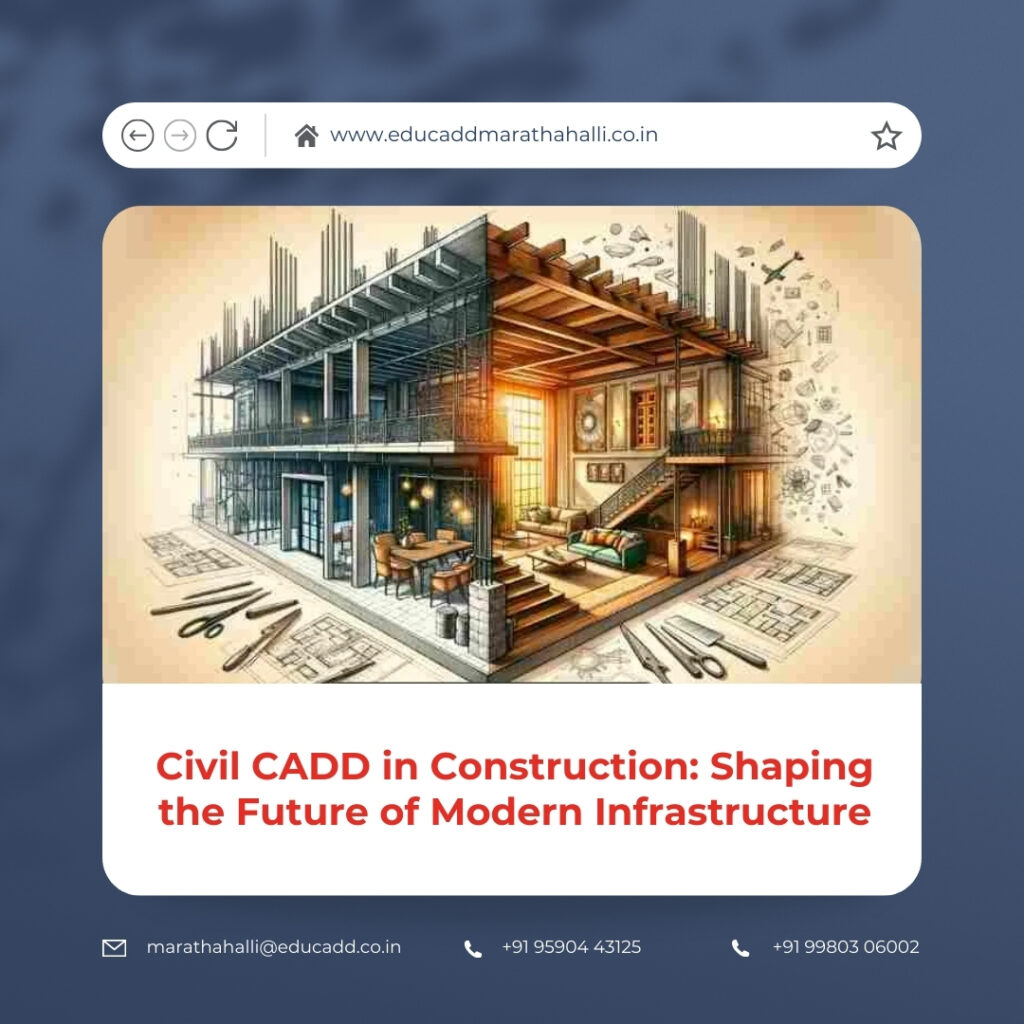
Civil CADD Construction Technology
Civil CADD Construction Technology; it allows professionals to visualize complex civil structures before actual construction begins. Engineers can simulate terrain, integrate regulatory compliance, and forecast material requirements, ensuring informed decision-making throughout the project lifecycle. This blog explores the meaning, significance, applications, advantages, challenges, and future of Civil CADD in construction, highlighting why it has become a cornerstone of the industry.
Understanding Civil CADD: Precision Meets Innovation
Civil CADD refers to computer-aided design software specifically designed for civil engineering applications. Unlike generic CAD tools, Civil CADD focuses on designing infrastructure such as roads, bridges, drainage systems, pipelines, and urban layouts. It provides engineers with advanced capabilities to model real-world scenarios, simulate environmental conditions, and integrate local building codes seamlessly.
This technology enables both 2D drafting and 3D modeling, offering an immersive view of proposed structures. By adopting Civil CADD, construction professionals can detect errors early, optimize resources, and ensure structural safety. Its role extends beyond planning; it fosters better communication, project tracking, and operational efficiency.
The Evolution of Design in Civil Engineering
Civil CADD Construction Technology design has evolved from hand-drawn blueprints to highly sophisticated digital workflows. Initially, engineers relied on drafting tables, rulers, and paper sketches, which were labor-intensive and prone to errors. With the advent of CAD technology in the 1980s, design efficiency improved dramatically. Civil CADD emerged as a specialized branch tailored to civil infrastructure projects, addressing the unique needs of road design, terrain modeling, and utility planning.
Today, Civil CADD integrates seamlessly with BIM (Building Information Modeling) and GIS (Geographic Information Systems), allowing for more accurate planning and simulation. This evolution has not only enhanced project quality but also significantly reduced costs and timelines for large-scale construction projects.
Core Features of Civil CADD
Civil CADD is equipped with features that make it indispensable for modern civil engineering projects. Some of its most notable functionalities include:
-
3D Modeling: Enables realistic visualization of structures before construction.
-
Topographical Mapping: Integrates terrain, elevation, and environmental data.
-
Automated Drafting Tools: Streamlines repetitive design tasks.
-
Structural Simulation: Tests durability, load distribution, and drainage systems.
-
Collaborative Workflows: Allows multiple stakeholders to review and modify designs.
These features ensure designs are accurate, projects are cost-efficient, and the overall construction process is smoother and more reliable.
Civil CADD in Urban and Infrastructure Projects
The applications of Civil CADD span a broad spectrum of civil engineering domains. In road and highway projects, it helps engineers design routes considering traffic density, topography, and environmental impact. For bridges and elevated structures, Civil CADD simulates stress distribution, load capacity, and durability. Water management projects, such as drainage systems, pipelines, and canals, benefit from precise modeling and flow analysis.
Urban planning also sees immense value from Civil CADD. By digitally simulating city layouts, including roads, utilities, and public spaces, planners can optimize space utilization and infrastructure efficiency. Civil CADD’s versatility allows it to adapt to small-scale residential designs as well as massive industrial developments.
Advantages of Implementing Civil CADD
The benefits of Civil CADD are extensive, improving both project execution and overall quality. Key advantages include:
-
Improved Accuracy: Reduces human errors in planning and design.
-
Time Efficiency: Automated tools accelerate project timelines.
-
Cost Savings: Efficient designs minimize material wastage and rework.
-
Enhanced Collaboration: Teams can share, review, and modify designs in real-time.
-
Compliance with Standards: Ensures adherence to local building codes and regulations.
By integrating Civil CADD, construction teams can foresee potential issues, make informed decisions, and achieve higher levels of precision in their projects.
Comparing Civil CADD and Traditional Drafting
Traditional drafting relied on pen-and-paper blueprints, which were time-consuming and limited in scope. Changes often required redrawing entire designs, causing delays and potential errors. Civil CADD, in contrast, offers flexible and dynamic design capabilities. Engineers can adjust parameters, visualize updates in 3D, and run simulations without starting from scratch.
This transition from manual to digital design has improved speed, accuracy, and collaboration. It has enabled construction projects to meet tighter deadlines and higher quality standards, making Civil CADD the preferred choice for modern civil engineering.
Popular Civil CADD Tools and Software
Several software solutions dominate the Civil CADD landscape, each catering to specific project needs. These include:
-
AutoCAD Civil 3D: Comprehensive tool for drafting, design, and documentation.
-
MicroStation: Offers advanced modeling capabilities for civil infrastructure.
-
Bentley InRoads: Specializes in road and highway design.
-
Revit Civil: Integrates with BIM for intelligent design and planning.
Selecting the right software depends on the type of project, the team’s expertise, and the required level of precision. Mastery of these tools is now a crucial skill for engineers and construction professionals.
Civil CADD Across Project Lifecycles
Civil CADD plays a pivotal role in every stage of a construction project. During planning, it allows engineers to analyze terrain, assess feasibility, and simulate environmental conditions. In the design phase, it facilitates detailed drafting, structural calculations, and material optimization. During construction, Civil CADD provides accurate guidance for on-site implementation, monitors progress, and supports timely modifications when necessary.
By integrating Civil CADD into the project lifecycle, organizations can minimize risks, enhance collaboration, and ensure projects are completed on time and within budget.
Civil CADD and Sustainable Engineering Practices
Sustainability is a central concern in today’s construction industry, and Civil CADD contributes significantly to eco-friendly design. By accurately modeling material usage, optimizing layouts, and simulating environmental impacts, engineers can reduce resource wastage and energy consumption. Civil CADD also allows for the design of green infrastructure, including sustainable drainage systems and energy-efficient road networks.
Digital simulations enable assessment of environmental impact before construction begins, helping organizations align with sustainability regulations and corporate responsibility goals. Civil CADD ensures projects are not only efficient but also environmentally responsible.
Training and Certification in Civil CADD
As the demand for skilled Civil CADD professionals grows, training and certification have become essential. Certification programs provide expertise in software tools, drafting standards, and real-world applications. Professionals gain hands-on experience through project simulations and practical exercises, enhancing employability and career growth.
Organizations benefit from certified professionals, as they bring higher efficiency, precision, and problem-solving capabilities to complex construction projects. Ongoing training ensures teams remain updated with evolving software features and industry best practices.
Overcoming Challenges in Civil CADD Implementation
Despite its benefits, adopting Civil CADD comes with challenges. High initial costs, a steep learning curve, and complex data management can hinder implementation. Teams may struggle to integrate Civil CADD into existing workflows or collaborate effectively when handling large files.
Addressing these challenges requires careful planning, adequate training, and strong technical support. Once these hurdles are overcome, the long-term gains in accuracy, efficiency, and project quality outweigh the initial obstacles.
Future Trends and Innovations in Civil CADD
The future of Civil CADD is promising, driven by emerging technologies such as artificial intelligence, cloud computing, and Internet of Things (IoT) integration. AI-assisted design can automate repetitive tasks and suggest optimal layouts. Cloud-based collaboration enhances real-time communication among global teams. IoT-enabled sensors and monitoring tools provide live feedback during construction, ensuring designs are executed accurately.
As technology continues to evolve, Civil CADD will play a central role in designing smarter, safer, and more efficient infrastructure projects.
Conclusion
Civil CADD Construction Technology has transformed the construction industry by providing accurate, efficient, and scalable design solutions. Its ability to integrate planning, simulation, and project management makes it indispensable for engineers, architects, and project managers. From roadways and bridges to urban planning and water management systems, Civil CADD ensures projects are executed with precision, reduced errors, and optimized costs.
In an era of digital transformation, sustainability, and smart infrastructure, Civil CADD represents the future of civil engineering. Organizations that adopt it gain a competitive edge, ensuring projects are completed on time, within budget, and to the highest quality standards. For any professional in civil construction, mastering Civil CADD is no longer optional—it is essential for building the infrastructure of tomorrow.

