
Civil CADD Applications in Real-World Construction: Engineering the Future with Intelligent Digital Design
The construction industry has undergone a profound digital transformation in recent years. Traditional drafting boards, manual calculations, and paper-based blueprints have steadily given way to advanced design technologies that enhance speed and precision. Among these advancements, Civil CADD Construction Applications have emerged as a cornerstone of modern infrastructure development. These digital tools empower engineers to design, analyze, and document complex projects with exceptional clarity and efficiency. As infrastructure demands grow and project timelines shrink, the reliance on intelligent drafting systems continues to increase across the globe.
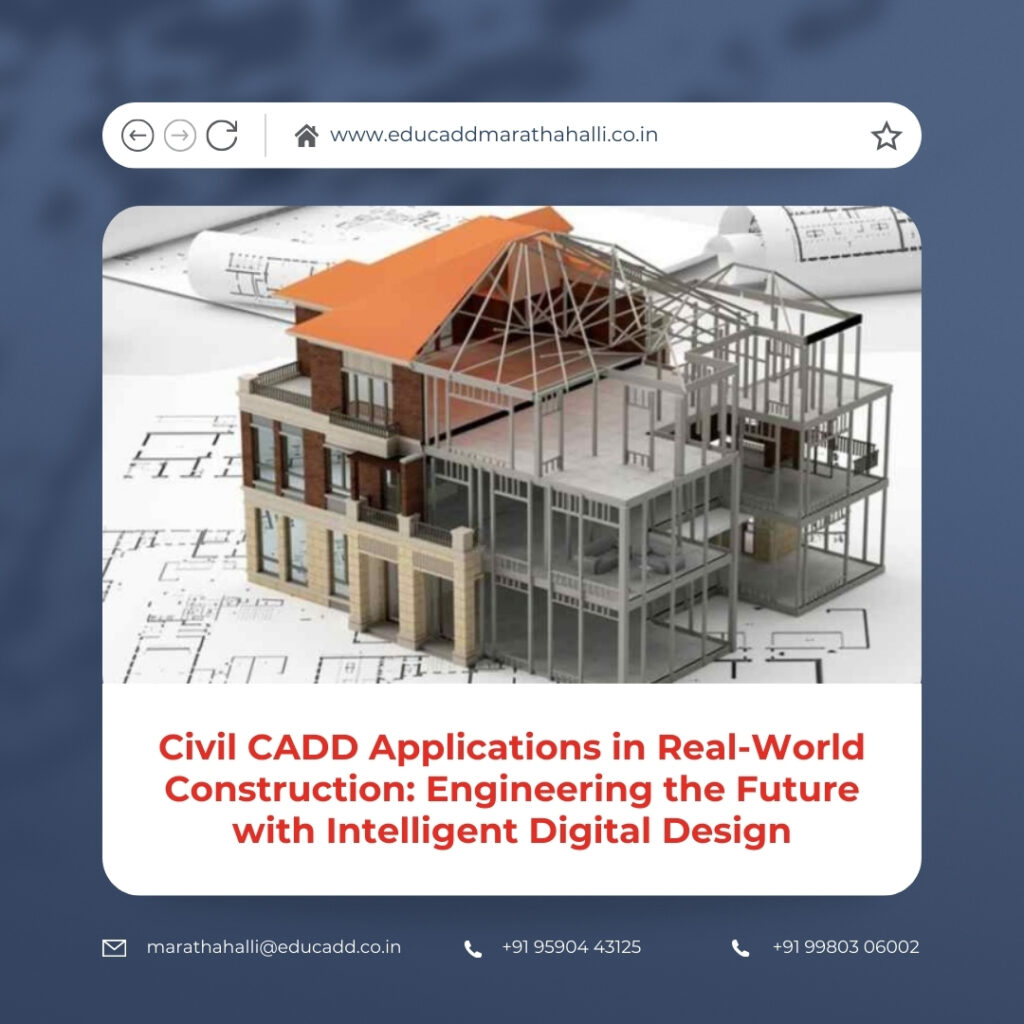
Civil CADD Construction Applications
In real-world construction, accuracy is essential. A minor error in measurement can lead to structural complications, financial loss, or project delays. Therefore, digital drafting systems have become indispensable for civil engineers. Civil CADD applications not only improve drawing accuracy but also streamline workflows, reduce rework, and enable effective coordination among multidisciplinary teams. This comprehensive blog explores how Civil CADD applications influence various aspects of construction, from planning and surveying to sustainability and future innovation.
1. Foundations of Civil CADD Applications in Modern Infrastructure
Civil CADD Construction Applications refer to specialized computer-aided drafting and design software tailored for civil engineering projects. These tools allow professionals to create detailed 2D drawings and 3D models for roads, bridges, drainage systems, and site layouts. Unlike conventional drafting methods, digital platforms provide automated calculations, standardized symbols, and precise dimensioning. As a result, design accuracy improves significantly.
Moreover, Civil CADD applications help engineers maintain consistency across large projects. Designers can reuse templates, modify layouts, and store multiple design versions within a centralized system. Consequently, documentation becomes more organized and accessible. In modern infrastructure projects, where multiple stakeholders collaborate, this level of organization ensures smoother execution and better communication.
2. Highway and Transportation Design Using Civil CADD Applications
Transportation infrastructure forms the backbone of economic development. Designing highways and urban roads requires meticulous alignment planning, gradient analysis, and earthwork estimation. Civil CADD applications simplify these tasks by offering integrated design tools that calculate horizontal and vertical alignments with precision.
Engineers can generate cross-sections, longitudinal profiles, and pavement details within a unified platform. Because these calculations are automated, designers can test various alignment alternatives quickly. This flexibility helps in selecting the most cost-effective and environmentally suitable route. Furthermore, Civil CADD applications reduce drafting time while maintaining technical standards. Construction teams benefit from clear, detailed drawings that minimize confusion on-site.
3. Land Development and Urban Planning Applications
Urban expansion demands efficient land utilization and structured planning. Civil CADD applications play a vital role in residential, commercial, and industrial development projects. By importing topographical data, engineers can create accurate contour maps and digital terrain models. These models help evaluate slope conditions and drainage patterns before construction begins.
In addition, Civil CADD applications enable planners to design internal road networks, utility corridors, and plot divisions efficiently. Stakeholders can visualize the entire development in 3D, which enhances decision-making and project approvals. Because every design element exists in a digital format, modifications can be implemented quickly. Therefore, planning becomes more flexible and responsive to changing requirements.
4. Structural Drafting and Reinforcement Detailing
Structural integrity defines the safety and durability of any construction project. Civil CADD Construction Applications assist engineers in preparing detailed structural drawings, including foundation layouts, column placements, beam sections, and slab reinforcements. These tools ensure accurate dimensioning and compliance with engineering standards.
Reinforcement detailing becomes more precise through digital drafting systems. Engineers can generate bar bending schedules and modify reinforcement patterns easily. As a result, material optimization improves, and errors decrease. Civil CADD applications also support quick revisions when structural loads change. This adaptability enhances project efficiency and reduces delays during execution.
5. Survey Integration and Topographical Modeling
Survey data forms the foundation of civil engineering design. Civil CADD applications integrate seamlessly with modern surveying instruments such as total stations and GPS systems. Engineers can import coordinate data directly into the software, eliminating manual entry errors.
Using this information, designers develop digital terrain models that illustrate elevation variations and slope characteristics. These models assist in grading plan preparation and cut-and-fill analysis. Consequently, earthwork estimations become more reliable. Field teams benefit from accurate setting-out drawings derived from the digital model, ensuring precise implementation during construction.
6. Drainage System Design and Water Management
Effective drainage planning protects infrastructure from water damage and environmental risks. Civil CADD applications support the design of stormwater drains, sewer networks, and water distribution systems. Engineers can calculate flow capacities, pipe diameters, and gradient requirements within the drafting environment.
Three-dimensional visualization of underground utilities reduces the likelihood of clashes between pipelines and structural components. Municipal authorities rely on detailed documentation produced by Civil CADD applications for project approvals. Therefore, public infrastructure projects achieve higher efficiency and reliability. Accurate hydraulic design also contributes to long-term maintenance and system sustainability.
7. Quantity Take-Off and Cost Optimization
Budget control plays a critical role in construction success. Civil CADD applications enable precise quantity extraction from digital drawings. Engineers can calculate areas, volumes, and material lengths automatically. This automation enhances the accuracy of cost estimation and procurement planning.
Contractors rely on these calculations to develop realistic project budgets. Because quantities are derived directly from design models, financial transparency improves. Civil CADD applications also allow engineers to optimize material usage before construction begins. Consequently, wastage decreases, and profitability increases.
8. Collaboration and Interdisciplinary Coordination
Modern construction projects involve architects, civil engineers, structural experts, and utility planners. Effective coordination among these professionals determines project success. Civil CADD applications provide a shared digital environment that facilitates real-time collaboration.
Design files can be reviewed, updated, and shared across departments. Revision histories remain documented, which improves accountability. Additionally, Civil CADD applications support interoperability with other engineering software platforms. This integration ensures seamless data exchange and reduces communication gaps. As a result, project timelines remain on track.
9. Enhancing Construction Documentation and Compliance
Accurate documentation ensures smooth regulatory approvals and quality inspections. Civil CADD applications produce professional drawings that comply with industry standards. Engineers can incorporate standardized symbols, annotations, and legends into their plans.
Digital storage of revisions simplifies the audit process. Authorities can review modifications efficiently, which accelerates approval timelines. Clear documentation also benefits on-site teams by reducing misunderstandings and construction errors. Therefore, compliance and quality control become more manageable.
10. Sustainable Infrastructure Design
Sustainability remains a priority in contemporary construction practices. Civil CADD applications assist engineers in designing environmentally responsible infrastructure. Designers can analyze drainage patterns, slope stability, and land usage to minimize ecological impact.
Material optimization features reduce resource consumption. Engineers can evaluate alternative alignments that preserve natural landscapes. Furthermore, digital simulations help assess flood risks and stormwater behavior. By integrating environmental considerations into the design process, Civil CADD applications support the creation of resilient and sustainable infrastructure systems.
11. Real-Time Modifications and Design Flexibility
Construction projects often undergo design revisions due to regulatory requirements or client preferences. Civil CADD applications allow engineers to implement modifications quickly without redrawing entire plans. Changes in one section automatically update related elements within the model.
This dynamic flexibility saves time and reduces repetitive work. Teams can evaluate multiple design scenarios before finalizing decisions. Because revisions remain documented, transparency increases throughout the project lifecycle. Consequently, stakeholders gain confidence in the design process.
12. Skill Development and Professional Growth
Proficiency in Civil CADD applications enhances career opportunities for civil engineers and drafting professionals. Training programs focus on practical project simulations that mirror real-world challenges. Students learn to design roads, drainage networks, and site layouts using advanced tools.
Employers prefer candidates who can deliver accurate digital drawings efficiently. Therefore, expertise in Civil CADD applications provides a competitive advantage in the job market. Continuous skill development ensures professionals remain adaptable to evolving technologies in the construction industry.
13. Integration with BIM and Emerging Technologies
The future of construction lies in integrated digital ecosystems. Civil CADD applications increasingly connect with Building Information Modeling platforms and cloud-based systems. This integration enables real-time collaboration and centralized data management.
Engineers can access project files from remote locations, which improves coordination across geographically dispersed teams. Artificial intelligence and automation features further enhance design efficiency. Civil CADD applications continue to evolve, incorporating predictive analytics and smart modeling capabilities that redefine infrastructure planning.
14. The Expanding Scope of Civil CADD Applications in Smart Cities
As urbanization accelerates, smart city development demands advanced planning tools. Civil CADD applications support the design of integrated transportation networks, sustainable drainage systems, and utility infrastructures within digital frameworks. Engineers can simulate traffic patterns, evaluate land use efficiency, and plan infrastructure expansions proactively.
Digital models enable authorities to monitor infrastructure performance and plan maintenance schedules effectively. By combining precision drafting with intelligent analytics, Civil CADD applications contribute to the development of technologically advanced urban environments. Consequently, cities become more efficient, resilient, and future-ready.
Conclusion
Civil CADD Construction Applications have revolutionized real-world construction by introducing speed, accuracy, and collaboration into every phase of project development. From transportation design and land planning to structural detailing and cost control, these digital tools empower engineers to deliver high-quality infrastructure solutions.
Their ability to integrate survey data, optimize material usage, and facilitate interdisciplinary coordination positions Civil CADD applications at the center of modern engineering practice. As the industry continues to embrace sustainability and smart technologies, these applications will play an even greater role in shaping resilient infrastructure.
Ultimately, Civil CADD applications represent more than drafting software. They embody a transformative approach to civil engineering that prioritizes precision, efficiency, and innovation. Professionals who master these tools will lead the next generation of construction excellence.

