
CAM in Mechanical Engineering: Essential Knowledge for Modern Engineers
In today’s rapidly evolving industrial landscape, CAM Mechanical Engineering Basics has become an indispensable tool for mechanical engineers. As industries demand precision, efficiency, and innovation, understanding CAM has moved from being optional to essential. Mechanical engineers who learn CAM gain a competitive edge in designing, manufacturing, and optimizing products. This article explores what CAM is, its significance, and why mechanical engineers must acquire this skill to excel in their careers.
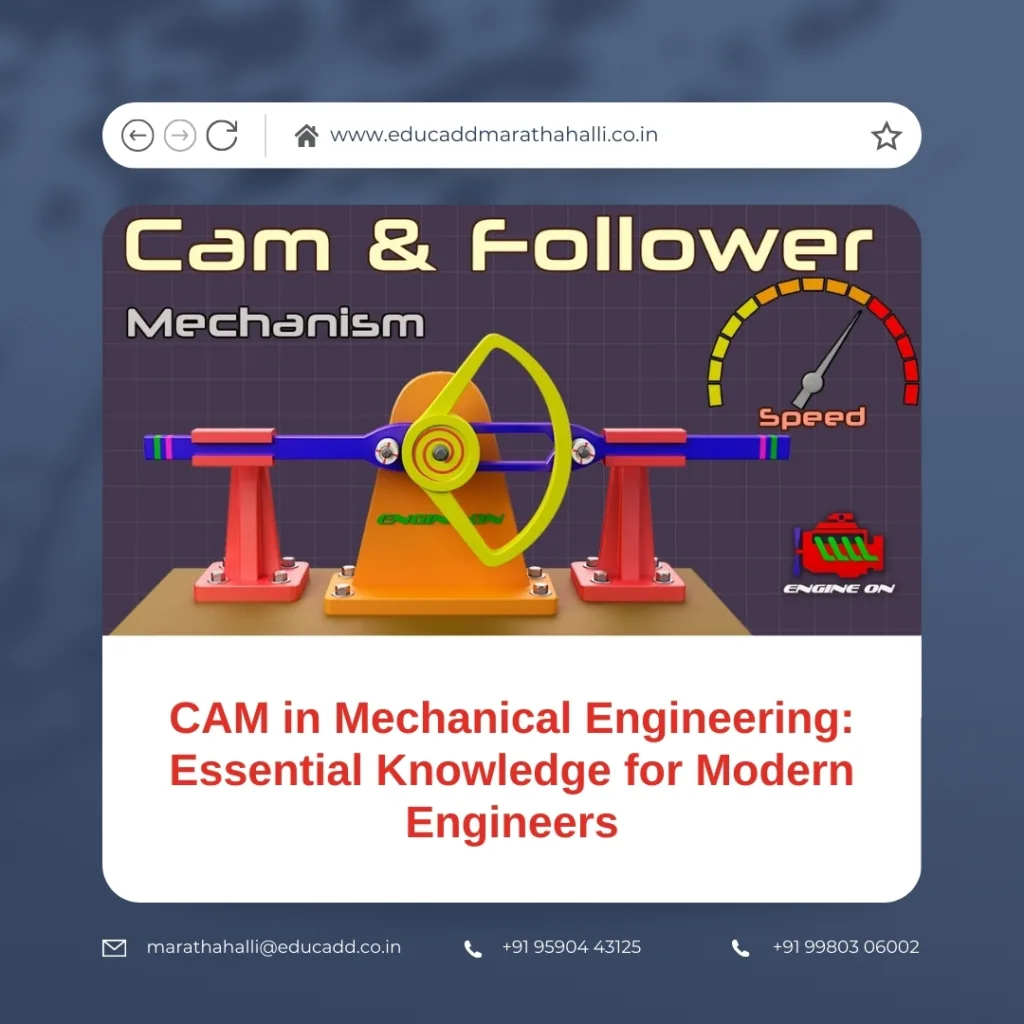
CAM Mechanical Engineering Basics
Understanding CAM: The Basics
CAM Mechanical Engineering Basics refers to the use of software and computer systems to control machine tools and related machinery in the manufacturing process. Unlike traditional manufacturing methods, CAM integrates design with production, ensuring accuracy and efficiency. Through CAM, engineers can automate machining operations, simulate production processes, and predict potential errors before actual production begins.
CAM software is designed to interpret Computer-Aided Design (CAD) models and generate precise toolpaths, which guide CNC machines during manufacturing. It reduces human errors, saves time, and enhances product quality. Moreover, CAM supports a variety of manufacturing techniques, including milling, turning, drilling, and additive manufacturing.
For mechanical engineers, understanding the foundations of CAM is critical. It not only enhances their design capabilities but also bridges the gap between concept and production. With CAM knowledge, engineers can evaluate manufacturing feasibility during the design phase, which is increasingly valued in modern engineering environments.
The Role of CAM in Mechanical Engineering
Mechanical engineers work on designing, testing, and producing mechanical systems and components. Integrating CAM into their workflow transforms traditional practices and improves efficiency. CAM enables engineers to convert conceptual designs into tangible products seamlessly, ensuring that specifications are precisely met.
By using CAM, mechanical engineers can:
-
Optimize production processes: CAM allows for precise machining and reduces material waste.
-
Increase manufacturing speed: Automated machining operations reduce production time significantly.
-
Enhance product quality: Accurate toolpaths and simulations ensure high precision and consistency.
-
Facilitate complex designs: CAM handles intricate geometries that are challenging for manual manufacturing.
-
Integrate with CAD: CAM software often works in conjunction with CAD, allowing engineers to go from design to production without data loss.
The role of CAM extends beyond the shop floor. Engineers involved in product development, prototyping, and quality assurance find CAM essential for testing design feasibility and improving manufacturing efficiency. Therefore, mechanical engineers who learn CAM are not just improving their technical skills—they are expanding their overall engineering capabilities.
Advantages of Learning CAM for Mechanical Engineers
Mechanical engineers who master CAM gain multiple professional benefits. These advantages extend across productivity, career growth, and innovation.
1. Career Advancement:
CAM expertise is highly sought in industries such as automotive, aerospace, consumer products, and industrial machinery. Engineers with CAM knowledge are often preferred for roles in design, production planning, and manufacturing management.
2. Increased Efficiency and Accuracy:
Manual machining involves trial and error, which increases time and cost. CAM automates these processes, reducing errors and ensuring precise execution. Engineers can simulate machining operations virtually, detect flaws, and make adjustments before actual production.
3. Cost Savings:
CAM reduces material wastage and machine downtime. By predicting potential issues through simulation, companies save money, which directly enhances the engineer’s value in the organization.
4. Innovation and Creativity:
CAM enables engineers to experiment with complex designs without risking production errors. This flexibility encourages innovation, allowing engineers to implement advanced design ideas that may not be possible with traditional methods.
5. Enhanced Collaboration:
Modern CAM systems integrate with CAD and PLM (Product Lifecycle Management) tools. Mechanical engineers can share design files, production plans, and updates with ease, improving teamwork and reducing miscommunication.
Transitioning to CAM-centric workflows is not just a technical improvement; it transforms the engineering mindset toward a more analytical and production-oriented approach.
Key CAM Software Tools Mechanical Engineers Should Know
Mechanical engineers aiming to leverage CAM must familiarize themselves with leading CAM software. These tools vary in features, complexity, and industry focus. The most widely used CAM tools include:
-
Mastercam: Known for its ease of use, Mastercam is widely adopted in manufacturing industries for CNC programming.
-
Siemens NX CAM: Offers integrated solutions for design, simulation, and manufacturing planning, making it ideal for complex engineering tasks.
-
SolidWorks CAM: Seamlessly integrates with SolidWorks CAD, enabling engineers to design and manufacture components within a single environment.
-
CATIA CAM: Preferred in aerospace and automotive industries, CATIA provides advanced machining capabilities and surface modeling.
-
Fusion 360: Combines CAD, CAM, and CAE in a cloud-based platform, ideal for collaboration and rapid prototyping.
Learning these tools equips mechanical engineers with practical skills that are directly applicable in real-world manufacturing environments. Beyond software knowledge, understanding CAM principles ensures engineers can select the right tool for each project, optimize workflows, and troubleshoot effectively.
Future Trends in CAM for Mechanical Engineers
The manufacturing industry is evolving with smart technologies, and CAM is at the forefront of this transformation. Mechanical engineers who stay updated with emerging trends can remain competitive in the job market. Key trends include:
-
Integration with Industry 4.0: CAM systems are increasingly connected with IoT-enabled machines, enabling real-time monitoring and predictive maintenance.
-
Additive Manufacturing Support: CAM software now supports 3D printing and hybrid manufacturing, expanding possibilities for prototyping and production.
-
AI-Driven CAM: Artificial intelligence is being integrated into CAM to optimize toolpaths, reduce errors, and improve efficiency automatically.
-
Cloud-Based CAM Solutions: Cloud integration allows engineers to collaborate remotely, access resources, and perform complex simulations without local hardware limitations.
-
Sustainable Manufacturing: CAM helps in reducing waste, energy consumption, and material costs, contributing to more environmentally responsible engineering practices.
Mechanical engineers who embrace these trends can not only improve production efficiency but also lead innovation within their organizations. CAM knowledge is no longer optional; it is a critical component of modern mechanical engineering education and career development.
Conclusion: CAM as a Strategic Skill for Mechanical Engineers
In conclusion, CAM Mechanical Engineering Basics, offering unmatched precision, efficiency, and innovation capabilities. By learning CAM, mechanical engineers can seamlessly transition from design concepts to high-quality production, optimize manufacturing processes, and stay ahead in a competitive job market.
Understanding what CAM is and why mechanical engineers should learn it is essential for anyone aspiring to succeed in industries that rely on advanced manufacturing techniques. CAM transforms the way engineers design, test, and produce, making it a critical skill for career growth and professional excellence.
Mechanical engineers who invest time in mastering CAM not only improve their technical skills but also position themselves as valuable contributors to modern, high-tech manufacturing environments. With ongoing advancements in software and technology, CAM remains a field of continuous learning and opportunity for innovation.

