
Engineering Innovation Through Simulation: The Strategic Role of CAE in Product Lifecycle Management
In the modern era of product development, businesses face increasing pressure to deliver innovative products faster, reduce development costs, maintain exceptional quality, and meet ever-changing customer expectations. Traditional product development methods often involve lengthy testing cycles, multiple physical prototypes, and significant resource investment. To overcome these challenges, organizations are increasingly integrating CAE Product Lifecycle Management strategies. This combination has transformed the way products are designed, analyzed, manufactured, and maintained throughout their lifecycle.
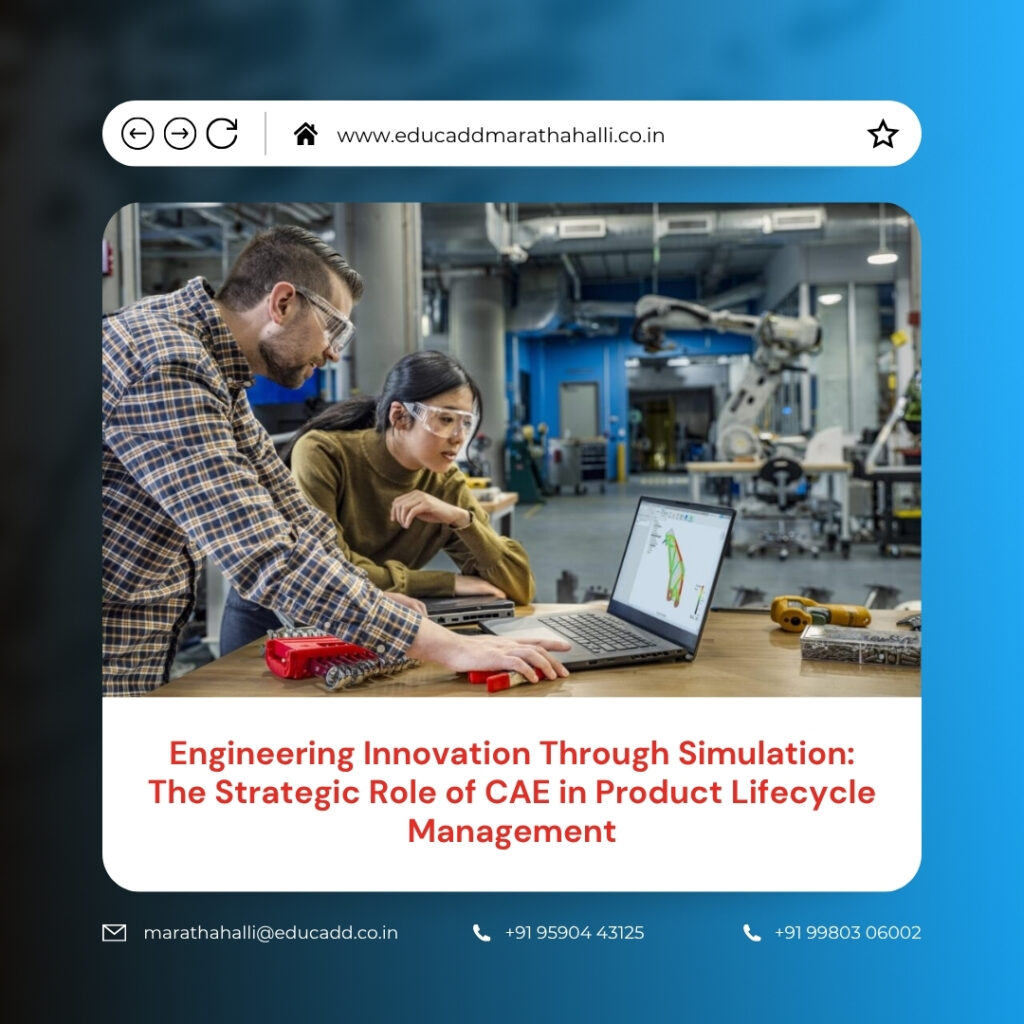
CAE Product Lifecycle Management
CAE provides advanced simulation and analysis capabilities that allow engineers to evaluate product performance in virtual environments before production begins. Product Lifecycle Management serves as the framework that manages every stage of a product’s existence, from initial concept and design to manufacturing, maintenance, and eventual retirement. Together, CAE and PLM create a powerful ecosystem that improves decision-making, enhances collaboration, accelerates innovation, and reduces risks. Understanding the strategic role of CAE Product Lifecycle Management is essential for organizations seeking to remain competitive in an increasingly technology-driven marketplace.
Understanding the Connection Between CAE and PLM
Computer-Aided Engineering refers to the use of simulation software and engineering analysis tools to predict how products will perform under various operating conditions. Engineers use these technologies to study stress, thermal behavior, fluid dynamics, vibration, fatigue, and numerous other factors without creating physical prototypes. This capability enables more accurate engineering decisions during product development.
CAE Product Lifecycle Management, meanwhile, provides a centralized environment where all product-related information is stored, managed, and shared. It ensures that every department involved in product development has access to consistent and up-to-date information. When CAE becomes an integral part of PLM, simulation data is seamlessly connected with design, manufacturing, and maintenance information. This integration creates a more efficient workflow and allows organizations to make informed decisions throughout the entire product lifecycle.
Accelerating Product Development with Virtual Testing
One of the most significant advantages of integrating CAE into Product Lifecycle Management is the ability to perform virtual testing. Traditionally, engineers depended heavily on physical prototypes to evaluate product performance. Although effective, this process often consumed substantial time and financial resources. CAE changes this approach by allowing products to be tested digitally before any physical model is created.
Virtual testing enables engineering teams to explore multiple design options rapidly and identify potential issues early in the development process. Because simulations can be performed repeatedly without additional material costs, companies can refine designs more efficiently. As a result, development cycles become shorter, product launches occur sooner, and organizations gain a valuable competitive advantage in fast-moving markets.
Improving Product Quality Through Advanced Simulation
Product quality plays a crucial role in customer satisfaction and long-term business success. Consumers expect products to perform reliably under various conditions, and even minor defects can damage a company’s reputation. CAE contributes significantly to quality improvement by enabling engineers to evaluate product behavior under realistic operating scenarios before production begins.
Through detailed simulations, engineers can identify weak points, predict potential failures, and implement design improvements long before products reach the manufacturing stage. This proactive approach reduces the likelihood of costly recalls and warranty claims. Furthermore, organizations gain confidence that their products will consistently meet performance expectations, ultimately strengthening customer trust and brand loyalty.
Enhancing Design Accuracy and Engineering Confidence
Every product development project involves numerous engineering decisions that directly affect performance, durability, manufacturability, and cost. Making these decisions without sufficient data can introduce uncertainty and increase the risk of design errors. CAE provides engineers with valuable insights that support accurate and confident decision-making throughout the development process.
Simulation tools allow teams to compare different design concepts and evaluate their performance under identical conditions. Instead of relying solely on experience or assumptions, engineers can use measurable data to guide their choices. Consequently, design accuracy improves significantly, and organizations can achieve better outcomes while minimizing development risks.
Reducing Development Costs Across the Product Lifecycle
Cost control remains a priority for manufacturers operating in competitive industries. Product development expenses can quickly escalate when multiple prototypes, repeated testing procedures, and late-stage design changes become necessary. CAE helps organizations reduce these costs by identifying problems before physical production begins.
Several key cost-saving advantages emerge from CAE integration:
- Elimination of numerous physical prototype iterations.
- Reduced spending on testing, materials, and redesign activities.
By detecting issues early and enabling virtual validation, organizations avoid expensive corrections later in the development cycle. This efficiency allows businesses to allocate resources more effectively while maintaining high product standards and profitability.
Strengthening Collaboration Between Engineering Teams
Successful product development depends on effective communication among designers, analysts, manufacturing engineers, quality specialists, and project managers. Unfortunately, disconnected workflows often create information silos that slow progress and increase the risk of misunderstandings. CAE integrated within a PLM environment helps eliminate these barriers.
Simulation results, engineering analyses, and performance data become accessible to all relevant stakeholders through a centralized platform. Team members can review findings, discuss improvements, and make collaborative decisions based on shared information. This transparency improves coordination across departments and ensures that everyone works toward common project objectives. As a result, organizations experience greater efficiency and fewer delays during product development.
Driving Product Optimization and Performance Improvement
Modern customers expect products that offer exceptional performance, durability, efficiency, and value. Meeting these expectations requires continuous optimization throughout the design process. CAE provides the analytical capabilities necessary to identify opportunities for performance enhancement and resource optimization.
Engineers can use simulations to evaluate how changes in geometry, materials, or operating conditions affect product behavior. Through multiple iterations, teams can achieve the ideal balance between performance, weight, strength, and cost. This optimization process helps organizations create products that exceed customer expectations while maintaining manufacturing efficiency and profitability.
Supporting Effective Risk Management Strategies
Risk management is an essential component of successful Product Lifecycle Management. Design failures, safety concerns, regulatory violations, and manufacturing challenges can create significant financial and operational consequences. CAE serves as a powerful tool for identifying and mitigating these risks before they impact product development.
Through virtual simulations, organizations can evaluate how products perform under extreme conditions, unexpected loads, and challenging environments. Engineers gain valuable insights into potential failure mechanisms and can implement preventive measures during the design phase. This proactive approach reduces uncertainty and increases confidence in product reliability and safety.
Helping Organizations Meet Industry Regulations
Manufacturers in sectors such as automotive, aerospace, healthcare, and energy must comply with strict regulatory requirements and performance standards. Demonstrating compliance often requires extensive testing, documentation, and validation. CAE simplifies this process by generating detailed simulation data that supports certification and approval activities.
The ability to validate product performance digitally allows organizations to identify compliance issues earlier in development. This capability reduces delays associated with regulatory reviews and minimizes the risk of costly redesigns. Furthermore, simulation reports provide valuable evidence that products meet safety and performance requirements, making the certification process more efficient and manageable.
Advancing Sustainable Product Development Practices
Sustainability has become a key consideration for businesses across all industries. Companies must balance profitability with environmental responsibility while meeting growing expectations from customers, investors, and regulatory agencies. CAE supports sustainability initiatives by helping organizations develop products that use resources more efficiently and generate less environmental impact.
Simulation tools enable engineers to analyze material consumption, energy efficiency, emissions, and overall environmental performance during the design phase. This insight allows teams to make informed decisions that support sustainability objectives. By optimizing products before manufacturing begins, organizations can reduce waste, conserve resources, and contribute to long-term environmental stewardship without compromising product functionality.
Improving Manufacturing Efficiency and Production Planning
The influence of CAE extends beyond design and engineering activities into manufacturing operations. Production efficiency depends on careful planning, process optimization, and the ability to anticipate potential challenges before they occur. CAE helps manufacturers achieve these goals through advanced process simulation capabilities.
Important manufacturing benefits include:
- Better evaluation of production workflows and assembly procedures.
- Reduced downtime through proactive process optimization.
By simulating manufacturing conditions, organizations can identify bottlenecks, improve resource utilization, and refine production strategies. This preparation enhances operational efficiency and helps ensure consistent product quality throughout the manufacturing process.
Enabling Predictive Maintenance and Lifecycle Support
The value of CAE Product Lifecycle Management continues long after products enter the marketplace. Engineering simulations provide valuable information that supports maintenance planning, performance monitoring, and service operations throughout a product’s operational life. This capability is especially important for complex industrial equipment and high-value assets.
By analyzing wear patterns, stress distribution, and operational behavior, engineers can predict potential maintenance requirements before failures occur. Organizations can then implement preventive maintenance programs that reduce downtime and extend product lifespan. Customers benefit from improved reliability, while manufacturers strengthen long-term relationships through superior service support and lifecycle management.
Empowering Digital Twin Technology and Smart Products
Digital transformation has introduced new opportunities for organizations to manage products more intelligently throughout their lifecycle. One of the most significant advancements is the adoption of digital twin technology. A digital twin is a virtual representation of a physical product that continuously reflects real-world operating conditions through connected data systems.
CAE serves as the foundation for creating accurate digital twins by providing detailed simulation models and performance predictions. These virtual replicas allow organizations to monitor equipment health, optimize operations, and forecast future performance. As smart manufacturing and connected products continue to evolve, digital twins supported by CAE will play an increasingly important role in enhancing lifecycle management and operational excellence.
The Future of CAE in Product Lifecycle Management
The future of Product Lifecycle Management will be heavily influenced by advancements in simulation technologies, artificial intelligence, machine learning, cloud computing, and high-performance computing. These innovations are making CAE tools faster, more accessible, and more capable than ever before. Organizations can now perform highly complex analyses in less time and explore a wider range of design possibilities.
As technology continues to advance, CAE will become even more integrated with PLM systems, enabling real-time decision-making and automated optimization. Engineers will gain deeper insights into product performance, while organizations will benefit from greater agility, reduced development costs, and enhanced innovation capabilities. The combination of intelligent simulation and lifecycle management will define the next generation of product development strategies.
Conclusion
CAE Product Lifecycle Management. By enabling virtual testing, design optimization, risk reduction, regulatory compliance, and predictive analysis, CAE transforms the way organizations develop and manage products. Its integration into PLM creates a connected environment where engineering knowledge supports every stage of the product lifecycle.
As industries continue to embrace digital transformation and advanced manufacturing practices, the strategic importance of CAE will continue to grow. Organizations that leverage CAE effectively can accelerate product development, improve operational efficiency, enhance customer satisfaction, and maintain a strong competitive position in the global marketplace. In an era where innovation and speed are essential for success, CAE stands as one of the most valuable technologies supporting modern Product Lifecycle Management.

