
Beyond Creativity: Why CAD Skills Have Become a Game-Changer for Modern Interior Designers
Interior design is no longer limited to selecting furniture, choosing color palettes, or decorating spaces. The profession has evolved into a highly technical and detail-oriented field where creativity and technology work together to deliver exceptional results. Clients today expect designers to provide accurate layouts, realistic visualizations, efficient space planning, and professional documentation before a project even begins. This shift has transformed the way interior designers approach their work and has made digital tools an integral part of the design process. Among these tools, CAD Skills for Interior Designers, has emerged as one of the most valuable skills an interior designer can possess.
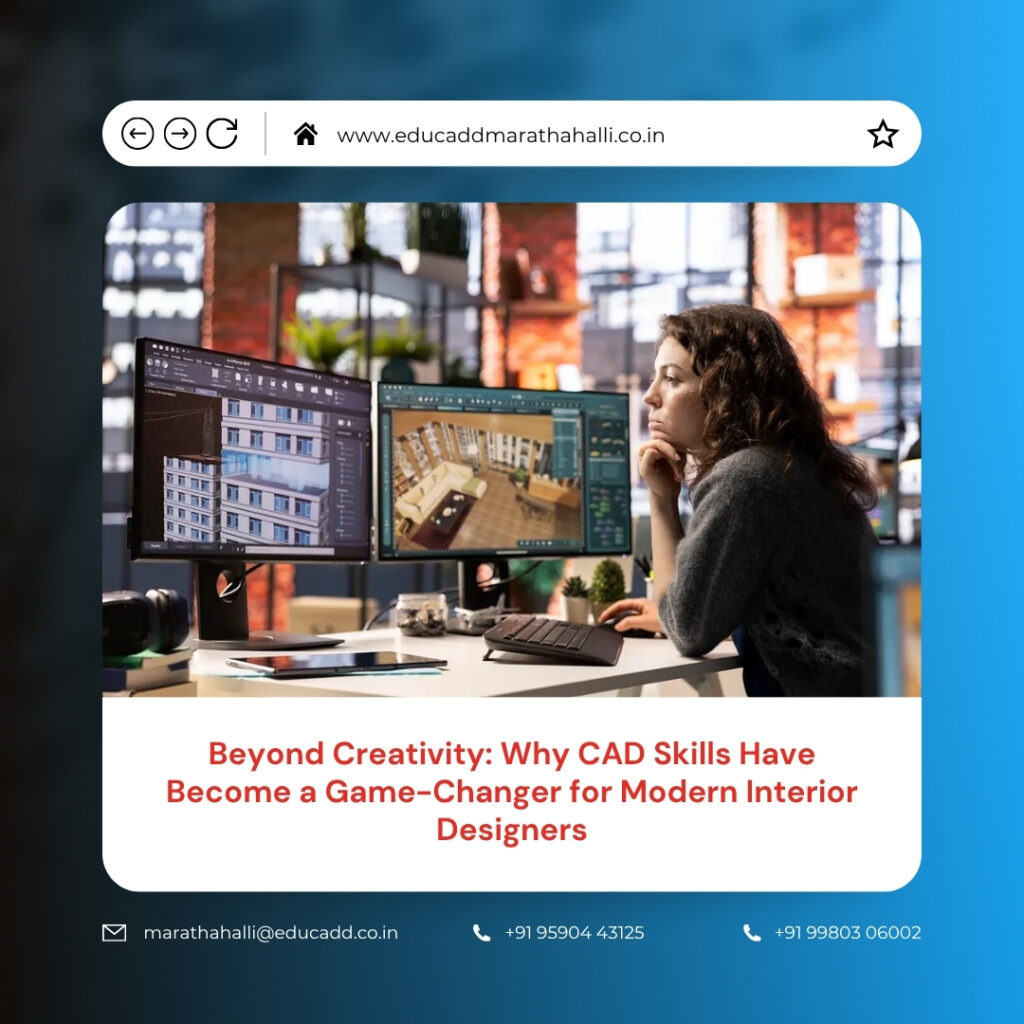
CAD Skills for Interior Designers
Whether designing a compact apartment, a luxurious villa, a commercial office, or a retail outlet, CAD helps professionals convert ideas into precise and practical designs. As competition in the industry continues to increase, designers who understand and utilize CAD software gain a significant advantage. They can communicate concepts more effectively, reduce errors, improve project efficiency, and meet client expectations with greater confidence. Consequently, CAD Skills for Interior Designers and a skill that aspiring professionals cannot afford to overlook.
Understanding CAD and Its Role in Interior Design
Computer-Aided Design refers to the use of specialized software for creating technical drawings, floor plans, elevations, sections, and detailed design documentation. Unlike traditional hand-drawn sketches, CAD allows designers to work with exact measurements and highly accurate dimensions. This precision is especially important in interior design, where every inch of space matters. CAD Skills for Interior Designers to create layouts that include walls, doors, windows, furniture arrangements, lighting plans, and other essential design elements. These drawings serve as a blueprint for contractors, suppliers, and clients throughout the project lifecycle. Furthermore, CAD software allows designers to edit, update, and modify drawings quickly whenever project requirements change.
This flexibility improves efficiency and reduces the time spent on revisions. As interior spaces become more complex and client expectations continue to rise, CAD has become a powerful tool that enables designers to maintain professional standards while delivering visually appealing and technically sound solutions.
Why Modern Interior Design Demands Technical Expertise
The interior design industry has undergone significant changes over the years. While artistic ability remains important, technical expertise has become equally essential. Modern projects involve multiple stakeholders, strict deadlines, detailed specifications, and extensive coordination. Designers are expected to produce accurate documentation that supports smooth project execution from start to finish. CAD helps bridge the gap between creative vision and technical implementation. It allows designers to develop designs that not only look attractive but also function effectively in real-world environments.
In addition, clients are becoming more informed and demanding. They want to see detailed plans, realistic representations, and precise layouts before approving a project. Designers who possess CAD skills can meet these expectations more efficiently than those who rely solely on manual drafting techniques. Therefore, technical proficiency has become a critical factor in achieving success within the contemporary interior design landscape.
Enhancing Design Visualization Through CAD Tools
One of the greatest benefits of CAD software is its ability to improve design visualization. Clients often find it difficult to interpret rough sketches or conceptual drawings. As a result, misunderstandings can occur during the design process. CAD eliminates much of this confusion by providing detailed and professional visual representations of proposed interiors. Designers can create accurate floor plans, elevations, and perspectives that clearly communicate spatial arrangements and design concepts. These visual tools help clients understand how a completed space will appear and function.
Additionally, CAD-based visualizations allow designers to present multiple design options, making it easier for clients to compare alternatives and make informed decisions. Better visualization leads to stronger client confidence, faster approvals, and fewer design revisions. Ultimately, CAD serves as a communication tool that helps translate creative ideas into forms that clients can easily understand and appreciate.
Precision and Accuracy That Improve Project Outcomes
Accuracy is a fundamental requirement in every interior design project. Even minor measurement errors can lead to costly construction issues, material wastage, and project delays. CAD software minimizes these risks by enabling designers to create drawings with exact dimensions and specifications. Every element within a design can be measured, aligned, and verified with remarkable precision. This level of accuracy ensures that furniture fits correctly, circulation paths remain functional, and construction activities proceed according to plan.
Furthermore, precise documentation reduces misunderstandings among project stakeholders and improves overall project coordination. Contractors, fabricators, and installers can rely on CAD drawings to execute work accurately and efficiently. By reducing the likelihood of mistakes and rework, CAD contributes directly to better project outcomes and enhanced client satisfaction.
Improving Space Planning and Functional Design
Space planning represents one of the most important responsibilities of an interior designer. A beautiful space must also be practical, comfortable, and efficient. CAD software plays a crucial role in achieving these objectives by helping designers analyze and organize interior layouts effectively. Through digital planning tools, designers can experiment with different furniture arrangements, circulation routes, and zoning strategies before finalizing a design. This flexibility allows them to identify potential challenges and optimize the use of available space.
Some major advantages of CAD-based space planning include:
- Better utilization of available floor area.
- Improved movement and accessibility within the space.
By evaluating layouts digitally, designers can create environments that balance aesthetics and functionality while meeting the specific needs of occupants.
Strengthening Collaboration Across Project Teams
CAD Skills for Interior Designers projects rarely involve a single professional working independently. Instead, successful projects require collaboration among architects, engineers, contractors, consultants, suppliers, and clients. Effective communication is essential for ensuring that everyone works toward the same objectives. CAD facilitates this collaboration by providing a standardized platform for sharing information and coordinating project activities. Digital drawings can be distributed quickly, reviewed efficiently, and updated whenever necessary. Team members can access the latest design information and provide feedback without delays.
This streamlined communication process helps reduce conflicts, prevent misunderstandings, and improve overall project efficiency. Moreover, collaborative workflows supported by CAD allow design teams to respond more effectively to changes and maintain project momentum throughout every phase of development.
How CAD Increases Productivity for Interior Designers
Efficiency has become a key factor in today’s fast-paced design industry. Clients expect quick turnaround times, frequent updates, and timely project completion. CAD software helps designers meet these demands by automating many time-consuming tasks. Features such as reusable templates, drawing libraries, automatic dimensioning, and editing tools enable professionals to work faster without compromising quality. Instead of redrawing plans manually whenever changes occur, designers can make adjustments within minutes.
This capability significantly reduces workload and improves productivity. Additionally, increased efficiency allows designers to dedicate more time to creative problem-solving, client communication, and project management. As a result, CAD not only enhances technical performance but also contributes to a more balanced and effective design workflow.
Creating Professional Presentations That Impress Clients
Securing client approval often depends on the quality of design presentations. Professional CAD drawings create a strong first impression and demonstrate a designer’s expertise and attention to detail. Clients appreciate clear, organized documentation that helps them understand every aspect of a proposed design. CAD-generated presentations can include floor plans, elevations, reflected ceiling plans, furniture layouts, and detailed design specifications. These materials provide a comprehensive overview of the project and help clients visualize the final outcome.
Moreover, polished presentations increase confidence in the designer’s abilities and strengthen the overall client relationship. In a competitive marketplace, the ability to deliver professional presentations can become a significant differentiator that influences purchasing decisions and project approvals.
Supporting Advanced 3D Modeling and Realistic Visualization
Modern CAD software extends far beyond two-dimensional drafting. Many programs offer advanced 3D modeling capabilities that enable designers to create realistic representations of interior spaces. These models provide a comprehensive view of how colors, materials, textures, lighting, and furnishings interact within an environment. Clients can explore spaces virtually and gain a deeper understanding of design concepts before construction begins.
Key benefits of 3D CAD visualization include:
- Greater client engagement during presentations.
- Reduced design revisions through improved understanding.
By presenting realistic models, designers can communicate ideas more effectively and ensure that client expectations align closely with project outcomes.
Expanding Career Opportunities Through CAD Expertise
CAD proficiency can significantly enhance career prospects within the interior design industry. Employers increasingly prioritize candidates who possess strong technical skills and practical software knowledge. Design firms, architectural practices, construction companies, furniture manufacturers, and real estate developers all seek professionals who can create and manage digital drawings efficiently. In addition to improving employability, CAD expertise opens doors to specialized career paths.
Designers may pursue roles in residential design, commercial interiors, workplace planning, hospitality design, retail environments, or visualization services. As professionals gain experience, they may advance into leadership positions such as project manager, design coordinator, CAD specialist, or BIM consultant. Therefore, investing time in learning CAD can provide substantial long-term career benefits and professional growth opportunities.
Popular CAD Software Used in the Interior Design Industry
A variety of CAD Skills for Interior Designers professionals. Each software platform offers unique features that cater to different project requirements and design workflows. AutoCAD remains one of the most widely recognized programs for technical drafting and documentation. SketchUp is popular for conceptual modeling and quick visualization. Revit supports Building Information Modeling and integrated project coordination. Other commonly used tools include 3ds Max, ArchiCAD, and Vectorworks.
Learning these applications equips designers with valuable technical capabilities that align with industry standards. While mastering one program provides a strong foundation, familiarity with multiple platforms can further increase versatility and marketability. As technology continues to evolve, software proficiency remains an important component of professional success.
Can Creativity Alone Replace CAD Skills?
Some individuals believe that strong artistic talent is sufficient for a successful interior design career. While creativity is undoubtedly essential, it cannot fully replace technical competence. Great ideas must be translated into practical and buildable solutions. CAD serves as the bridge between imagination and implementation. Without digital drafting skills, designers may struggle to communicate concepts accurately, coordinate with construction teams, or produce professional documentation. Furthermore, many clients and employers expect designers to use modern technology as part of their workflow. Creative ability remains the heart of interior design, but CAD provides the structure and precision needed to bring creative visions to life. Therefore, the most successful professionals combine artistic talent with technical expertise to deliver exceptional results.
Preparing Future Designers for an Evolving Industry
The future of interior design will be shaped by technological innovation, digital collaboration, and increasingly sophisticated design tools. Emerging technologies such as virtual reality, augmented reality, artificial intelligence, and Building Information Modeling are transforming how designers create and present projects. CAD serves as the foundation for many of these advancements and continues to play a central role in professional practice.
Students and aspiring designers who develop strong CAD skills position themselves for success in a rapidly changing industry. By embracing technology and continuously expanding their knowledge, they can remain competitive and adapt to future opportunities. As design expectations continue to evolve, CAD will remain an indispensable skill that empowers professionals to create functional, beautiful, and innovative interior environments.
Conclusion
The question of whether CAD Skills for Interior Designers has a clear answer in today’s professional environment. CAD has become far more than a drafting tool; it is a comprehensive solution that supports visualization, documentation, collaboration, accuracy, and project management. It helps designers communicate ideas effectively, improve productivity, reduce errors, and deliver high-quality results that satisfy clients and stakeholders alike. While creativity remains the driving force behind successful interior design, CAD provides the technical framework necessary to transform concepts into reality. As the industry continues to embrace digital technologies and advanced workflows, CAD expertise will remain one of the most valuable assets an interior designer can possess. For students entering the field and professionals seeking career growth, learning CAD is an investment that offers lasting rewards and creates a strong foundation for future success.

