
Master the Future of Construction: Unlock New Opportunities with BIM Virtual Classroom Training
The construction and infrastructure sectors are experiencing a remarkable digital transformation. Traditional methods of designing, planning, and managing projects are gradually being replaced by intelligent technologies that improve efficiency and collaboration. Among these advancements, Building Information Modeling (BIM) has emerged as one of the most influential innovations in the industry. As companies increasingly seek professionals who can work with BIM processes and software, the demand for specialized training continues to grow. This is where BIM Virtual Classroom Training plays a vital role.
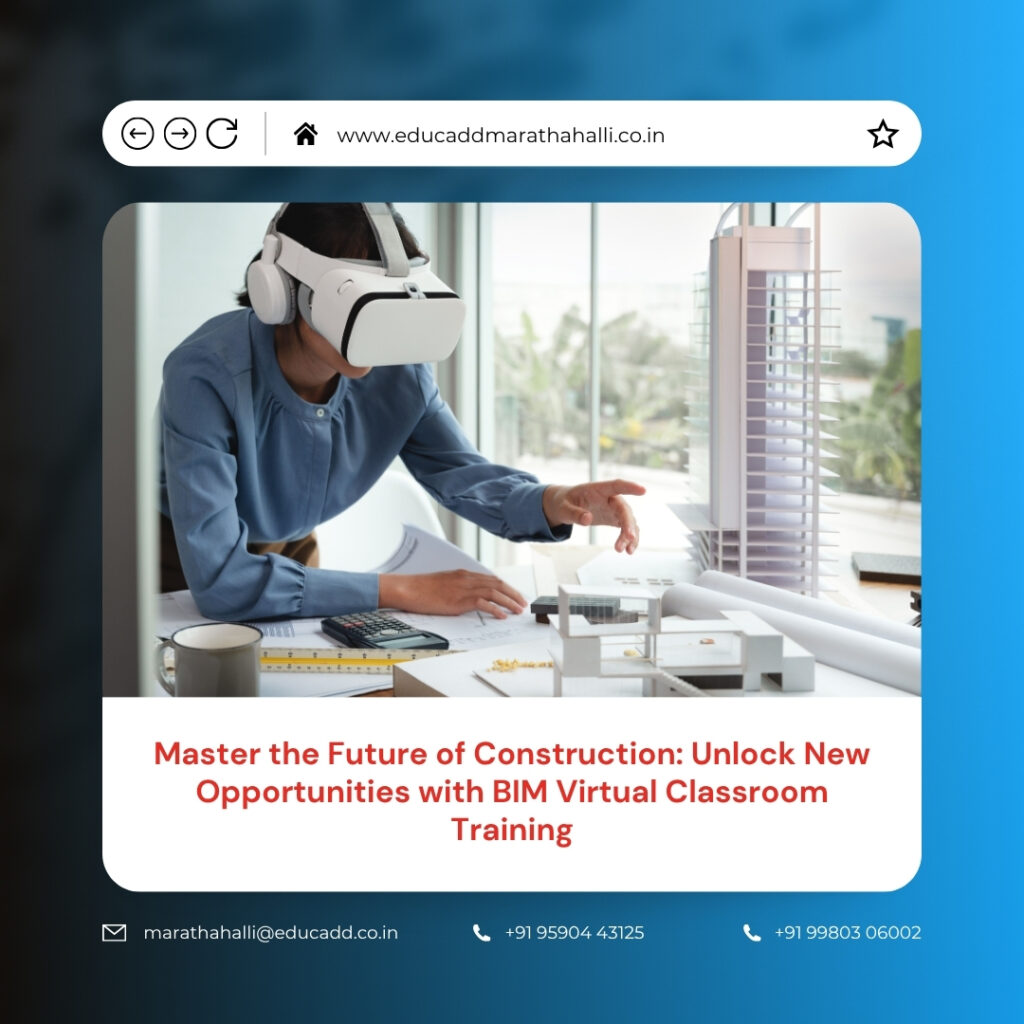
BIM Virtual Classroom Training
It enables students, architects, engineers, designers, and construction professionals to acquire industry-relevant skills from the comfort of their homes. With expert-led instruction, interactive sessions, and practical project exposure, virtual BIM training offers a convenient pathway toward career growth and professional excellence in the modern construction landscape.
Understanding the Significance of BIM in the Digital Construction Era
Building Information Modeling is much more than a software application; it is a comprehensive process that enables professionals to create, manage, and utilize intelligent digital representations of buildings and infrastructure assets. Unlike conventional drafting methods that rely heavily on separate drawings and documents, BIM integrates all project information into a centralized model. This allows stakeholders to access accurate data throughout the project lifecycle. As a result, decision-making becomes faster, collaboration improves, and costly errors are minimized.
Organizations worldwide are adopting BIM standards to enhance project performance and achieve better outcomes. Therefore, individuals equipped with BIM expertise are becoming highly valuable assets in the architecture, engineering, and construction industries.
How BIM Virtual Classroom Training Revolutionizes Learning
The traditional classroom model has served educational institutions for decades, but technological advancements have introduced more flexible and accessible learning methods. BIM virtual classroom training combines the benefits of live instruction with the convenience of online education. Through virtual platforms, learners can attend real-time sessions, interact with instructors, participate in discussions, and complete hands-on exercises without the need to travel. This approach creates an engaging educational experience while maintaining the structure of a professional training environment.
Furthermore, learners gain immediate access to demonstrations, project files, and support materials, making the entire learning process more effective and interactive.
Flexibility and Convenience for Modern Learners
One of the primary reasons professionals choose online BIM education is flexibility. Many individuals struggle to balance work responsibilities, personal commitments, and skill development simultaneously. Virtual classroom training addresses this challenge by allowing learners to attend sessions from any location with an internet connection. Whether someone is a college student, a working engineer, or a construction professional seeking career advancement, virtual learning provides the freedom to study without disrupting daily routines.
Additionally, recorded sessions often allow participants to revisit lessons whenever necessary, ensuring that important concepts can be reviewed and understood thoroughly. Consequently, learners can progress at their own pace while still benefiting from structured instruction.
Developing Practical BIM Skills for Real-World Projects
A quality BIM training program focuses heavily on practical application rather than theoretical concepts alone. Students gain experience working on industry-oriented projects that simulate real construction scenarios. Through these projects, they learn how to create accurate models, manage project information, coordinate multiple disciplines, and produce detailed documentation. Practical training strengthens technical proficiency while helping learners understand how BIM methodologies are applied in professional environments.
By working on realistic assignments, participants build confidence and develop problem-solving abilities that are highly valued by employers. This hands-on experience ultimately bridges the gap between education and workplace expectations.
Learning Industry-Standard BIM Software and Tools
Modern BIM workflows rely on specialized software platforms designed to streamline project development and collaboration. During virtual classroom training, students are introduced to tools commonly used across the architecture, engineering, and construction sectors. They learn how to create intelligent models, perform design coordination, manage project data, and generate construction documentation efficiently. Exposure to these software applications enhances technical capabilities and prepares learners for industry demands.
Moreover, understanding multiple BIM tools increases professional versatility and broadens employment opportunities. As technology continues to evolve, software proficiency remains an essential component of career success within the construction industry.
Enhancing Collaboration and Communication Skills
Construction projects involve numerous stakeholders, including architects, structural engineers, MEP consultants, contractors, and project managers. Effective communication among these professionals is critical for successful project delivery. BIM methodologies facilitate collaboration by enabling all team members to access and contribute to a shared digital model.
Virtual classroom training introduces learners to collaborative workflows that reflect actual industry practices. Students gain experience coordinating with different disciplines, sharing project information, and resolving conflicts within digital environments. Consequently, they develop communication and teamwork skills that support successful participation in multidisciplinary projects and modern workplace settings.
Access to Expert Guidance and Industry Knowledge
One of the most valuable aspects of BIM virtual classroom training is direct access to experienced instructors. These professionals often possess extensive industry backgrounds and practical expertise gained from real projects. During live sessions, students can ask questions, seek clarification, and receive personalized guidance tailored to their learning needs. Instructors frequently share practical insights, best practices, and professional experiences that extend beyond textbook concepts.
Such exposure helps learners understand industry expectations and current trends. As a result, students not only acquire technical skills but also gain valuable knowledge about the professional realities of working within BIM-driven environments.
Expanding Career Opportunities Through BIM Expertise
The growing adoption of BIM across global construction markets has created significant demand for skilled professionals. Organizations are actively seeking candidates who can contribute to digital project delivery and improve operational efficiency. BIM expertise opens doors to various career paths, including modeling, coordination, project management, design consulting, and information management.
Professionals with BIM knowledge often enjoy better employment prospects and increased earning potential. Furthermore, BIM skills are transferable across multiple sectors, including commercial construction, residential development, infrastructure projects, and facility management. Therefore, investing in BIM education can provide substantial long-term career benefits.
Supporting Project Efficiency and Quality Improvement
Construction projects frequently encounter challenges such as design conflicts, communication breakdowns, scheduling issues, and budget overruns. BIM helps address these problems by providing a centralized source of project information that supports informed decision-making. Through virtual classroom training, learners understand how BIM contributes to greater project efficiency and quality assurance. They discover how clash detection identifies conflicts before construction begins, reducing costly rework and delays.
Additionally, BIM enables better coordination between disciplines and improves resource allocation throughout the project lifecycle. Consequently, trained professionals play a crucial role in enhancing project outcomes and organizational performance.
Cost-Effective Learning Without Geographic Limitations
Traditional classroom training often requires commuting, accommodation expenses, and significant time commitments. Virtual learning eliminates many of these barriers, making professional education more accessible and affordable. Students can attend classes from their homes while maintaining existing work schedules and personal responsibilities. This convenience reduces overall training costs while delivering high-quality instruction and practical learning experiences.
Furthermore, virtual classrooms allow participants from different regions and countries to learn together, creating diverse educational environments. Such accessibility ensures that more individuals can pursue career advancement opportunities regardless of their geographic location.
Building a Professional Portfolio That Attracts Employers
Employers increasingly seek evidence of practical competence when evaluating job candidates. As a result, a strong portfolio can significantly improve employment prospects. BIM virtual classroom training often includes project assignments that enable students to showcase their skills and accomplishments. These projects demonstrate proficiency in modeling, coordination, visualization, documentation, and project management processes. A well-developed portfolio provides tangible proof of technical capabilities and highlights a candidate’s readiness for professional responsibilities.
Moreover, portfolio projects can serve as valuable discussion points during interviews, helping applicants communicate their expertise more effectively to potential employers.
Key Portfolio Benefits
- Demonstrates practical BIM skills through completed projects.
- Provides evidence of technical proficiency to prospective employers.
Staying Ahead of Emerging Industry Trends
The construction industry continues to evolve through advancements such as digital twins, artificial intelligence, cloud-based collaboration, and smart infrastructure technologies. BIM serves as the foundation for many of these innovations, making it an essential skill for future-ready professionals. Virtual classroom programs regularly update their curricula to incorporate emerging trends and industry developments.
This ensures that learners remain aligned with current market demands and technological advancements. By understanding modern digital workflows and evolving construction technologies, students position themselves for sustained success in a rapidly changing professional environment.
Why BIM Virtual Classroom Training Represents the Future of Professional Education
The future of education increasingly emphasizes accessibility, flexibility, and practical relevance. BIM virtual classroom training embodies these principles by providing high-quality instruction that aligns with industry needs. Learners benefit from expert guidance, collaborative learning environments, and hands-on project experience without geographical constraints. Furthermore, virtual education mirrors the remote collaboration practices commonly used within modern construction projects.
This prepares students not only to use BIM tools effectively but also to thrive in digitally connected workplaces. As organizations continue embracing digital transformation, professionals trained through virtual BIM programs will remain well-positioned to capitalize on emerging opportunities and contribute meaningfully to industry innovation.
Advantages of Virtual BIM Learning
- Learn from industry experts regardless of location.
- Gain practical experience through interactive project-based training.
Developing Confidence Through Continuous Practice and Project Exposure
Confidence is often the defining factor that separates knowledgeable individuals from truly effective professionals. While theoretical understanding forms a solid foundation, practical experience transforms that knowledge into actionable expertise. BIM virtual classroom training emphasizes continuous practice through assignments, simulations, and real-world project exercises that allow learners to apply concepts repeatedly. As students work through increasingly complex scenarios, they develop the ability to solve problems independently, manage project information efficiently, and communicate effectively with multidisciplinary teams.
This consistent exposure to practical challenges strengthens both technical competence and professional confidence. Over time, learners become comfortable handling responsibilities commonly encountered in architecture, engineering, and construction environments, making them more attractive to employers and better prepared for long-term career success.
Conclusion
The construction industry is moving steadily toward a fully digital future, and Building Information Modeling remains at the center of this transformation. Professionals who invest in BIM education today are preparing themselves for the opportunities of tomorrow. BIM Virtual Classroom Training offers an ideal combination of flexibility, accessibility, expert instruction, and practical skill development. Through comprehensive learning experiences, students gain the knowledge needed to excel in design, coordination, project management, and digital construction workflows.
Whether you are beginning your professional journey or seeking to enhance your existing qualifications, BIM training provides a valuable pathway toward career growth and industry recognition. By embracing virtual BIM education, individuals can acquire future-ready skills, expand their career opportunities, and confidently contribute to the next generation of construction and infrastructure development.

