
Beyond Aesthetics: How BIM Applications in Interior Design Redefine Intelligent Space Creation
Interior design today demands far more than selecting finishes and arranging furniture. Clients expect precision, efficiency, sustainability, and immersive visualization before construction even begins. At the same time, projects have become more complex due to advanced building systems, tighter budgets, and shorter timelines. In this dynamic environment, digital transformation plays a decisive role. One of the most powerful technologies reshaping the industry is BIM Interior Design Applications.
BIM Applications in Interior Design combine creative freedom with data-driven intelligence. Rather than working with disconnected drawings, designers develop coordinated digital models that contain geometry, material data, specifications, and performance insights. Every design decision reflects across the entire project instantly. This unified workflow minimizes errors, enhances collaboration, and supports informed planning.
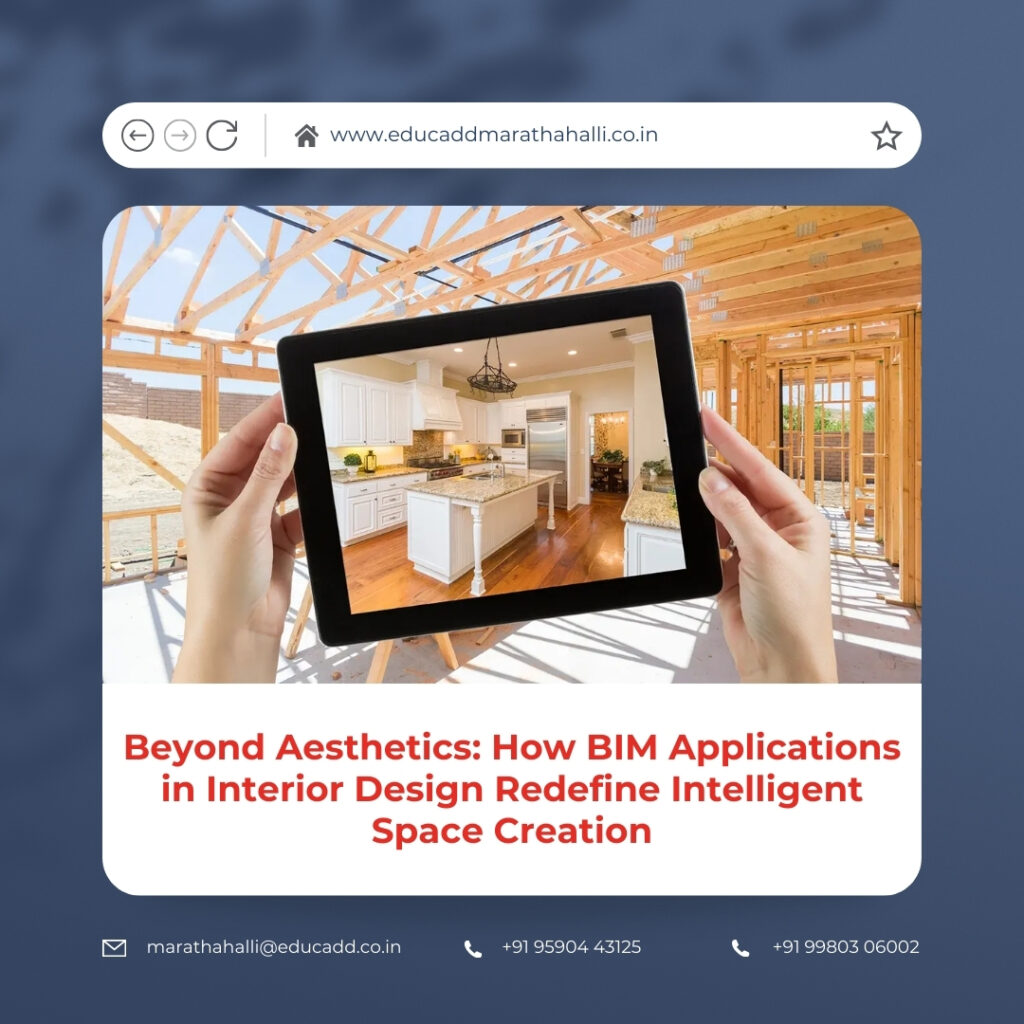
BIM Interior Design Applications
In the following comprehensive discussion, we explore how BIM Applications in Interior Design influence every phase of a project—from concept development to facility management. Each section explains practical advantages, workflow improvements, and strategic benefits in detail.
1. The Digital Evolution of Interior Design Practices
Interior design once relied heavily on hand-drawn sketches and isolated CAD files. While those tools supported creativity, they often created coordination challenges. Designers spent significant time revising drawings after each modification. Misalignment between plans and elevations frequently led to confusion during construction.
BIM Interior Design Applications introduced a model-based approach that changed this traditional workflow. Designers now create intelligent objects rather than simple lines. Walls, ceilings, lighting fixtures, and furniture elements carry embedded parameters. These parameters include material properties, dimensions, and technical specifications.
When designers modify one component, the entire model updates automatically. This dynamic environment saves time and eliminates repetitive adjustments. Consequently, teams can focus on refining spatial experiences instead of correcting documentation inconsistencies. The transition to BIM marks a major shift toward efficiency and precision in interior design practice.
2. Intelligent Space Planning with Real-Time Analysis
Effective space planning forms the foundation of successful interiors. Designers must balance functionality, aesthetics, safety, and circulation within limited areas. BIM Applications in Interior Design enhance this process by enabling real-time evaluation of spatial relationships.
Through intelligent modeling, designers test multiple layout alternatives quickly. They analyze movement flow, furniture placement, and zoning strategies without redrawing plans repeatedly. The model provides instant feedback regarding clearances and accessibility standards.
Moreover, designers can simulate user interactions within the digital space. This allows them to optimize comfort and efficiency early in the design phase. As a result, projects move forward with greater confidence and fewer design conflicts during construction.
3. Advanced Visualization and Immersive Client Engagement
Client approval often depends on visualization quality. Traditional 2D drawings require imagination, which sometimes leads to misunderstandings. BIM Applications in Interior Design address this challenge by generating detailed 3D views and high-quality renderings.
Designers present lifelike representations of materials, lighting effects, textures, and spatial depth. Clients can virtually walk through their future interiors and experience design concepts before execution begins. This immersive approach strengthens communication and accelerates decision-making.
Additionally, virtual reality tools integrate seamlessly with BIM platforms. Clients gain a deeper emotional connection with the design. Consequently, feedback becomes more precise and constructive. The result is a smoother approval process and stronger professional relationships.
4. Precision in Quantity Take-Off and Budget Management
Financial transparency remains essential in interior projects. Even small estimation errors can disrupt budgets. BIM Applications in Interior Design provide automated quantity extraction directly from the model.
Designers generate accurate schedules for flooring materials, partitions, paint finishes, and ceiling systems. Whenever they revise the design, the quantities update automatically. This real-time accuracy reduces cost discrepancies and enhances trust with clients.
Furthermore, BIM models integrate with cost estimation software. This connection allows designers to evaluate financial implications instantly. By aligning design creativity with budget control, teams maintain balance throughout the project lifecycle.
5. Collaborative Coordination Across Disciplines
Interior projects involve collaboration with architects, structural consultants, and mechanical engineers. Poor coordination can result in costly site conflicts. BIM Applications in Interior Design enable seamless multidisciplinary collaboration through shared digital environments.
Designers detect clashes between ceiling features and mechanical ducts during the modeling stage. They resolve issues proactively rather than reacting during construction. This early coordination prevents delays and reduces on-site rework.
Cloud-based BIM systems further enhance teamwork. Stakeholders access synchronized updates from different locations. This transparency fosters accountability and ensures everyone works from the latest information.
6. Automated Documentation and Drawing Consistency
Documentation demands precision and consistency. In traditional workflows, designers manually updated multiple drawing sheets after every revision. This process consumed time and increased the risk of inconsistencies.
BIM Interior Design Applications automate drawing generation from a single integrated model. Plans, sections, elevations, and schedules remain interconnected. When designers modify the model, all related documentation updates instantly.
This streamlined workflow enhances efficiency while maintaining accuracy. Designers spend more time refining aesthetics and less time correcting drafting errors. Consequently, documentation quality improves significantly.
7. Sustainable Design Integration and Environmental Insight
Sustainability has become a defining priority in modern interiors. Designers must evaluate environmental impact alongside visual appeal. BIM Applications in Interior Design support sustainable decision-making through integrated analysis tools.
Designers assess daylight penetration, thermal performance, and material lifecycle data within the model. This analytical capability encourages responsible material selection and energy-efficient planning.
Moreover, accurate quantity calculation reduces material waste. Sustainable practices not only benefit the environment but also enhance brand reputation. Clients increasingly value eco-conscious interiors, making BIM-driven sustainability a strategic advantage.
8. Detailed Custom Furniture and Joinery Modeling
Custom millwork and bespoke furniture define many interior projects. BIM Applications in Interior Design enable precise parametric modeling of these elements. Designers specify dimensions, materials, hardware, and finishes within the digital environment.
Manufacturers receive detailed fabrication information directly from the model. This reduces misinterpretation and improves production accuracy. Additionally, parametric tools allow designers to adjust dimensions easily without rebuilding components.
Such flexibility accelerates design iterations and ensures customization aligns with functional requirements. Precision modeling strengthens both creativity and practicality.
9. Construction Sequencing and Timeline Integration
Time management influences overall project success. BIM Applications in Interior Design integrate scheduling features that align model components with construction timelines.
Designers visualize installation sequences and coordinate with contractors effectively. This proactive planning identifies potential bottlenecks before execution begins.
By linking the model with time-based data, teams improve resource allocation and workflow organization. As a result, projects progress smoothly and meet deadlines more reliably.
10. Error Reduction and Quality Assurance
Mistakes in interior projects often arise from outdated drawings or miscommunication. BIM Applications in Interior Design centralize project data within one coordinated platform.
Automated clash detection identifies spatial conflicts early. Designers correct issues before they reach the construction site. This preventive strategy minimizes costly rework and enhances build accuracy.
Quality assurance becomes systematic rather than reactive. Teams deliver projects with higher precision and stronger reliability.
11. Integration with Facility Management Systems
The value of BIM continues even after project completion. BIM Applications in Interior Design store maintenance data within the digital model. Facility managers access information about finishes, fixtures, and equipment throughout the building’s lifecycle.
This data supports maintenance scheduling, renovation planning, and asset tracking. Instead of relying on paper documents, managers reference an intelligent digital repository.
Designers who adopt BIM provide long-term value beyond aesthetics. They deliver a comprehensive digital asset that supports operational efficiency.
12. Improved Compliance with Building Codes and Standards
Interior designers must adhere to safety regulations and accessibility guidelines. BIM Applications in Interior Design include rule-based validation tools that check compliance automatically.
Designers verify dimensions, fire safety requirements, and accessibility standards within the model. Early detection of non-compliance prevents legal complications and project delays.
This proactive approach strengthens professional credibility. Clients gain confidence knowing their project meets regulatory expectations from the beginning.
13. Business Growth and Market Differentiation
Technology adoption influences competitive positioning. Firms that implement BIM Interior Design Applications demonstrate innovation and efficiency. Clients increasingly prefer partners who deliver data-driven accuracy alongside creativity.
BIM reduces turnaround time and enhances workflow transparency. Firms manage multiple projects simultaneously without compromising quality.
Moreover, high-quality visualizations and coordinated documentation improve proposal presentations. This strengthens brand image and supports long-term growth.
14. The Future of BIM in Interior Innovation
The future of interior design will integrate advanced technologies such as artificial intelligence, cloud collaboration, and digital twins. BIM Applications in Interior Design will continue evolving to support predictive analytics and real-time building performance monitoring.
Designers will analyze occupant behavior and optimize layouts based on data insights. Augmented reality will enhance visualization further. Cloud platforms will facilitate global collaboration without geographical limitations.
As innovation accelerates, interior professionals who embrace BIM remain prepared for emerging challenges. The integration of creativity and digital intelligence defines the next era of design excellence.
Conclusion
BIM Interior Design Applications represent a transformative advancement in how designers conceptualize, coordinate, and execute projects. By combining intelligent modeling with collaborative workflows, BIM enhances precision, efficiency, and sustainability. Designers gain control over data, budgets, timelines, and documentation within a unified digital environment.
Beyond technical benefits, BIM strengthens client communication and supports long-term facility management. It reduces errors, improves compliance, and drives business growth. As the industry evolves, professionals who adopt BIM Applications in Interior Design position themselves at the forefront of innovation. Through this technology, interior design transcends aesthetics and becomes a data-driven discipline that delivers smarter, more resilient, and future-ready spaces.

