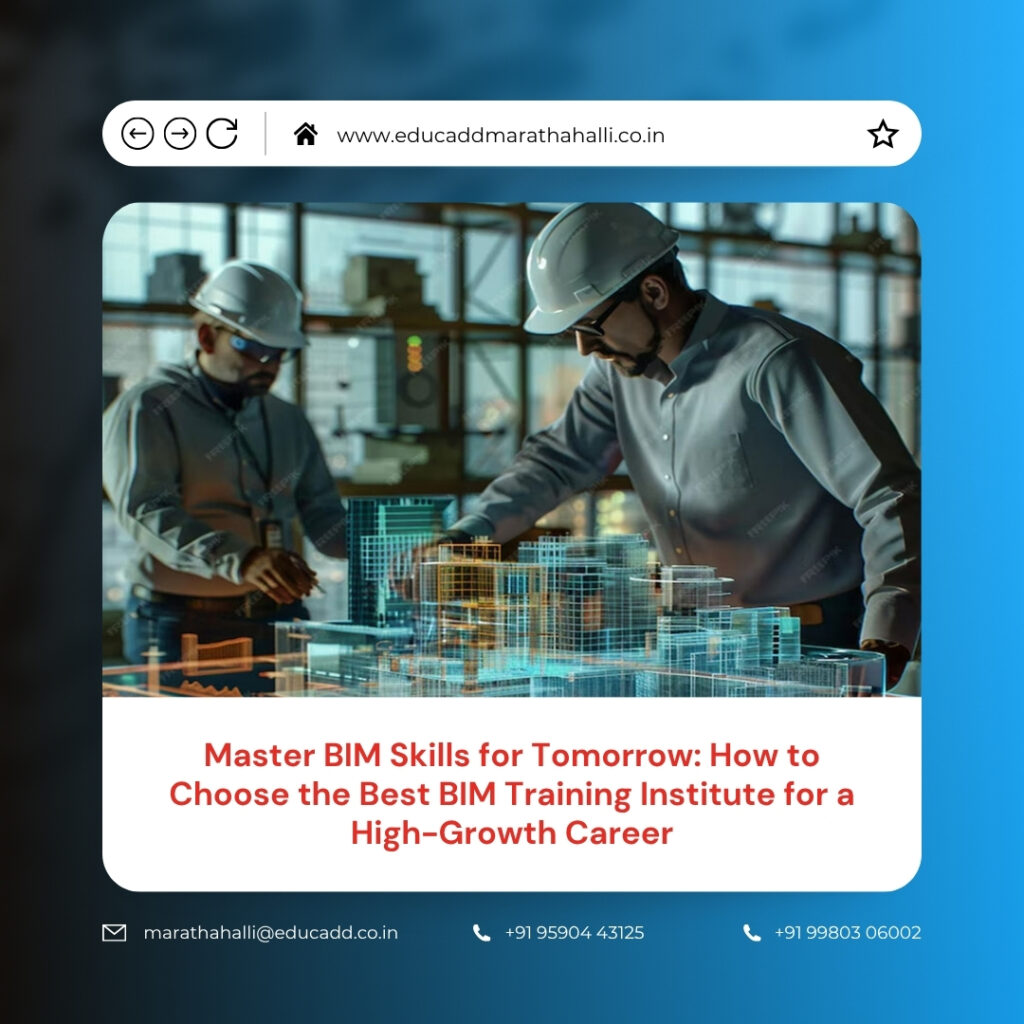
Master BIM Skills for Tomorrow: How to Choose the Best BIM Training Institute for a High-Growth Career
As this transformation continues, the need for skilled BIM professionals is rising rapidly. However, success in this field depends heavily on the quality of training you receive. Selecting the Best BIM Training Institute is not just a simple choice; it is a strategic decision that can shape your entire career. This detailed guide explores every aspect of BIM education and helps you understand how to choose the best training institute to build a future-proof career.
Best BIM Training Institute
The construction industry is entering a new era where digital precision and smart workflows define success. Traditional methods are gradually being replaced by advanced technologies that improve efficiency, reduce costs, and enhance collaboration. Among these innovations, Building Information Modeling (BIM) has emerged as a game-changing approach. It is transforming how buildings and infrastructure projects are designed, executed, and managed.
1. Understanding the Core Concept of BIM
Building Information Modeling is more than just creating 3D models. It is a comprehensive process that integrates data, design, and collaboration into a unified system. BIM allows professionals to visualize a project before it is built, detect potential issues early, and optimize every stage of construction.
Unlike traditional drafting methods, BIM includes intelligent data that can be updated in real time. This ensures accuracy and consistency throughout the project lifecycle. As a result, organizations prefer professionals who are trained in BIM workflows. Learning these concepts from a reputed institute helps you build a strong foundation and prepares you for real-world applications.
2. Why BIM Skills Are in High Demand
The global construction sector is expanding at a steady pace, and digital transformation is driving this growth. Governments and private developers are increasingly adopting BIM standards to improve project outcomes. This shift has created a strong demand for professionals who can manage digital construction processes effectively.
Companies are actively searching for individuals who can handle complex models, coordinate with multiple teams, and deliver accurate project data. Skilled BIM professionals are not only in demand locally but also internationally. This makes BIM a highly rewarding career path with long-term growth potential.
3. What Defines a Top BIM Training Institute
Not all training institutes offer the same level of quality. A top BIM training institute stands out due to its structured approach, experienced faculty, and industry-focused curriculum. It ensures that students gain both theoretical knowledge and practical skills.
A strong institute focuses on real-world applications rather than just software training. It prepares students to handle actual project challenges. By choosing a reputed institute, learners can gain confidence and improve their chances of securing high-paying jobs in the construction industry.
4. Importance of a Well-Structured Curriculum
The curriculum plays a crucial role in shaping your learning experience. A well-designed BIM course covers all essential aspects, including architectural modeling, structural design, and MEP systems. It also introduces students to project coordination and data management.
Institutes that regularly update their syllabus ensure that students stay aligned with industry trends. This approach helps learners acquire relevant skills that are immediately applicable in the workplace. A strong curriculum is the foundation of successful BIM training.
5. Role of Hands-On Training in Skill Development
Practical learning is essential for mastering BIM concepts. While theoretical knowledge provides understanding, hands-on training builds confidence and expertise. Working on live projects allows students to apply what they have learned and gain valuable experience.
A good training institute emphasizes project-based learning. This approach helps students understand real-world scenarios and develop problem-solving skills. It also prepares them for job interviews and professional responsibilities.
6. Value of Certifications in BIM Careers
Certifications are an important part of professional growth. They validate your skills and demonstrate your expertise to potential employers. A recognized BIM certification can significantly enhance your career prospects.
Many companies prefer candidates who have completed certified training programs. These certifications act as proof of your knowledge and commitment to the field. Investing in a certified course is a smart step toward building a successful career.
7. Placement Support and Career Guidance
One of the key benefits of joining a reputed BIM training institute is the availability of placement support. Institutes with strong industry connections can help students find job opportunities in leading companies.
Career guidance services often include resume preparation, interview training, and job referrals. These services make it easier for students to transition from learning to employment. A good placement support system increases the chances of securing a rewarding job.
8. Software Skills You Will Gain During Training
BIM training involves learning various software tools that are widely used in the construction industry. These tools help professionals create detailed models, analyze data, and manage projects efficiently.
Some commonly used software includes Revit, Navisworks, and AutoCAD. Learning these tools enables students to work on complex projects and collaborate with teams effectively. Strong software skills are essential for career advancement in BIM.
9. Learning from Industry Experts
The experience of trainers plays a significant role in the learning process. Trainers with industry experience bring practical insights that cannot be found in textbooks. They share real-world examples and guide students through complex scenarios.
Learning from experts helps students understand industry expectations and avoid common mistakes. It also provides valuable exposure to current trends and best practices. This mentorship is crucial for building a strong career foundation.
10. Flexible Learning Options for Modern Learners
Today’s learners have different needs and schedules. A good BIM training institute offers flexible learning options to accommodate everyone. These options may include classroom training, online sessions, and hybrid models.
Flexible learning allows students and working professionals to balance their studies with other commitments. It also makes education more accessible and convenient. This approach ensures that more people can benefit from BIM training.
11. Evaluating Cost and Return on Investment
The cost of training is an important factor, but it should not be the only consideration. Instead, students should focus on the value they receive from the course. Quality training, practical exposure, and placement support provide long-term benefits.
Choosing a cheaper course with limited resources may not deliver the desired results. On the other hand, investing in a reputed institute can lead to better job opportunities and higher salaries. A well-planned investment in education always pays off.
12. Career Paths After Completing BIM Training
Completing a BIM course opens up a wide range of career opportunities. Professionals can work in architecture firms, construction companies, and engineering consultancies. They can also explore roles in project management and coordination.
Some popular career options include BIM Modeler, BIM Coordinator, and BIM Manager. These roles offer attractive salaries and opportunities for growth. With experience, professionals can take on leadership positions and manage large-scale projects.
13. Global Career Opportunities in BIM
BIM is a globally recognized technology, and its adoption is increasing worldwide. Many countries have made BIM mandatory for large-scale infrastructure projects. This has created a demand for skilled professionals across international markets.
Professionals trained in BIM can explore opportunities in countries like the USA, UK, UAE, and Australia. Working on global projects enhances skills and provides exposure to advanced technologies. It also opens doors to higher earning potential.
14. Future Trends in BIM and Digital Construction
The future of BIM is closely linked with emerging technologies. Innovations such as artificial intelligence, virtual reality, and digital twins are being integrated into BIM workflows. These advancements are transforming the construction industry.
Professionals who stay updated with these trends will have a competitive advantage. Continuous learning and skill development are essential for long-term success. BIM is not just a current trend; it is the future of construction.
Conclusion
The journey toward a successful career in Best BIM Training Institute. By choosing a reputable institute, you gain access to quality education, practical experience, and valuable industry connections. These factors play a crucial role in shaping your professional future.
As the construction industry continues to evolve, BIM skills will remain in high demand. Investing in the right training today can help you secure a stable and rewarding career tomorrow. With dedication, continuous learning, and the right guidance, you can become a successful BIM professional and contribute to the future of smart construction.

