
Elevating Interiors with AutoCAD for Kitchen & Bath Design: A Specialized Skill for Modern Living
Designing kitchens and bathrooms requires much more than creativity. These spaces demand precision, technical knowledge, and a clear vision. That is why AutoCAD for kitchen & bath design has become an essential specialized skill. With this tool, designers transform ideas into accurate layouts, detailed elevations, and realistic 3D presentations.
Unlike simple design software, AutoCAD offers a professional edge. It allows accurate space planning, integrates fixtures and appliances, and ensures smooth communication with contractors. Today, clients expect more than imagination—they want technical precision that guarantees functionality and style. Designers who master AutoCAD for kitchen & bath design meet these expectations with confidence.
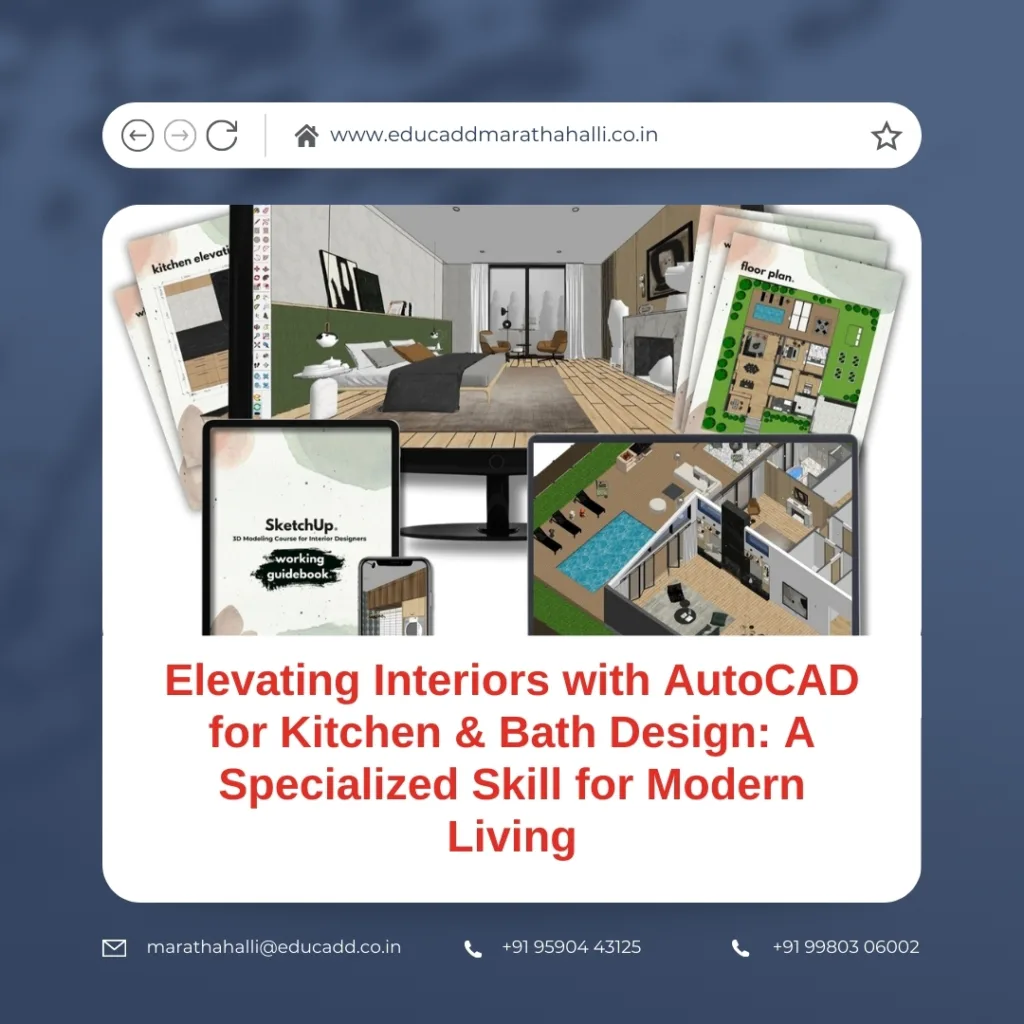
AutoCAD Kitchen Bath Design
This blog explores the importance of AutoCAD in kitchen and bath projects, its professional benefits, how to learn it effectively, career opportunities it creates, and its future relevance.
The Importance of AutoCAD for Kitchen & Bath Design
Kitchens and bathrooms are the most function-driven spaces in a home. Every cabinet, faucet, and appliance must be positioned with care. Traditional drafting methods often fail to capture such complexity, but AutoCAD handles it with ease.
Designers using AutoCAD for kitchen & bath design can create layouts that maximize space efficiency. Whether arranging work triangles in kitchens or planning bathroom clearances, the software ensures compliance with ergonomic standards. Even small adjustments, like moving a sink or altering cabinet height, are handled smoothly without redrawing the entire plan.
Another important aspect is accuracy. Kitchens and bathrooms involve plumbing, electrical work, and custom cabinetry. Small errors can lead to costly construction issues. AutoCAD eliminates these risks by producing exact, to-scale drawings. Contractors and carpenters depend on these layouts, reducing on-site confusion and delays.
Finally, AutoCAD speeds up revisions. Clients often request design modifications. With this software, designers can make changes instantly and present updated drawings. This saves valuable time, builds trust, and improves project efficiency.
Advantages of AutoCAD for Kitchen & Bath Professionals
Professionals who adopt AutoCAD for kitchen & bath design enjoy a long list of benefits. These advantages strengthen their market position and enhance their credibility.
1. Unmatched Precision
Accuracy is critical in kitchens and bathrooms. Cabinet gaps, appliance spacing, and plumbing points must align perfectly. AutoCAD delivers exact measurements, reducing construction errors.
2. Efficient Communication
Clear communication makes projects run smoothly. AutoCAD drawings provide contractors, plumbers, and electricians with detailed references. Misunderstandings reduce significantly, saving both time and money.
3. Boosted Creativity with Structure
Far from limiting imagination, AutoCAD provides a base where creativity flourishes. Designers can explore innovative layouts while maintaining practical accuracy. A curved countertop or custom cabinet idea fits seamlessly into the structured plan.
4. Time-Saving Modifications
In real projects, changes are inevitable. AutoCAD simplifies modifications. Designers can resize cabinets, reposition fixtures, or adjust flooring layouts within minutes.
5. Client Confidence through Visualization
Clients want to “see” their future kitchen or bathroom. AutoCAD integrates with 3D tools, producing realistic visualizations. These presentations inspire confidence and improve approval rates.
6. Competitive Professional Edge
In a crowded industry, standing out is vital. Knowledge of AutoCAD for kitchen & bath design demonstrates technical expertise. This specialization helps professionals attract high-value projects.
By combining accuracy, speed, and creativity, AutoCAD positions professionals as reliable and future-ready.
Learning Path for AutoCAD in Kitchen & Bath Design
Although AutoCAD is widely used across industries, applying it to kitchens and bathrooms requires specialized learning. Professionals must understand design standards, space optimization, and real-world detailing.
1. Study Ergonomics and Guidelines
Effective kitchens depend on the work triangle concept, while bathrooms follow clearance rules for fixtures. AutoCAD allows integration of these ergonomic standards into layouts.
2. Cabinetry and Storage Expertise
Cabinets dominate kitchen and bath design. AutoCAD enables detailed elevations and sectional drawings for cabinetry. These plans help carpenters create accurate final products.
3. Integration of Appliances and Fixtures
Every kitchen and bathroom includes sinks, faucets, ovens, lighting, and more. Designers can place actual product dimensions into AutoCAD layouts. This ensures realistic design outcomes.
4. Specialized Training Courses
Several institutes offer courses focused on AutoCAD for kitchen & bath design. These programs cover drafting techniques, 3D modeling, and project simulations. Training helps professionals apply concepts confidently.
5. Hands-On Project Practice
Theory alone isn’t enough. Designers must apply skills on real projects. From small remodels to full-scale designs, practice builds speed and accuracy.
With structured learning and consistent practice, professionals gain mastery over this specialized application of AutoCAD.
Career Opportunities with AutoCAD in Kitchen & Bath Design
Demand for skilled designers continues to grow, especially in kitchens and bathrooms. Homeowners expect precision, and firms value professionals who can deliver it. Mastery of AutoCAD for kitchen & bath design creates strong career opportunities.
1. Independent Kitchen & Bath Specialists
Freelancers can work directly with homeowners. Offering AutoCAD-driven layouts ensures professional service that sets them apart from competitors.
2. Interior Design Firms
Design firms often need AutoCAD specialists who can handle technical drawings. Professionals with this skill become indispensable in multi-disciplinary teams.
3. Cabinetry and Fixture Companies
Manufacturers need professionals to create detailed installation drawings. AutoCAD-trained designers can support production and installation departments effectively.
4. Remodeling Businesses
Renovation companies benefit from precise layouts. AutoCAD ensures smooth execution during demolition, plumbing realignment, and cabinet installation.
5. Training and Education Roles
As demand for this specialization increases, experienced designers can also become trainers. Teaching AutoCAD for kitchen & bath design adds another revenue stream.
Clearly, career options extend beyond design firms, making this skill versatile and rewarding.
The Future of Kitchen & Bath Design with AutoCAD
The design industry is constantly evolving. AutoCAD continues to adapt, integrating with emerging technologies that make kitchens and bathrooms smarter and more sustainable.
1. Smart Home Integration
Connected kitchens and bathrooms are no longer futuristic. AutoCAD helps map layouts for IoT appliances, automated faucets, and lighting systems.
2. Sustainability and Eco-Conscious Planning
Designers can use AutoCAD to calculate material usage, optimize natural light, and plan water-efficient systems. Sustainable kitchens and bathrooms are becoming the new standard.
3. Immersive Client Experiences
With AutoCAD linked to VR tools, clients can virtually step into their new kitchen or bathroom. This immersive preview strengthens trust and decision-making.
4. Faster Customization
AutoCAD allows designers to build libraries of fixtures and cabinets. This speeds up customization while maintaining accuracy across projects.
5. Global Demand for Skilled Designers
Urban housing growth and luxury remodeling worldwide are driving demand. Professionals with AutoCAD for kitchen & bath design skills enjoy strong opportunities in global markets.
These advancements ensure that AutoCAD will remain vital for future-focused design professionals.
Conclusion
AutoCAD for kitchen & bath design has evolved into more than a drafting tool. It represents a specialized skill that blends creativity with technical accuracy. In kitchens and bathrooms, where every inch counts, this precision matters most.
By mastering AutoCAD, designers can deliver detailed layouts, professional elevations, and stunning 3D presentations. They gain a competitive edge in the market and open multiple career opportunities. From independent freelancing to corporate design firms, the scope is immense.
As technology advances, the future of kitchen and bath design will lean further on tools like AutoCAD. For professionals, this skill is no longer optional—it is essential for long-term success.
Investing time in learning AutoCAD for kitchen & bath design means investing in a career where innovation, accuracy, and client satisfaction meet seamlessly.

