
Build a Powerful Engineering Career: Master AutoCAD Civil with Assured Placement Opportunities
The construction and infrastructure industry is undergoing a rapid transformation driven by digital innovation and precision-based design. In this evolving landscape, engineers are expected to possess not only theoretical knowledge but also strong technical expertise in industry-standard software. One of the most in-demand tools in this domain is AutoCAD Civil, which plays a crucial role in planning, designing, and executing civil engineering projects. As a result, enrolling in an AutoCAD Civil Placement Course has become a strategic move for individuals who aim to secure a stable and rewarding career.
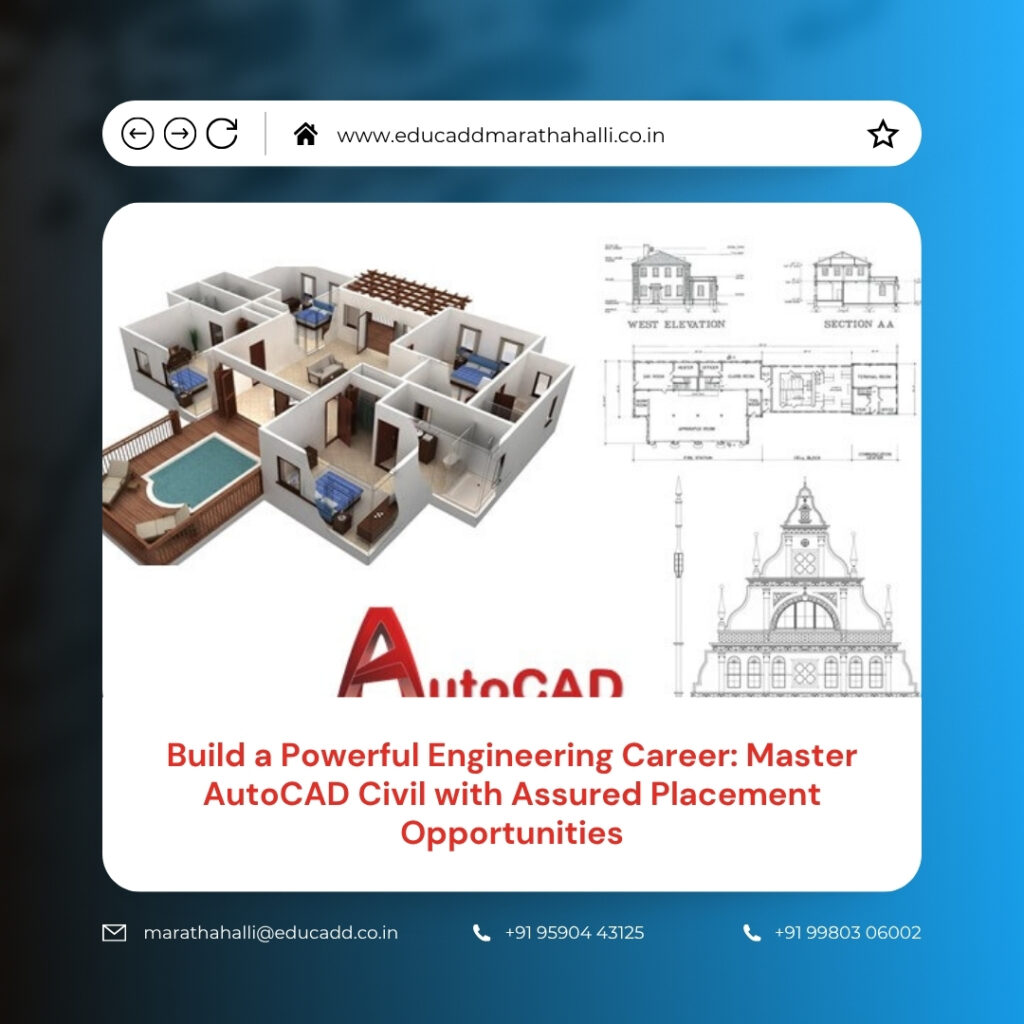
AutoCAD Civil Placement Course
Today, employers prefer candidates who are job-ready and capable of handling real-world projects from the beginning. This is where placement-oriented training programs stand out. They focus on practical learning, industry exposure, and career readiness. Whether you are a student, fresher, or working professional, such a course can help you gain a competitive advantage. In this detailed blog, you will explore every aspect of the course, including its benefits, structure, career scope, and long-term potential.
1. The Growing Relevance of AutoCAD Civil in Infrastructure Development
Modern infrastructure projects require accuracy, efficiency, and seamless collaboration. AutoCAD Civil has become an essential tool that enables engineers to meet these expectations effectively. It simplifies complex design processes and allows professionals to create detailed drawings with precision.
As urbanization continues to rise, the demand for well-planned roads, bridges, and drainage systems is increasing. Consequently, companies rely heavily on skilled professionals who can operate advanced design tools. Learning AutoCAD Civil ensures that you stay aligned with industry requirements and remain competitive in the job market.
2. Why Choose an AutoCAD Civil Course with Placement Support
A regular training program may provide theoretical knowledge, but it often lacks career-oriented guidance. In contrast, a placement-focused course prepares you for the job market by combining technical training with professional development.
These programs are designed to make students industry-ready. They include resume preparation, interview training, and direct job referrals. As a result, learners can transition smoothly from training to employment without facing major challenges.
3. Comprehensive Curriculum Tailored for Real-World Applications
The curriculum of an AutoCAD Civil course with placement is structured to cover both fundamental and advanced concepts. It ensures that learners gain a strong foundation while also developing specialized skills.
Key areas typically included are:
- Drafting techniques and 2D design fundamentals
- Land development and site planning
- Basic road design concepts
- Introduction to contour mapping and surveying
This well-rounded approach enables students to handle practical engineering tasks with confidence and efficiency.
4. Practical Learning Through Live Projects and Assignments
Hands-on experience is a vital component of effective learning. Most training institutes emphasize real-time projects to help students understand how concepts are applied in actual scenarios.
By working on case studies and assignments, learners gain valuable exposure to industry practices. This method not only improves technical skills but also enhances problem-solving abilities. Consequently, students become more confident in handling complex design challenges.
5. Career-Focused Training for Immediate Job Readiness
One of the standout features of an AutoCAD Civil course with placement is its focus on employability. The training goes beyond software skills and includes essential career preparation.
Students are guided on how to present their skills effectively during interviews. Mock interview sessions and communication workshops are often conducted to build confidence. Therefore, candidates are better prepared to secure job opportunities in reputed organizations.
6. Ideal Candidates for This Course
This course is suitable for a diverse group of learners who wish to build or enhance their careers in civil engineering.
- Engineering students looking for practical exposure
- Diploma holders aiming to improve their job prospects
Additionally, professionals already working in the field can enroll to upgrade their skills and explore better career opportunities.
7. Diverse Career Paths After Course Completion
Completing an AutoCAD Civil course with placement opens up a wide range of career opportunities. The construction sector offers multiple roles that require expertise in design and drafting.
Some popular job roles include:
- Civil Design Engineer
- CAD Technician
- Site Supervisor
- Structural Draftsman
These roles provide opportunities to work on large-scale projects and contribute to infrastructure development.
8. Salary Trends and Long-Term Growth Opportunities
Salary packages in this field vary depending on skills, experience, and location. However, even entry-level professionals can expect decent compensation.
With continuous learning and experience, individuals can move into higher positions with better pay. Moreover, specialization in advanced tools and technologies can further enhance career prospects and earning potential.
9. Importance of Certification for Professional Recognition
Certification plays a crucial role in establishing your credibility as a skilled professional. Employers often prefer candidates who have completed recognized training programs.
An AutoCAD Civil course with placement provides certification that validates your expertise. This not only improves your resume but also increases your chances of getting hired by top companies.
10. Expert Guidance and Supportive Learning Environment
A structured learning environment significantly impacts the quality of education. Experienced trainers provide valuable insights and mentorship throughout the course.
Interactive sessions, doubt-clearing classes, and personalized attention ensure that students fully understand each concept. This supportive approach enhances learning outcomes and builds confidence among learners.
11. Integration of Advanced Technology in Training
The construction industry is continuously evolving with the adoption of new technologies. AutoCAD Civil incorporates advanced features that simplify design and improve efficiency.
By learning these tools, students gain exposure to modern engineering practices. This helps them stay updated with industry trends and prepares them for future challenges.
12. Choosing the Right Institute for Maximum Benefits
Selecting the right training institute is a critical step in your learning journey. It directly influences your skill development and career opportunities.
Consider factors such as course content, trainer expertise, and placement success rate. Additionally, reviewing feedback from past students can help you make an informed decision.
13. Strategies to Excel in Your Training Program
Success in an AutoCAD Civil course requires consistent effort and dedication. Active participation and regular practice are essential for mastering the software.
Focus on understanding practical applications rather than just theoretical concepts. Work on projects, ask questions, and seek feedback from trainers. This proactive approach will help you build strong technical skills.
14. Future Scope and Industry Demand for Skilled Professionals
The demand for skilled AutoCAD Civil professionals is expected to grow significantly in the coming years. Infrastructure development and smart city projects are creating new opportunities.
As the industry continues to expand, professionals with advanced design skills will be highly valued. Therefore, investing in an AutoCAD Civil course with placement can lead to long-term career success and stability.
Conclusion
An AutoCAD Civil Placement Course is more than just a training program—it is a gateway to a successful engineering career. It combines technical learning with practical exposure and career support, ensuring that students are fully prepared for the job market.
By gaining expertise in AutoCAD Civil, you can position yourself as a valuable asset in the construction and infrastructure industry. Whether you are starting your career or looking to advance, this course offers the skills and opportunities needed to achieve your goals. With the right guidance and commitment, you can build a strong foundation for a rewarding and future-proof career.

