
Enhancing Product Reliability Through ANSYS Design Validation
In today’s fast-paced engineering landscape, product reliability and precision are critical. Companies cannot afford to release products that fail to meet performance standards or customer expectations. Errors in the design stage often result in costly rework, delays, and even safety hazards. This is why ANSYS Design Validation Benefits has become an essential step in modern product development.
ANSYS provides advanced simulation tools that allow engineers to assess designs virtually, optimize performance, and ensure accuracy before production begins. By simulating real-world conditions digitally, companies can reduce risks and enhance product quality efficiently.
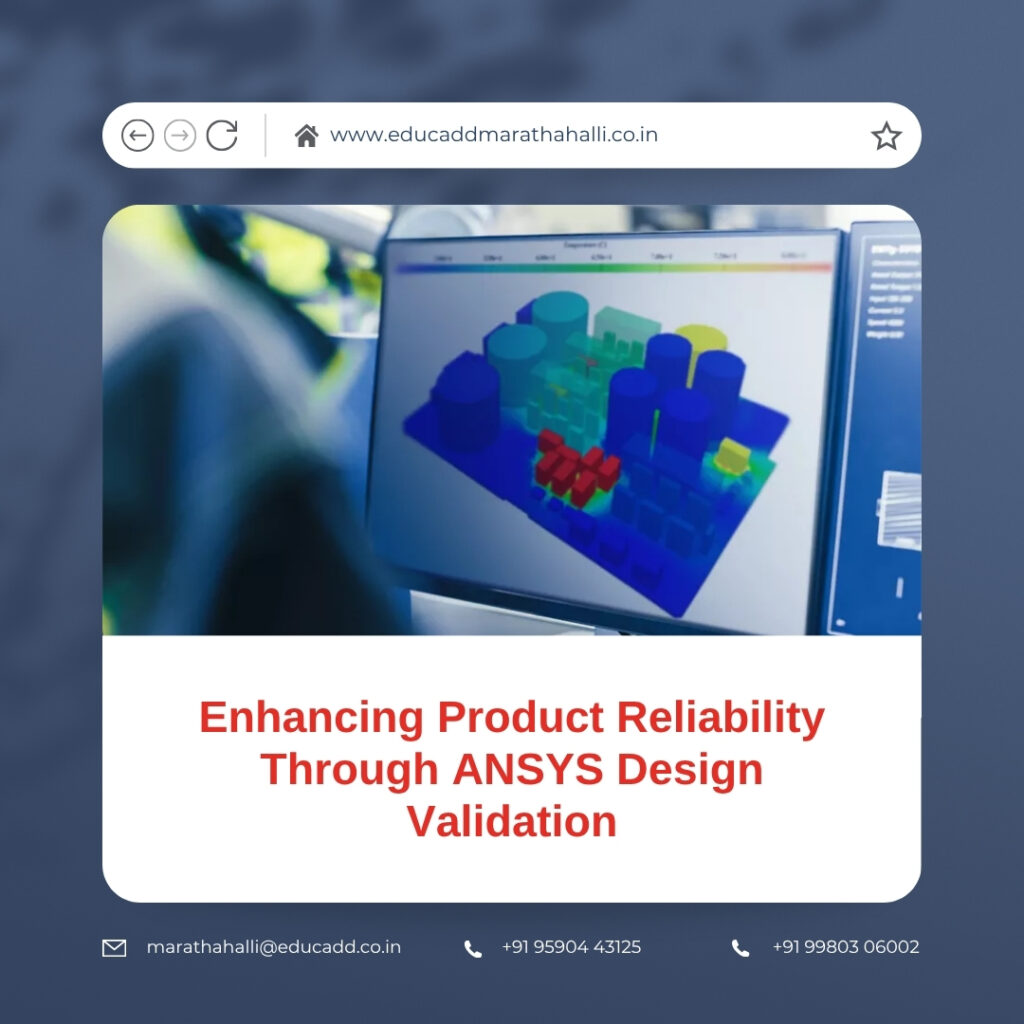
ANSYS Design Validation Benefits
This blog delves into the importance of ANSYS for design validation, its practical applications, and how it drives product accuracy across industries.
The Importance of Design Validation in Engineering
Every product starts as a concept, but translating ideas into reliable products is complex. Minor errors can become major issues if not addressed early. Traditional methods, such as physical prototyping, are time-consuming, expensive, and often fail to capture all performance variables.
ANSYS Design Validation Benefits solves this challenge by providing a virtual environment to test and analyze designs under realistic conditions. Engineers can simulate mechanical stresses, thermal effects, fluid flows, and electromagnetic interactions. This ensures the product performs reliably across all anticipated scenarios.
Moreover, digital validation significantly reduces time-to-market. Engineers can iterate designs rapidly, implement improvements, and move faster toward production. In today’s competitive market, early-stage digital validation is crucial for both efficiency and innovation.
How ANSYS Supports Accurate Design Validation
ANSYS offers a comprehensive platform for testing multiple aspects of a product. Its capabilities range from finite element analysis (FEA) to computational fluid dynamics (CFD) and multi-physics simulations.
-
Structural Performance – ANSYS evaluates how products withstand forces, vibrations, and mechanical stress, identifying potential weak points early.
-
Thermal Analysis – Temperature variations and heat flow are simulated to prevent overheating, warping, or material failure.
-
Fluid Dynamics – Simulations improve the design of pumps, turbines, and other systems where fluid behavior impacts performance.
-
Electromagnetic Performance – Electronics and devices are tested for signal integrity, interference, and efficiency.
The key advantage of design validation using ANSYS is the ability to integrate multiple simulations into a single model. For example, thermal and structural effects can be analyzed together, providing a comprehensive view of product behavior. This approach surpasses the limitations of conventional physical testing.
Advantages of ANSYS Design Validation
The benefits of using ANSYS extend beyond simple error detection. Some of the most significant advantages include:
-
Improved Accuracy: Simulations closely predict real-world performance, reducing design uncertainty.
-
Cost Reduction: Fewer prototypes and iterations lower production expenses.
-
Accelerated Development: Engineers can make informed decisions quickly, speeding up project timelines.
-
Enhanced Reliability: Potential failures are identified and resolved before manufacturing.
-
Encouraging Innovation: New ideas can be tested safely without risking resources or timelines.
For sectors like automotive, aerospace, healthcare, and electronics, these benefits are transformative. They enable companies to maintain high-quality standards while staying competitive.
Real-World Applications Across Industries
ANSYS is applied across various industries, each with specific challenges:
-
Automotive: Engineers validate crash safety, aerodynamics, and engine performance to enhance safety and efficiency.
-
Aerospace: Aircraft components are tested for pressure resistance, thermal effects, and turbulence to reduce risk.
-
Electronics: Devices like smartphones and laptops undergo simulations to prevent overheating and interference.
-
Healthcare: Implants and medical devices are validated to ensure safety and functionality inside the human body.
-
Energy: Wind turbines and other energy systems are analyzed for structural and aerodynamic performance.
These applications highlight how design validation using ANSYS adapts to diverse challenges while maintaining accuracy and performance.
Implementing ANSYS Effectively
To achieve maximum benefits, ANSYS must be implemented strategically. First, clearly define validation objectives. Whether the focus is structural integrity, thermal resistance, or efficiency, goals shape the simulation process.
Next, engineers must develop precise digital models. Accurate input data, material properties, and boundary conditions are crucial for reliable results.
Scenario testing is another critical step. ANSYS allows engineers to simulate multiple conditions, from optimal to worst-case scenarios. This ensures products perform reliably under all circumstances.
Finally, ANSYS simulations should integrate with the overall product development workflow. Insights from virtual validation should guide CAD designs, prototyping, and manufacturing plans, creating a seamless loop of continuous improvement.
Conclusion: Driving Innovation and Reliability
The modern engineering environment demands precision, speed, and innovation. ANSYS Design Validation Benefits enables organizations to achieve these goals by simulating real-world conditions digitally. This reduces costs, minimizes risk, and accelerates development while ensuring high-quality products.
By shifting from traditional physical testing to digital validation, companies can innovate confidently, refine designs efficiently, and bring reliable products to market faster. In essence, ANSYS is not just a tool but a catalyst for accurate, reliable, and forward-thinking product development.

