Build Stronger Projects with the Right Project Monitoring Skills
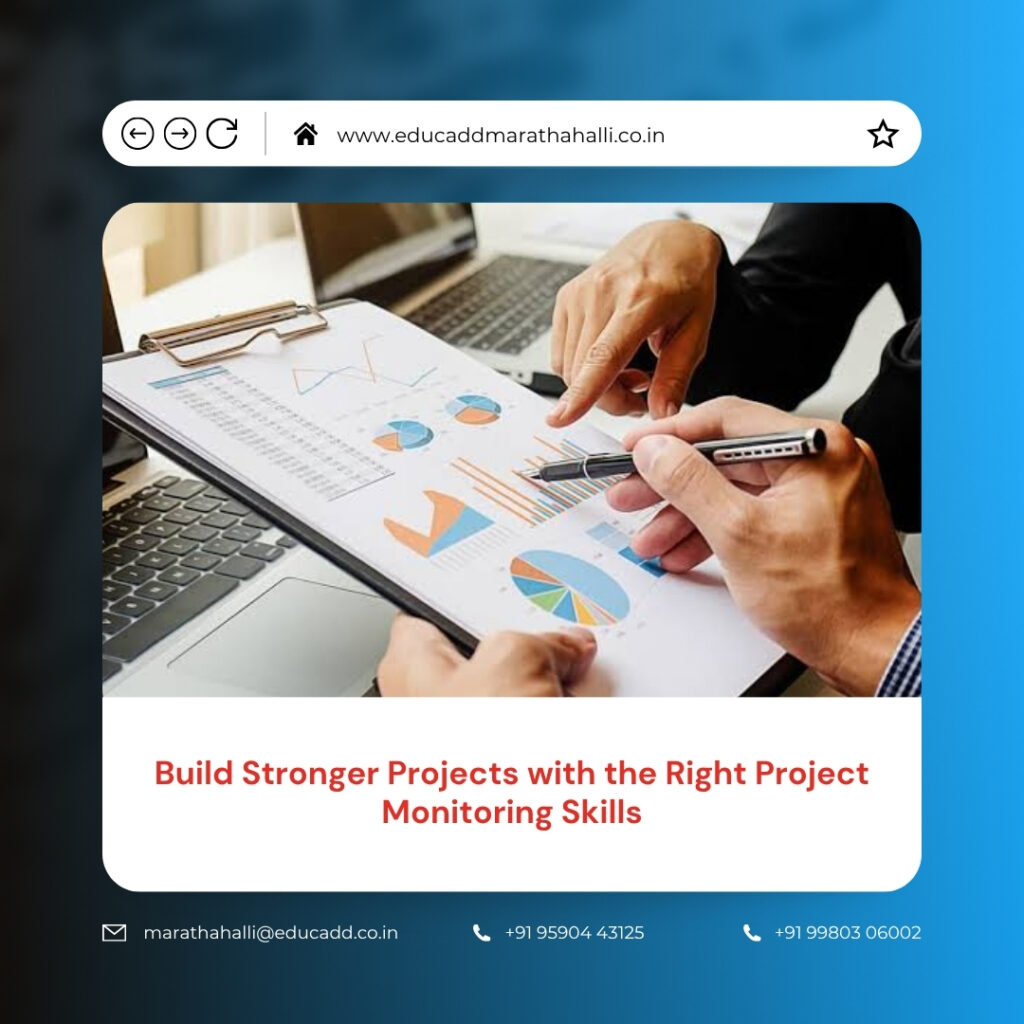
Successful projects need more than good planning. They require continuous monitoring, accurate reporting, timely decisions, and strong control over resources. A Top Project Monitoring Skills helps professionals understand how to track project performance from start to finish. It teaches learners how to compare planned work with actual progress, identify delays, monitor costs, and communicate updates clearly.
Top Project Monitoring Skills
As organizations handle increasingly complex projects, skilled monitoring professionals are becoming valuable across construction, engineering, infrastructure, manufacturing, and other industries. Therefore, learning project monitoring can help professionals improve their capabilities and prepare for better career opportunities.
Understand the Foundation of Project Monitoring
Project monitoring involves regularly checking whether a project is moving according to its approved schedule, budget, quality standards, and objectives. It gives project teams a clear view of current performance. Instead of waiting until a project faces major problems, monitoring helps teams identify warning signs early.
A Top Project Monitoring Skills introduces learners to these fundamental principles through practical concepts and industry-focused methods. As a result, learners can understand how monitoring supports project success and why consistent tracking matters throughout the project lifecycle.
Learn to Track Project Progress Effectively
Progress tracking is one of the most important responsibilities in project management. Professionals need to know what work has been completed, what remains pending, and whether activities are progressing according to schedule. Effective tracking also helps managers identify activities that may affect upcoming milestones.
During a Project Monitoring Course, learners can develop methods for recording progress, reviewing milestones, and preparing meaningful status updates. Moreover, they learn how to turn project information into useful insights that support faster and more informed decisions.
Master Scheduling and Time Management
Time management directly influences project performance. Delays can increase costs, affect resources, and create problems for other activities. Therefore, professionals must understand project schedules and monitor them consistently. A structured Top Project Monitoring Skills can help learners understand timelines, milestones, dependencies, and critical activities.
They can also learn how to compare planned schedules with actual progress. Consequently, professionals become better prepared to recognize schedule deviations and support corrective action before small delays develop into significant project issues.
Develop Strong Cost Monitoring Skills
Controlling project costs is equally important. Every project operates within a financial framework, and unexpected expenses can quickly affect profitability. Cost monitoring involves comparing planned expenditure with actual spending while identifying reasons for variations. Through a Project Monitoring Course, learners can understand basic cost control concepts and learn how financial information contributes to project decisions.
Furthermore, they can develop an awareness of budget deviations, resource costs, and expenditure trends. This knowledge can help teams maintain better financial discipline throughout the project.
Improve Resource Utilization and Control
Projects depend on people, materials, equipment, technology, and other resources. Poor resource utilization can create unnecessary expenses and reduce productivity. Monitoring helps project teams determine whether available resources are being used effectively.
A Top Project Monitoring Skills can teach professionals how to observe resource allocation and identify potential gaps. In addition, learners can understand how resource availability affects project schedules and performance. With better monitoring practices, teams can use resources more efficiently while reducing avoidable disruptions.
Identify Risks Before They Become Problems
Every project contains risks. These may involve schedule delays, cost increases, material shortages, technical challenges, or resource limitations. Effective monitoring makes it easier to recognize these risks at an early stage.
A Project Monitoring Course helps learners understand how regular project reviews can support risk identification and response. Instead of reacting only after an issue appears, professionals can watch key indicators and take preventive measures. Therefore, monitoring becomes an important part of maintaining project stability and reducing uncertainty.
Build Better Reporting and Documentation Skills
Clear reporting allows project stakeholders to understand current performance without confusion. Reports may include progress updates, cost information, schedule status, resource details, risks, and upcoming activities. Professionals must present this information in a simple and organized way. Through a Project Monitoring Course, learners can strengthen their understanding of project documentation and reporting practices.
They can learn how to organize information and highlight important changes. As a result, managers and stakeholders can review project conditions more quickly and make appropriate decisions.
Strengthen Communication with Project Stakeholders
Project monitoring is not limited to collecting information. Professionals must also communicate that information effectively. Project managers, engineers, clients, contractors, consultants, and team members may have different responsibilities and expectations. Regular communication keeps everyone aligned with project objectives.
A Top Project Monitoring Skills can help learners understand how monitoring information supports stakeholder communication. Moreover, clear updates can reduce misunderstandings and improve coordination between different teams. This communication ability can become a valuable professional skill across many project-based industries.
Use Performance Indicators for Better Decisions
Performance indicators provide measurable information about project health. They help teams determine whether a project is meeting expectations or moving away from its targets. Depending on the project, indicators may focus on time, cost, quality, productivity, safety, or completed work. A Project Monitoring Course can introduce learners to the importance of performance measurement and regular evaluation.
By reviewing suitable indicators, professionals can recognize trends and support evidence-based decisions. Thus, project monitoring becomes more objective and useful instead of depending only on assumptions.
Learn Practical Tools for Project Monitoring
Modern projects often rely on digital tools to organize schedules, reports, resources, and performance information. Understanding the purpose of these tools can improve productivity and accuracy. A good Project Monitoring Course should combine concepts with practical learning so that participants understand how monitoring activities work in real project environments. Hands-on exercises can also improve confidence when preparing reports, reviewing schedules, and analyzing project information. Additionally, practical exposure helps learners connect classroom knowledge with the expectations of actual workplaces.
Prepare for Multiple Industry Opportunities
Project monitoring skills are useful across several industries. Construction and infrastructure companies require professionals who can track schedules, costs, resources, and site progress. Engineering and manufacturing organizations also depend on structured project controls. Similarly, professionals working in consulting, real estate, and other project-driven sectors can benefit from monitoring knowledge.
Completing a Top Project Monitoring Skills can therefore expand the range of roles a learner may consider. With suitable technical knowledge and practical experience, professionals can pursue opportunities related to project coordination, project controls, planning, reporting, and monitoring.
Develop a Career Advantage Through Specialized Knowledge
Employers often look for professionals who can do more than complete assigned tasks. They value people who can understand project performance, identify concerns, and contribute to effective solutions. Specialized monitoring knowledge can provide an additional advantage because it connects planning with actual project execution. A Project Monitoring Course can help learners develop this broader perspective.
Furthermore, combining monitoring skills with communication, analytical thinking, scheduling, and reporting abilities can create a stronger professional profile. This combination can support career growth and greater responsibility over time.
Choose Learning That Supports Practical Career Growth
When selecting a project monitoring program, learners should consider the course structure, practical exposure, trainer expertise, industry relevance, and learning outcomes. A strong program should explain fundamental concepts while providing opportunities to apply them. It should also encourage analytical thinking rather than simple memorization.
Learners should look for training that helps them understand real project situations and develop confidence in monitoring activities. By choosing the right Project Monitoring Course, professionals can gain knowledge that is relevant to workplace requirements and useful for long-term career development.
Conclusion
Project success depends on consistent monitoring, timely action, and informed decision-making. Professionals who understand how to track progress, control costs, manage schedules, monitor resources, identify risks, and communicate project information can make a meaningful contribution to their organizations. A Top Project Monitoring Skills provides a structured way to develop these valuable capabilities and understand how different project elements work together.
Whether you are beginning your project management career or looking to strengthen existing skills, specialized monitoring knowledge can help you become more confident, capable, and career-ready. Most importantly, strong project monitoring transforms project information into practical action, helping teams stay focused on objectives and achieve better results.

