
Top Commercial Interior Design: Transforming Business Spaces Into Powerful Brand Experiences
Top Commercial Interior Design Ideas does more than make a workplace look attractive. It creates spaces that support productivity, strengthen brand identity, improve customer experiences, and encourage people to stay engaged. Today, businesses understand that their interiors can influence how employees work and how customers perceive a brand. Therefore, thoughtful design has become an important part of business strategy. From offices and retail stores to restaurants, hotels, and corporate spaces, every detail can shape the overall experience.
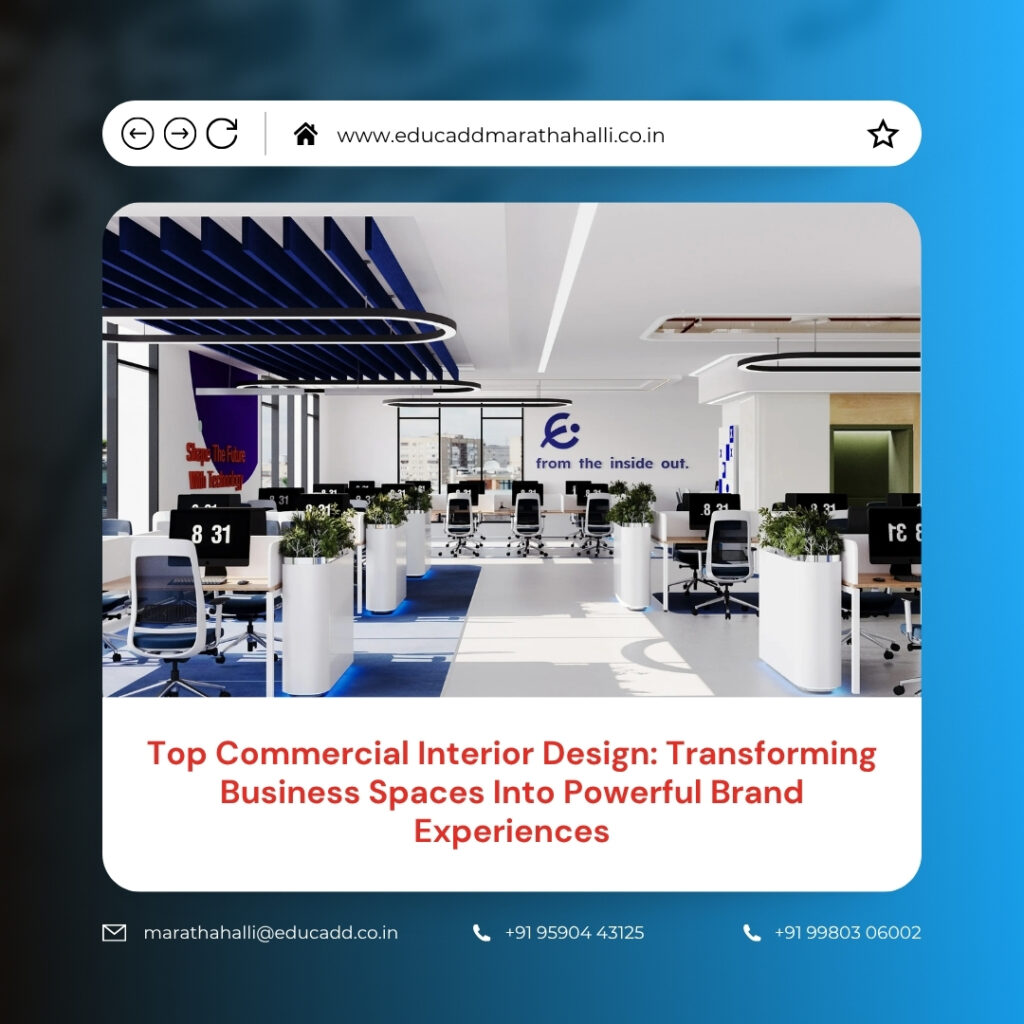
Commercial Interior Design Ideas
A well-designed commercial environment combines functionality, comfort, creativity, and visual appeal. As competition continues to grow, businesses are investing in professional interiors that help them stand apart while creating meaningful spaces for everyone who uses them.
Understanding the Power of Commercial Interior Design
Top Commercial Interior Design Ideas focuses on creating practical and visually appealing environments for business activities. Unlike residential design, it considers larger groups of users, business objectives, customer movement, workplace efficiency, and brand requirements. Designers study the purpose of a space before developing its layout, materials, lighting, colors, and furniture. As a result, every design element has a clear purpose.
A successful commercial space should look impressive while supporting daily operations. Furthermore, it should remain comfortable and adaptable as business needs change. This balance between aesthetics and functionality makes professional commercial design essential for modern businesses that want to create memorable environments.
Creating Interiors That Reflect Brand Identity
A commercial space should communicate the personality of its business. Colors, furniture, materials, lighting, wall treatments, and decorative elements can work together to create a strong visual identity. For example, a technology company may prefer a modern and minimal environment, while a luxury brand may choose elegant materials and sophisticated lighting. Similarly, creative businesses can use bold colors and flexible spaces to express innovation.
Therefore, designers must understand the brand before creating the interior. When the design matches the company’s identity, visitors can recognize its values without reading a single word. This creates a consistent brand experience across physical locations.
Smart Space Planning for Better Performance
Effective space planning is one of the most important elements of top commercial interior design. A beautiful space may still fail if people cannot move comfortably or complete their tasks efficiently. Designers carefully study traffic patterns, workstations, meeting areas, storage requirements, customer zones, and service areas. Then, they create layouts that support smooth movement and efficient operations.
Open layouts can encourage communication, while private areas can support focused work. Likewise, dedicated collaboration zones can improve teamwork. Smart planning also prevents wasted space. Consequently, businesses can use their available area more effectively while creating an organized and comfortable environment.
The Growing Importance of Workplace Comfort
Employee comfort has become a major consideration in modern commercial interiors. People spend many hours in offices and other professional environments, so their surroundings can influence their energy and productivity. Ergonomic furniture, suitable lighting, proper ventilation, acoustic control, and comfortable seating can make a significant difference. In addition, natural elements such as indoor plants, natural textures, and daylight can create a more pleasant atmosphere.
Designers increasingly consider how people experience a space throughout the day. By focusing on comfort, businesses can create environments where employees feel more motivated and connected to their workplace.
Lighting That Changes the Entire Experience
Lighting plays a powerful role in commercial interiors because it affects mood, visibility, atmosphere, and functionality. Natural light can make a space feel open and welcoming, while carefully positioned artificial lighting can highlight important areas. Offices may require task lighting for focused activities, whereas retail environments may use accent lighting to draw attention to products. Restaurants can use warmer lighting to create a relaxed atmosphere.
Therefore, lighting should be selected according to the purpose of each zone. Modern commercial design often combines ambient, task, and accent lighting. This layered approach creates depth while ensuring that every area receives appropriate illumination.
Choosing Materials With Purpose
Materials contribute significantly to the appearance, durability, and character of a commercial environment. Designers must consider how frequently a space will be used before selecting flooring, wall finishes, furniture, countertops, ceilings, and other surfaces. High-traffic areas require durable materials that can withstand regular use. At the same time, businesses want finishes that reflect their brand and create visual interest.
Sustainable materials are also gaining popularity because companies are becoming more conscious of environmental responsibility. Recycled materials, responsibly sourced wood, low-impact finishes, and energy-efficient solutions can support greener interiors. Thus, material selection should balance beauty, performance, maintenance, and sustainability.
Technology and Modern Commercial Spaces
Technology has become an important part of commercial interior design. Modern offices require video conferencing systems, charging stations, smart lighting, digital displays, and efficient connectivity. Retail stores may use interactive screens and digital product displays to improve customer engagement. Hotels and restaurants can integrate technology into booking, communication, entertainment, and service systems.
However, technology should blend naturally into the design rather than create visual clutter. Designers must plan electrical points, cable management, equipment placement, and access requirements during the early stages. As technology continues to evolve, flexible interiors can help businesses upgrade their systems without completely redesigning the space.
Designing for Customer Experience
For customer-focused businesses, interior design can directly influence purchasing decisions and brand perception. Retail stores need clear product displays and comfortable movement paths. Restaurants require suitable seating arrangements, attractive lighting, and efficient service circulation. Hotels need welcoming reception areas, comfortable lounges, and memorable guest environments. Every touchpoint matters.
From the entrance to the waiting area, customers should experience a consistent visual and functional journey. Therefore, designers consider customer behavior while developing commercial interiors. A well-planned environment can reduce confusion, encourage exploration, improve comfort, and create positive impressions that customers remember long after they leave.
Sustainable Design for the Future
Sustainability is becoming an essential part of modern commercial interior design. Businesses are increasingly looking for ways to reduce energy consumption, material waste, and environmental impact. Designers can support these goals through energy-efficient lighting, natural ventilation, durable materials, responsible sourcing, and adaptable layouts. Reusing existing furniture and structures can also reduce unnecessary waste.
Moreover, sustainable design can improve the overall quality of a workplace by introducing natural light, greenery, and healthier materials. Although sustainability requires careful planning, it can provide long-term value. Businesses can reduce operational costs while demonstrating environmental responsibility to employees, customers, and partners.
Flexible Spaces for Changing Business Needs
Business environments are constantly changing, so commercial interiors must be flexible. Companies may expand their teams, introduce hybrid work, change their services, or reorganize their operations. A rigid layout can make these changes expensive and difficult.
Flexible furniture, movable partitions, multipurpose rooms, modular workstations, and adaptable meeting areas can provide greater freedom. Consequently, businesses can modify their spaces without starting a complete renovation. This approach also supports different activities within the same environment. A meeting room, for example, can become a training area or collaborative workspace when required. Flexibility therefore adds practical and financial value to commercial interiors.
The Role of Color and Visual Psychology
Color can influence emotions, attention, and perception. Designers use color strategically to create specific moods and strengthen brand recognition. Neutral shades can create a professional and calm atmosphere, while brighter accents can add energy and creativity.
However, excessive use of strong colors may become distracting. Therefore, successful designers create balanced palettes that support both the brand and the function of each area. Color can also help define zones within an open environment. For instance, different shades can distinguish meeting spaces, relaxation areas, reception zones, or customer sections. When used thoughtfully, color becomes an effective communication tool.
Why Professional Designers Make a Difference
Professional interior designers bring technical knowledge, creative thinking, and project planning skills to commercial projects. They understand space planning, materials, lighting, furniture, building requirements, ergonomics, and visual communication. More importantly, they can connect design decisions with business objectives. They also coordinate with contractors, suppliers, architects, and other professionals to maintain consistency throughout the project.
Without proper planning, commercial renovations can face delays, unnecessary expenses, or functional problems. Therefore, working with experienced professionals can help businesses achieve better results. A strong design team can transform an ordinary commercial property into a space that performs effectively and represents the business professionally.
Building a Lasting Commercial Environment
Top Commercial Interior Design Ideas should deliver value beyond the initial visual impact. A successful space remains useful, comfortable, attractive, and relevant over time. It should support employees, welcome customers, strengthen branding, and adapt to future requirements. Businesses should therefore avoid trends that may quickly become outdated. Instead, they can combine timeless design principles with carefully selected modern elements.
Quality materials, thoughtful planning, functional furniture, balanced colors, and effective lighting can create interiors with long-lasting appeal. When these elements work together, the result becomes more than an attractive workplace or business location. It becomes an environment that actively supports growth and success.
Conclusion
Top Commercial Interior Design Ideas brings together creativity, functionality, technology, comfort, sustainability, and brand identity. A well-designed commercial environment can improve employee experiences, attract customers, strengthen brand recognition, and support efficient business operations. From smart layouts and strategic lighting to flexible furniture and sustainable materials, every decision can contribute to the success of a space.
As businesses continue to compete through customer experience and workplace culture, professional interior design will become even more valuable. Ultimately, the best commercial interiors are not simply beautiful spaces. They are carefully planned environments that help people work better, connect with brands, and experience businesses in a more meaningful way.

