
Master the Future of Industrial Engineering with an Advanced Electrical Panel Design Course
Electrical engineering is evolving at an incredible pace, and industries are constantly looking for professionals who can design safe, efficient, and intelligent electrical systems. Electrical panels play a critical role in managing power distribution, protecting equipment, and controlling industrial automation processes. As factories, commercial buildings, and infrastructure projects continue to embrace advanced technologies, the need for skilled electrical panel designers has reached new heights. An Advanced Electrical Panel Design provides aspiring engineers and working professionals with practical knowledge, software expertise, and industry-focused skills that prepare them for rewarding career opportunities. Whether you are a student, diploma holder, or experienced technician, mastering electrical panel design can significantly enhance your employability and open doors to diverse engineering roles.
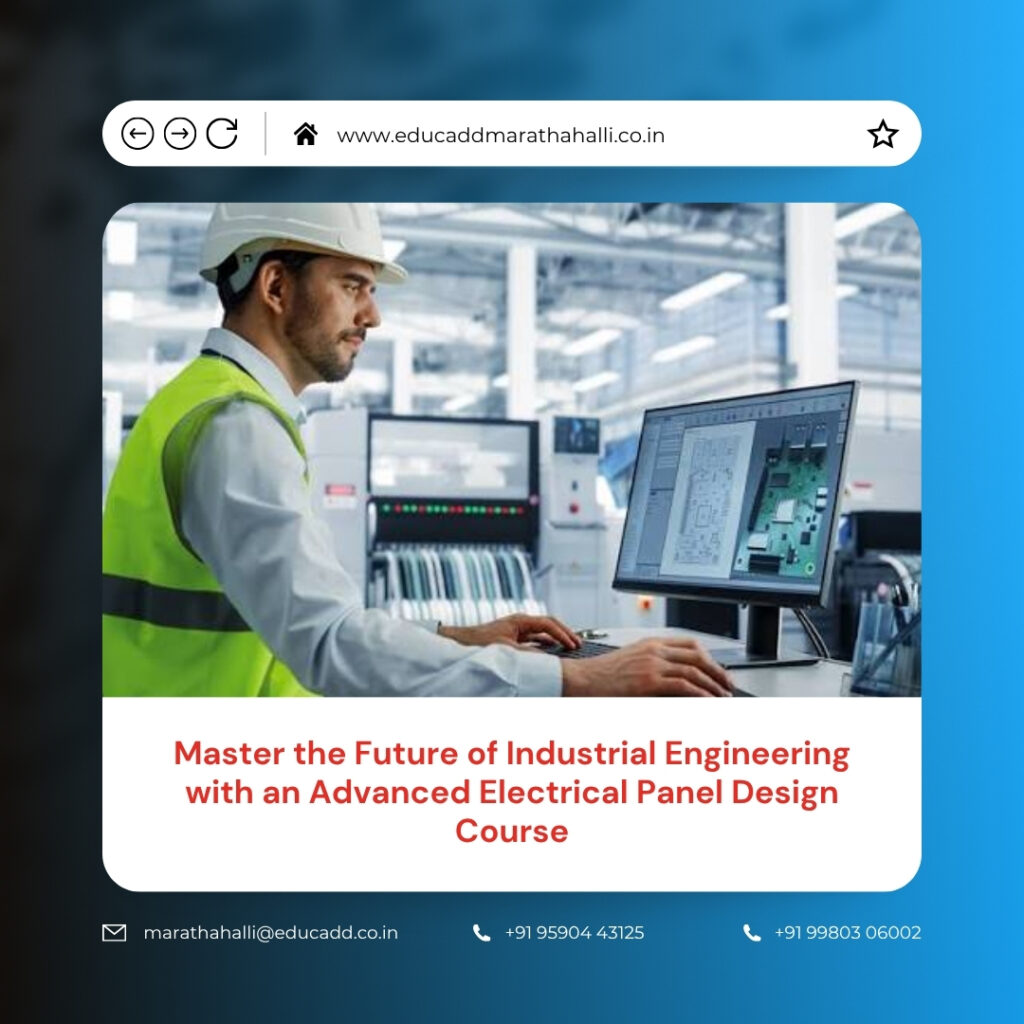
Advanced Electrical Panel Design
Build a Strong Foundation in Electrical Panel Design
Electrical panel design involves planning, organizing, and documenting electrical control systems that distribute power safely and efficiently. These panels contain various components, including circuit breakers, relays, contactors, terminal blocks, switches, busbars, and programmable controllers. Every component must be selected carefully to ensure optimal system performance and long-term reliability.
An industry-oriented Advanced Electrical Panel Design introduces learners to electrical fundamentals before progressing to advanced panel design concepts. Students understand how each component functions within a control panel while gaining knowledge about power distribution, circuit protection, electrical symbols, and engineering documentation. This strong foundation prepares learners for practical industrial applications.
Understand the Growing Importance of Electrical Panel Design
Modern industries rely heavily on electrical control panels to operate machines, production lines, and automation systems without interruption. Manufacturing facilities, pharmaceutical companies, renewable energy plants, hospitals, airports, and commercial buildings all depend on professionally designed electrical panels. A well-designed system improves operational efficiency while minimizing safety risks and maintenance costs.
A professional Advanced Electrical Panel Design explains how proper engineering decisions directly influence productivity and equipment performance. Students learn how thoughtful panel design reduces downtime, improves reliability, and supports smooth industrial operations. This practical understanding enables learners to meet the expectations of today’s fast-growing engineering sector.
Learn Core Technical Skills Required by Industries
Success in electrical panel design depends on mastering both theoretical concepts and practical engineering techniques. Employers seek professionals who understand electrical calculations, system design, and industrial documentation while demonstrating strong technical problem-solving abilities.
During an advanced Advanced Electrical Panel Design, students develop expertise in load calculations, cable sizing, voltage drop analysis, circuit protection, motor control circuits, wiring methods, panel layout preparation, control panel assembly, bill of materials generation, and testing procedures. These practical skills help learners confidently handle real-world engineering projects with accuracy and efficiency.
Gain Expertise in Electrical Standards and Safety Practices
Electrical engineering demands strict compliance with safety standards because every design directly affects equipment performance and human safety. Even minor design errors may result in equipment damage, operational failures, or hazardous working conditions. Therefore, engineers must possess a thorough understanding of applicable regulations and safety procedures.
A comprehensive Advanced Electrical Panel Design familiarizes students with national and international electrical standards such as IEC, IS, NEC, and industrial best practices. Learners also study grounding systems, overload protection, fault analysis, short-circuit calculations, insulation techniques, and protective device coordination. This knowledge ensures every design follows recognized engineering standards while promoting workplace safety.
Master Modern Software Used for Panel Design
Engineering companies increasingly depend on digital design software to improve project quality, reduce design errors, and streamline documentation. Software proficiency has become one of the most valuable skills for electrical design professionals because it significantly improves productivity throughout the project lifecycle.
A quality Advanced Electrical Panel Design includes practical training in software applications such as AutoCAD Electrical, EPLAN Electric P8, SolidWorks Electrical, and other industry-recognized tools. Students learn to create schematic diagrams, wiring layouts, terminal drawings, cable schedules, and detailed engineering documentation that meets professional project requirements and industry expectations.
Practical Learning Creates Industry-Ready Professionals
Classroom theory provides essential knowledge, but practical training transforms learners into confident engineering professionals. Industries value candidates who understand actual project workflows and can contribute effectively from the beginning of their careers. Hands-on experience strengthens technical confidence while improving decision-making abilities.
An advanced Electrical Panel Design Course incorporates laboratory sessions, live projects, industrial case studies, simulation exercises, and panel assembly demonstrations. Students practice solving real engineering challenges while preparing complete electrical panel designs. This practical exposure bridges the gap between academic learning and industrial applications, making graduates more employable.
Discover Diverse Career Opportunities Across Industries
Electrical panel design professionals are needed across multiple industrial sectors because reliable electrical systems remain essential for every engineering project. Rapid industrialization, smart manufacturing, renewable energy expansion, and infrastructure development continue to create new employment opportunities for qualified designers.
Graduates of an Electrical Panel Design Course can pursue careers in manufacturing companies, automation firms, EPC organizations, electrical equipment manufacturers, construction projects, power generation companies, renewable energy industries, process plants, engineering consultancies, and industrial maintenance organizations. These opportunities provide excellent career stability and long-term professional growth.
Explore Exciting Job Roles After Certification
Completing specialized training enables learners to qualify for numerous technical positions within the electrical engineering field. Employers appreciate candidates who possess both software proficiency and practical engineering knowledge because they require minimal additional training after recruitment.
Professionals who complete an Electrical Panel Design Course may work as Electrical Design Engineers, Control Panel Designers, Electrical CAD Engineers, Automation Engineers, Project Engineers, Design Coordinators, Testing Engineers, Commissioning Engineers, Maintenance Engineers, Technical Consultants, or Electrical Project Executives. With experience, these professionals can advance into senior engineering and project management positions.
Support the Future of Industrial Automation
Automation has transformed industrial production by improving efficiency, reducing manual intervention, and increasing operational accuracy. Electrical panels function as the control centers of automated systems, coordinating communication between controllers, sensors, motors, drives, and electrical equipment.
A specialized Electrical Panel Design Course teaches students how to integrate PLCs, HMIs, VFDs, industrial communication protocols, sensors, and intelligent control devices into electrical panel designs. Understanding automation technologies enables engineers to develop reliable systems that support modern manufacturing environments and future industrial innovations.
Improve Documentation and Engineering Accuracy
Engineering documentation plays an essential role throughout the lifecycle of every industrial project. Accurate drawings simplify manufacturing, installation, commissioning, troubleshooting, and maintenance while ensuring effective communication among engineering teams. Well-prepared documentation also reduces costly design revisions and project delays.
Students enrolled in an Electrical Panel Design Course learn to prepare single-line diagrams, control schematics, panel layout drawings, cable schedules, terminal plans, general arrangement drawings, wiring diagrams, and bills of materials. These documentation skills significantly improve engineering precision and project efficiency while supporting successful project execution.
Learn Directly from Experienced Industry Professionals
Learning from experienced trainers provides valuable exposure to practical engineering knowledge that extends beyond textbooks. Industry experts share real project experiences, design strategies, troubleshooting techniques, and current technological developments that help students understand professional engineering practices.
Many reputed training institutes offering an Electrical Panel Design Course also provide technical workshops, industrial seminars, interview preparation sessions, career guidance, resume-building support, and placement assistance. These additional learning opportunities strengthen technical confidence and improve career readiness for aspiring engineers.
Choose the Right Training Program for Long-Term Success
Selecting a well-structured training institute plays a vital role in shaping your engineering career. The right program should combine conceptual learning with practical implementation while maintaining close alignment with current industrial requirements. Quality education creates skilled professionals who remain competitive in today’s dynamic job market.
Before enrolling in an Electrical Panel Design Course, evaluate factors such as curriculum quality, experienced faculty, software training, laboratory facilities, live industrial projects, certification value, internship opportunities, and placement support. A comprehensive training program equips students with practical expertise that employers actively seek.
Secure Your Future in the Expanding Electrical Industry
The demand for skilled electrical engineers continues to increase as industries adopt smart technologies, renewable energy solutions, Industry 4.0 practices, and advanced automation systems. Electrical panel designers will remain essential because every modern facility depends on safe, efficient, and intelligent power control systems.
Completing an Electrical Panel Design Course prepares learners to meet these evolving industry demands while building a stable and rewarding engineering career. Professionals who continuously upgrade their technical knowledge can explore international opportunities, specialized consulting roles, leadership positions, and advanced engineering careers across various industrial sectors.
Conclusion
Electrical panel design has become one of the most valuable specializations in today’s engineering landscape because it combines electrical knowledge, automation, safety, and digital design into one high-demand profession. As industries continue to modernize, organizations require professionals who can design efficient electrical systems that improve productivity while maintaining the highest safety standards. A professionally designed control panel is far more than a collection of electrical components—it is the heart of every reliable industrial operation.
Enrolling in an Advanced Electrical Panel Design is an investment in long-term career growth. The course develops technical expertise, practical design skills, software proficiency, and a strong understanding of industry standards that employers value worldwide. Whether your goal is to work in manufacturing, automation, infrastructure, renewable energy, or electrical consulting, this specialized training provides the confidence and competence needed to succeed. By combining continuous learning with hands-on experience, you can build a successful engineering career that remains relevant in an increasingly technology-driven world.

