
From Drawing Boards to Digital Excellence: How Electrical CADD Is Transforming Modern Electrical Design
The world of Electrical CADD Design Transformation has experienced a remarkable evolution over the years. What once depended entirely on pencils, scales, drawing sheets, and drafting boards has now shifted toward intelligent software solutions that deliver faster and more accurate results. For decades, manual drafting served as the backbone of electrical design, helping engineers create wiring diagrams, electrical layouts, panel schedules, and technical documentation. Although this traditional approach contributed significantly to the growth of infrastructure and industrial development, modern projects demand a level of speed, flexibility, and precision that manual methods often struggle to provide.
Today, Electrical CADD Design Transformation, commonly known as Electrical CADD, has become the preferred choice for professionals across multiple industries. From commercial buildings and manufacturing plants to renewable energy facilities and smart infrastructure projects, Electrical CADD helps engineers produce high-quality designs within shorter timelines. As businesses continue to prioritize efficiency and innovation, the transition from manual drafting to digital design has accelerated rapidly. Understanding the differences between these two approaches reveals why Electrical CADD Design Transformation has become an essential skill for modern electrical professionals and a valuable asset for organizations seeking competitive advantages.
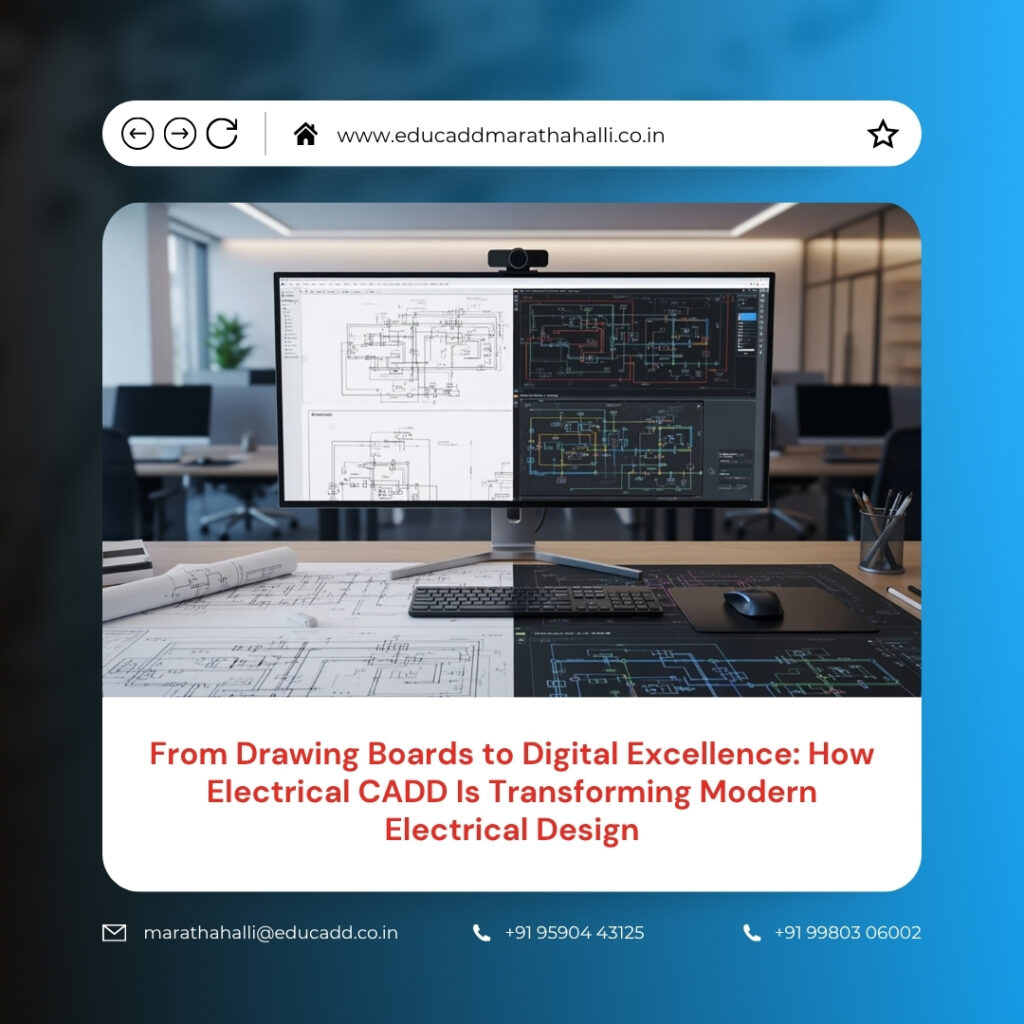
Electrical CADD Design Transformation
The Foundation of Electrical Design: Understanding Manual Drafting
Before the introduction of advanced design software, manual drafting represented the standard method for preparing electrical drawings. Engineers and draftsmen relied on specialized instruments such as drafting boards, rulers, protractors, compasses, templates, and technical pens to create detailed engineering documents. Every circuit, connection, symbol, and annotation had to be drawn carefully by hand to ensure the final drawing met project requirements.
Manual drafting required exceptional attention to detail and a deep understanding of engineering standards. Skilled professionals spent years mastering drafting techniques to achieve consistency and accuracy. However, the process often demanded considerable time and effort. Creating a complete electrical layout for a large project could take several days or even weeks. Additionally, maintaining uniformity across multiple drawings posed ongoing challenges. Despite these limitations, manual drafting established many of the design principles and documentation standards that continue to influence modern engineering practices.
Electrical CADD: The Digital Revolution in Engineering Design
Electrical CADD Design Transformation represents a significant advancement in the way electrical systems are designed and documented. Instead of creating drawings manually, designers use specialized software to generate detailed electrical plans within a digital environment. These platforms provide tools that simplify drawing creation, editing, analysis, and documentation management.
Unlike traditional drafting methods, Electrical CADD allows users to work with preloaded symbol libraries, automated commands, intelligent templates, and advanced editing features. Engineers can create highly detailed designs while maintaining consistency throughout the project. The software also supports integration with other engineering applications, making it easier to coordinate electrical systems with architectural, mechanical, and structural components. This digital approach not only increases efficiency but also improves overall project quality and communication among stakeholders.
Accuracy and Precision in Electrical Documentation
Accuracy remains one of the most critical factors in electrical engineering. Even minor errors in electrical drawings can lead to installation issues, project delays, safety concerns, and additional costs. Manual drafting depends heavily on individual skill and concentration, making it more vulnerable to human error.
Electrical CADD addresses this challenge by offering precise digital tools that help designers create accurate drawings every time. Dimensions, alignments, and component placements can be controlled with exceptional precision. The software ensures that symbols remain consistent and measurements remain exact throughout the design process.
Furthermore, digital verification features help identify potential mistakes before construction begins. This proactive approach reduces the likelihood of costly corrections later in the project lifecycle. As electrical systems become increasingly complex, the accuracy provided by Electrical CADD becomes a major advantage for engineers and organizations alike.
Speed and Efficiency in Project Execution
Modern construction and engineering projects often operate under strict deadlines. Clients expect rapid delivery without compromising quality, making efficiency a key factor in project success. Manual drafting, while effective, often requires substantial time for drawing creation, updates, and reviews.
Electrical CADD significantly improves productivity by automating many routine tasks. Designers can create standardized layouts, duplicate components, and modify drawings quickly using advanced software tools. Instead of redrawing sections manually, users can make changes instantly while maintaining design integrity.
This increased efficiency enables engineering teams to complete projects faster and allocate more time to technical analysis and problem-solving. Organizations benefit from shorter project cycles, improved resource utilization, and enhanced client satisfaction. As a result, Electrical CADD has become an essential tool for meeting the demands of today’s fast-paced engineering environment.
Managing Design Changes with Greater Flexibility
Design modifications are common throughout the lifecycle of any engineering project. Client requirements may evolve, equipment specifications may change, or regulatory standards may require adjustments. Managing these revisions efficiently is crucial for maintaining project schedules and budgets.
With manual drafting, revisions often involve extensive erasing, redrawing, and document updates. This process consumes valuable time and increases the risk of introducing new errors. In large projects, multiple revisions can become particularly challenging to manage.
Electrical CADD simplifies the revision process by allowing designers to modify drawings quickly and accurately. Changes can be implemented within minutes, and related documentation can be updated automatically. Version control features help teams track modifications and maintain organized records. This flexibility enables projects to adapt smoothly to changing requirements while minimizing disruptions and delays.
Storage, Accessibility, and Document Security
Traditional drafting methods generate large volumes of physical documents that require proper storage and protection. Managing these paper-based records can become increasingly difficult as project complexity grows. Drawings may be misplaced, damaged, or difficult to retrieve when needed.
Electrical CADD eliminates many of these challenges through digital document management. Files can be stored securely on local servers or cloud-based platforms, ensuring easy access and reliable backup options. Engineers can locate and retrieve project documents within seconds, regardless of project size.
Key benefits of digital document management include:
- Faster access to project files and design records.
- Improved protection against document loss or physical damage.
These advantages contribute to better project organization and support long-term maintenance activities by preserving valuable engineering information for future use.
Enhancing Collaboration Across Project Teams
Successful engineering projects require effective communication and coordination among various disciplines. Electrical engineers must often work closely with architects, civil engineers, mechanical engineers, contractors, and project managers. Collaboration becomes essential when multiple teams contribute to the same project.
Manual drafting can limit collaboration because physical drawings must be distributed, reviewed, and updated manually. Team members may inadvertently work with outdated information, leading to confusion and inconsistencies.
Electrical CADD promotes seamless collaboration by enabling digital file sharing and real-time communication. Team members can review designs, provide feedback, and coordinate updates more efficiently. Cloud-based platforms further enhance collaboration by allowing stakeholders to access project information from different locations. This improved connectivity strengthens teamwork and supports more successful project outcomes.
Cost Considerations and Long-Term Value
When evaluating drafting methods, organizations often consider both initial and long-term costs. Manual drafting may appear less expensive at first because it requires minimal software investment. However, ongoing labor expenses and productivity limitations can significantly increase overall project costs.
Electrical CADD requires investment in software licenses, hardware, and training programs. Despite these upfront expenses, the long-term benefits often outweigh the initial costs. Faster design development, reduced errors, and improved workflow efficiency contribute to substantial savings over time.
Additional financial advantages include:
- Lower costs associated with design revisions and corrections.
- Increased productivity that enables teams to handle more projects.
These factors make Electrical CADD a cost-effective solution for organizations seeking sustainable growth and operational efficiency.
Maintaining Industry Standards and Consistency
Consistency plays a vital role in electrical engineering documentation. Drawings must follow established standards to ensure clarity, compliance, and effective communication among all project participants. Inconsistent documentation can create confusion and increase the risk of errors during installation and maintenance.
Manual drafting depends largely on individual drafting styles and techniques. Even experienced professionals may produce variations in symbols, annotations, and formatting. These differences can affect document uniformity across large projects.
Electrical CADD addresses this issue through standardized templates, automated formatting tools, and predefined symbol libraries. These features help maintain consistency throughout the design process and ensure compliance with industry requirements. Standardized documentation improves readability, simplifies reviews, and enhances overall project quality.
Skill Development and Professional Growth
The skills required for success in electrical design have evolved significantly with the advancement of technology. While manual drafting emphasizes hand-drawing techniques and drafting instrument proficiency, modern employers increasingly seek candidates with digital design expertise.
Electrical CADD professionals must understand both engineering principles and software applications. They need the ability to create efficient designs, manage digital documentation, and collaborate effectively within multidisciplinary teams. These competencies align closely with current industry expectations and future technological developments.
Educational institutions and training centers have responded by incorporating Electrical CADD into engineering and technical programs. Students who acquire these skills gain a competitive advantage in the job market and position themselves for long-term career success.
Growing Demand for Electrical CADD Professionals
Industries around the world continue to adopt digital technologies to improve productivity and competitiveness. This trend has created strong demand for professionals who can utilize Electrical CADD effectively. Companies involved in construction, manufacturing, energy, telecommunications, automation, and infrastructure development actively seek individuals with digital drafting expertise.
Electrical CADD professionals contribute to various stages of project development, including planning, design, implementation, and maintenance. Their ability to produce accurate and efficient designs makes them valuable members of engineering teams. As technological innovation continues to reshape industries, demand for Electrical CADD expertise is expected to remain strong.
Professionals who invest in learning modern drafting software often enjoy broader career opportunities, higher employability, and greater potential for advancement within their organizations.
Supporting Sustainability Through Digital Design
Environmental responsibility has become an important priority for businesses across all sectors. Organizations increasingly seek solutions that reduce waste, conserve resources, and support sustainable practices. Traditional drafting methods rely heavily on paper-based documentation, which contributes to material consumption and storage requirements.
Electrical CADD supports sustainability by minimizing the need for printed drawings and physical records. Digital documentation reduces paper usage, lowers printing costs, and decreases the environmental impact associated with document management.
In addition, efficient digital workflows help organizations optimize resources and reduce unnecessary rework. By supporting both productivity and environmental goals, Electrical CADD aligns well with modern sustainability initiatives and corporate responsibility strategies.
The Future of Electrical Design Technology
Technological innovation continues to drive change within the engineering industry. Electrical CADD platforms are evolving rapidly, incorporating advanced capabilities such as automation, cloud computing, artificial intelligence, and integrated project management tools. These developments enable engineers to work more efficiently while improving design quality and decision-making.
Future Electrical CADD systems will likely offer even greater levels of intelligence and automation. Designers may benefit from predictive analysis, automated code compliance checks, and enhanced simulation features that identify potential issues before construction begins. These advancements will further strengthen the role of digital design in modern engineering.
As projects become more sophisticated and interconnected, Electrical CADD will continue serving as a cornerstone of electrical design and documentation processes.
Why Digital Drafting Has Become the Industry Standard
The transition from manual drafting to Electrical CADD reflects the changing needs of modern engineering projects. Organizations require faster workflows, higher accuracy, improved collaboration, and greater flexibility than traditional methods can typically provide. Electrical CADD addresses these requirements while supporting innovation and long-term business growth.
Digital drafting allows engineers to focus more on design optimization and technical problem-solving rather than repetitive drawing tasks. It enhances communication, improves project outcomes, and helps organizations remain competitive in an increasingly technology-driven marketplace.
For these reasons, Electrical CADD has evolved from a useful tool into an industry standard. Companies that embrace digital design technologies position themselves for greater efficiency, stronger performance, and continued success in the future.
Conclusion
The comparison Electrical CADD Design Transformation highlights a significant transformation in the field of electrical engineering. Manual drafting laid the groundwork for modern design practices and played a critical role in the development of countless engineering projects. However, the demands of contemporary industries require solutions that offer greater speed, precision, adaptability, and collaboration.
Electrical CADD delivers these advantages while supporting cost savings, sustainability, and technological innovation. From improving documentation accuracy to enabling seamless teamwork, digital drafting has redefined how electrical systems are designed and managed. As organizations continue embracing digital transformation, Electrical CADD remains an essential skill for engineers and designers seeking to thrive in a competitive and rapidly evolving professional landscape.

