
Build a Future in Digital Construction: Choose the Best BIM Institute With Proven Placement Success
The construction and engineering industry has entered a completely new era where digital technologies now play a major role in every stage of project execution. From planning and design to construction and facility management, companies are rapidly adopting advanced software solutions to improve productivity and reduce project errors. Among these innovations, Building Information Modeling has become one of the most important technologies shaping the future of the Architecture, Engineering, and Construction industry. Because of this transformation, students and professionals are actively searching for a Best BIM Placement Institute success to secure rewarding career opportunities in the modern construction sector.
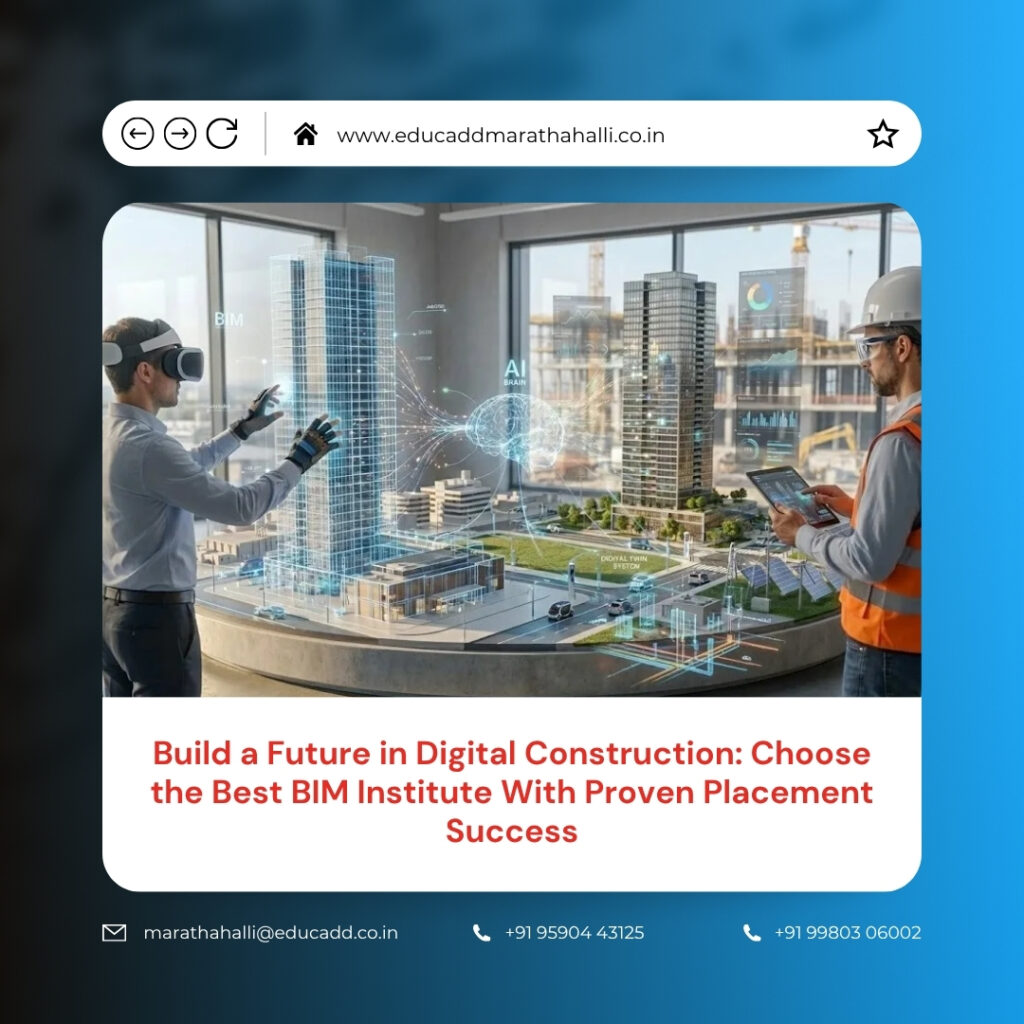
Best BIM Placement Institute
Today, companies prefer hiring candidates who understand intelligent modeling workflows, project coordination systems, and digital collaboration methods. Traditional drafting knowledge alone is no longer enough to meet industry requirements. Therefore, Best BIM Placement Institute has become essential for students who want to build a stable and future-ready career. However, selecting the right institute is equally important because quality training and placement support directly influence career growth. A reputed BIM training institute helps students develop technical expertise, practical project experience, and industry confidence that can open doors to excellent job opportunities across the world.
Why BIM Has Become Essential in the Construction Industry
The global construction industry is experiencing massive digital transformation. Earlier, construction projects depended heavily on manual coordination and 2D drafting methods, which often created communication gaps and costly project delays. However, BIM technology has changed this process completely by enabling intelligent 3D modeling and real-time collaboration among project teams.
Today, architects, structural engineers, MEP professionals, and contractors work together within a shared digital environment. This collaborative workflow improves project accuracy and minimizes design conflicts before construction begins. As a result, companies can save both time and money while delivering better-quality projects.
Moreover, governments and private organizations across the world are encouraging the adoption of BIM standards for infrastructure development and smart city projects. Therefore, demand for skilled BIM professionals continues to grow rapidly. Students who complete training from a reputed BIM institute with placement support can take advantage of this growing demand and build strong careers in the digital construction field.
Importance of Selecting the Right BIM Institute
Choosing the correct training institute is one of the most important decisions for students planning a career in BIM. Although many institutes offer BIM courses, not all provide industry-oriented education and genuine placement assistance. Therefore, students should carefully evaluate training quality before making a final decision.
A professional BIM institute focuses on practical learning instead of only theoretical concepts. Students receive hands-on experience through live projects, software practice sessions, and real-world case studies. This practical exposure helps candidates understand actual construction workflows and project coordination methods.
In addition, placement assistance plays a crucial role in helping freshers enter the industry successfully. Institutes with strong placement records maintain connections with construction companies, design firms, and engineering consultants. Consequently, students receive better opportunities for internships and full-time employment immediately after completing their course.
Furthermore, reputed institutes continuously update their curriculum according to changing industry requirements. This ensures that students learn the latest tools and technologies currently used in the global construction market.
Software Skills Students Learn During BIM Training
Modern BIM training programs include multiple software applications used in architecture, engineering, and construction projects. Since different project disciplines require specialized tools, students must gain knowledge in various industry-standard platforms.
Some commonly taught BIM software applications include Autodesk Revit, Navisworks, AutoCAD, Civil 3D, Tekla Structures, BIM 360, and Dynamo. Learning these tools enables students to work efficiently on multidisciplinary construction projects.
Additionally, software training improves technical accuracy and project coordination abilities. Students learn how to create intelligent models, generate construction documentation, perform clash detection, and manage project collaboration systems effectively.
Important benefits of learning multiple BIM tools include:
- Better job opportunities across different construction sectors
- Strong technical skills for handling real-world projects
Moreover, software expertise increases professional confidence and helps candidates stand out during interviews. Companies prefer candidates who can adapt quickly to digital construction workflows and contribute effectively from the beginning.
Career Opportunities Available After BIM Training
BIM technology has created a wide range of career opportunities for students and working professionals. Since digital construction methods are now widely adopted, organizations require trained professionals who can manage intelligent building models and project coordination systems.
After completing BIM training, candidates can apply for roles such as BIM Modeler, BIM Coordinator, BIM Engineer, Revit Technician, Structural BIM Specialist, MEP BIM Engineer, and BIM Manager. These roles exist in architecture firms, infrastructure companies, engineering consultancies, and construction organizations.
Furthermore, international demand for BIM professionals is increasing continuously. Countries such as Canada, Australia, the United States, Germany, Singapore, and the UAE actively recruit skilled BIM experts for major infrastructure projects. Therefore, students who receive quality training from a BIM institute with placement success can access global career opportunities.
Another major advantage is career growth potential. With experience and advanced technical skills, professionals can move into leadership positions involving project management and BIM implementation strategies.
How Placement Support Helps Freshers Start Their Careers
Placement assistance is one of the strongest advantages offered by reputed BIM training institutes. Many students possess technical knowledge but struggle to secure suitable job opportunities because they lack interview preparation and industry guidance.
Professional institutes help students prepare resumes, create project portfolios, and improve communication skills. In addition, they conduct mock interviews and technical assessments that prepare candidates for real recruitment processes.
Effective placement support generally includes:
- Interview preparation and resume-building sessions
- Direct interview opportunities with hiring companies
These services increase student confidence and improve overall employability. Furthermore, placement teams often connect students with reputed engineering firms and multinational companies searching for skilled BIM professionals.
As a result, candidates can begin their professional careers more quickly and with better salary packages. Institutes with strong placement records also build trust among students because they demonstrate consistent career outcomes.
Advantages of Learning Through Real-Time Projects
Practical project experience plays a significant role in BIM education because construction workflows involve complex coordination between multiple disciplines. Therefore, the best BIM institutes focus heavily on project-based learning methods.
When students work on live projects, they understand how architects, structural engineers, and MEP teams collaborate within a BIM environment. They also gain experience in model creation, clash detection, quantity takeoff, and project documentation.
Moreover, practical training improves analytical thinking and technical problem-solving abilities. Students become familiar with industry standards, project timelines, and professional workflows used in actual construction environments.
Another important benefit is confidence development. Candidates who complete real-time projects can handle professional responsibilities more effectively after joining companies. This practical exposure also creates a strong impression during interviews because employers value hands-on experience significantly.
Why Experienced Faculty Improves Learning Quality
The expertise of trainers directly affects the quality of BIM education. Institutes with experienced faculty provide better industry insights and practical understanding compared to centers that rely only on theoretical teaching methods.
Professional trainers with construction industry experience explain software workflows more clearly because they understand real project challenges. Instead of focusing only on commands and tools, they teach students how BIM technology solves coordination issues in construction projects.
Additionally, experienced faculty members guide students regarding career planning, project execution techniques, and industry expectations. Their mentorship helps students avoid common mistakes and develop professional discipline.
Another advantage is personalized learning support. Skilled trainers can identify student weaknesses and provide targeted guidance to improve technical performance. Consequently, students develop stronger confidence and become industry-ready more efficiently.
Role of BIM Certifications in Professional Growth
Certifications add significant value to a candidate’s professional profile because they validate technical knowledge and practical competency. Many employers prefer certified professionals because certifications indicate structured training and industry readiness.
A reputed BIM institute with placement support usually provides recognized certifications after successful course completion. These certifications improve resume visibility and increase the chances of securing interviews with top construction companies.
Moreover, certified professionals often receive better salary packages because employers trust their technical capabilities. Certifications also help candidates stand out in competitive recruitment processes.
In addition, certification programs motivate students to maintain professional standards and continue upgrading their skills. Since the BIM industry evolves continuously, certified professionals remain more adaptable to changing technologies and workflows.
Industry Exposure Creates Better Career Readiness
Industry exposure is essential for students who want to understand current market expectations and construction trends. Therefore, leading BIM institutes organize workshops, industrial visits, seminars, and expert interaction sessions regularly.
These activities help students observe how BIM workflows function in real project environments. They also gain insights into project management systems, coordination processes, and digital construction standards followed by leading organizations.
Furthermore, guest lectures by industry experts provide valuable knowledge about emerging technologies and future opportunities. Students can interact directly with professionals and learn about practical challenges faced in large construction projects.
This exposure also improves networking opportunities. Building professional connections during training can help students discover internships, job openings, and career development opportunities more effectively.
How BIM Supports Sustainable Construction Practices
Sustainability has become a major focus in the global construction industry. Companies now aim to reduce material wastage, improve energy efficiency, and optimize resource utilization in every project. BIM technology supports these goals effectively through intelligent planning and simulation capabilities.
Using BIM software, project teams can analyze building performance, estimate energy consumption, and identify design improvements before construction begins. This proactive approach reduces unnecessary expenses and environmental impact.
Additionally, BIM improves resource management by enabling accurate quantity estimation and project scheduling. Consequently, companies can reduce construction waste and improve project efficiency.
As governments continue promoting green building initiatives, the demand for professionals with BIM expertise will increase further. Therefore, students who develop BIM skills today will remain valuable assets in the future construction industry.
Important Factors Students Should Check Before Enrollment
Students should research carefully before selecting a BIM training institute because course quality directly affects career success. Although advertisements may look attractive, practical evaluation is extremely important.
Before enrollment, students should review trainer qualifications, software coverage, placement records, infrastructure quality, and practical training methods. Institutes that provide licensed software access and modern computer labs usually offer better learning experiences.
Key factors students must evaluate include:
- Industry-oriented curriculum with live project exposure
- Strong placement partnerships with engineering companies
Additionally, reading student reviews and placement testimonials can provide better clarity regarding institute performance. Choosing a reputed BIM institute with proven results ensures better career security and professional growth.
Future Scope of BIM Careers in the Global Market
The future of BIM careers looks highly promising because digital transformation in construction continues to expand worldwide. Governments and multinational organizations increasingly mandate BIM implementation for large infrastructure and commercial projects.
This growing adoption creates long-term demand for skilled BIM professionals across architecture, civil engineering, mechanical systems, and project management sectors. Furthermore, technologies such as Artificial Intelligence, Virtual Reality, and Digital Twins are now integrating with BIM workflows, creating new career opportunities.
Another major advantage is the rise of remote collaboration. Many BIM professionals now work on international projects from different locations because digital project coordination has become more accessible.
As the construction industry becomes more technology-driven, BIM expertise will continue to remain one of the most valuable skills for future engineering professionals.
Why BIM Training Is a Smart Career Investment
Investing in BIM training can provide excellent long-term career benefits for students and professionals. Unlike traditional educational programs that focus heavily on theory, BIM courses emphasize practical learning and industry applications.
Students can become job-ready within a relatively short period because BIM training focuses directly on technical workflows used by companies. Moreover, the construction industry offers strong demand, stable growth, and attractive salary opportunities for skilled BIM professionals.
Another reason students prefer BIM careers is global employability. Since BIM standards are widely used internationally, trained professionals can apply for opportunities in multiple countries and industries.
Furthermore, BIM careers provide continuous learning opportunities because construction technology evolves rapidly. Professionals who stay updated with modern tools and workflows can enjoy long-term career stability and growth.
Conclusion
The construction industry is moving toward a smarter and more digitally connected future, and BIM technology stands at the center of this transformation. As companies increasingly depend on intelligent modeling systems and collaborative workflows, the demand for trained BIM professionals continues to rise across the world.
Choosing a reputed Best BIM Placement Institute can help students build strong technical foundations and secure rewarding career opportunities. A quality institute provides practical software training, live project exposure, certification support, and direct placement assistance that prepares candidates for real industry challenges.
Moreover, BIM careers offer excellent salary potential, international job opportunities, and long-term professional growth. Students who invest in Best BIM Placement Institute today can position themselves for successful careers in the evolving Architecture, Engineering, and Construction industry. With the right training, practical skills, and industry guidance, aspiring professionals can confidently step into the future of digital construction and achieve lasting career success.

