
Smart Learning Spaces: The Ultimate Guide to Educational Institution Interior Design Planning
Educational institutions have transformed significantly over the last decade. Modern schools, colleges, universities, and training centers no longer focus only on academics. Today, institutions also concentrate on creating inspiring environments that improve learning experiences and student development. Because of this shift, Smart Educational Interior Design planning has become an essential part of campus development and infrastructure strategy.
A thoughtfully planned educational interior does much more than enhance visual appeal. It directly affects concentration, creativity, communication, and student engagement. When students enter a well-designed learning environment, they often feel more motivated and comfortable. As a result, institutions can improve academic performance, student satisfaction, and faculty productivity simultaneously.
Educational spaces now require flexibility, technological integration, safety, and sustainability. Traditional classroom layouts are slowly disappearing as institutions adopt modern concepts that encourage collaboration and innovation. Every section of a campus, including classrooms, libraries, reception areas, laboratories, and recreational spaces, requires detailed planning to support effective learning experiences.
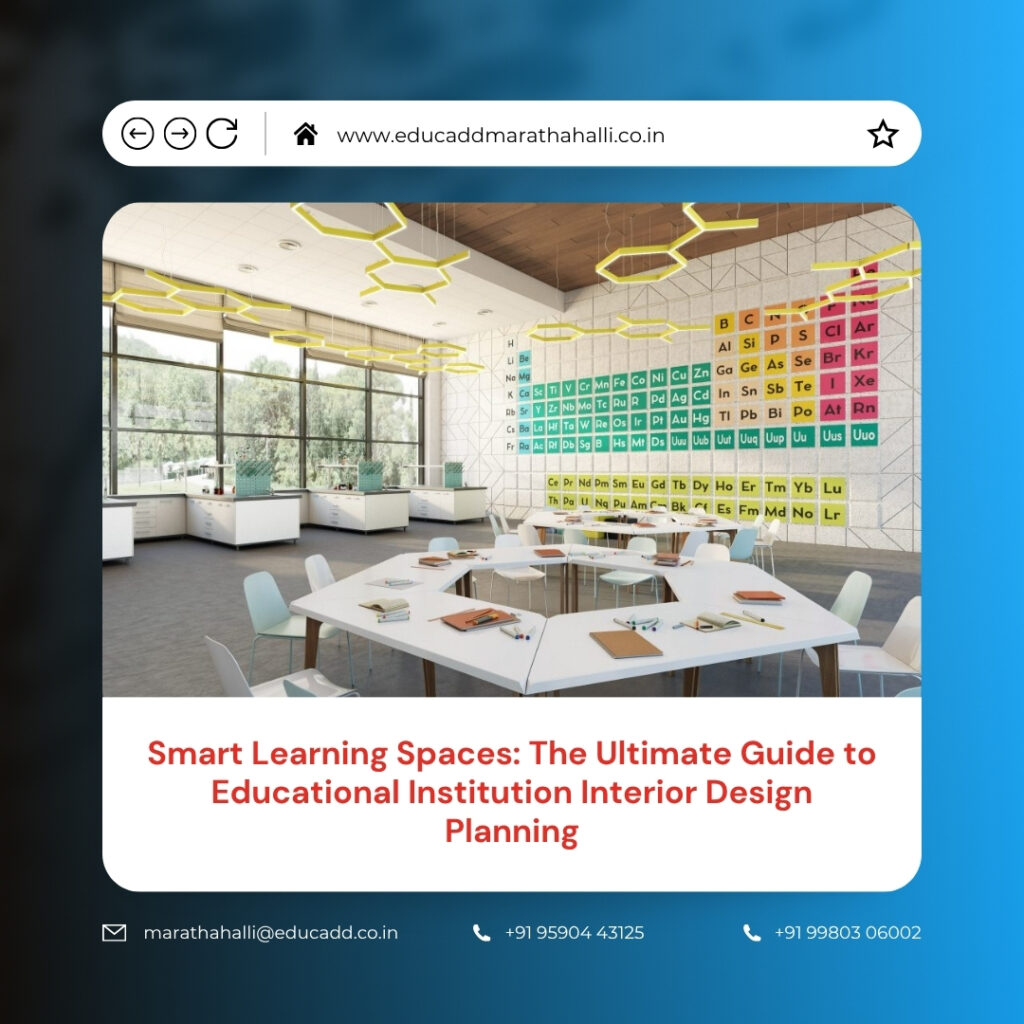
Smart Educational Interior Design
Smart Educational Interior Design planning also helps organizations strengthen their identity and attract prospective students. Parents and learners often judge the quality of an institution through its infrastructure and environment. Therefore, investing in professional interior planning has become an important competitive advantage in today’s education industry.
Why Interior Design Matters in Educational Institutions
Interior design strongly influences how students learn and interact within educational environments. A well-organized institution creates positive experiences that improve both emotional and academic development.
Students spend several hours each day inside classrooms and study areas. Therefore, uncomfortable or poorly designed spaces may reduce concentration and learning efficiency. On the other hand, bright and organized interiors create a welcoming atmosphere that encourages focus and participation.
Additionally, good interior design supports emotional well-being. Calm color schemes, natural lighting, and open layouts reduce stress while creating more relaxing learning environments. Consequently, educational institutions increasingly prioritize interior planning as part of their long-term development strategy.
Space Planning as the Foundation of Educational Design
Effective space planning forms the backbone of educational institution interior design planning. Without proper layout organization, even attractive interiors may fail to support smooth learning experiences.
Educational campuses require clear circulation paths and organized layouts. Students, teachers, and visitors should move comfortably between classrooms, libraries, laboratories, and common areas without confusion. Therefore, designers carefully analyze user movement before finalizing layouts.
Flexible space utilization has become extremely important in modern education. Institutions now require multi-functional spaces that support lectures, workshops, group discussions, and digital learning activities. Adaptable layouts help institutions maximize available space efficiently.
Storage planning remains another essential factor. Institutions need organized storage systems for books, equipment, laboratory tools, and digital devices. Efficient storage reduces clutter while improving overall campus organization.
Successful space planning combines functionality, accessibility, and aesthetics to create learning environments that support both academic and operational goals.
Modern Classroom Design for Interactive Learning
Classrooms remain the most important part of any educational institution. Therefore, classroom interior planning directly affects student engagement and teaching quality.
Modern classrooms focus on interaction rather than traditional lecture-based learning. Smart Educational Interior Design increasingly use flexible seating arrangements that support teamwork and communication. Movable furniture allows instructors to reorganize spaces quickly for different teaching methods.
Natural lighting significantly improves classroom environments. Bright spaces help students stay active and focused throughout the day. Large windows and open layouts maximize daylight while reducing energy consumption.
Acoustic treatment has become equally important in educational interiors. Excessive noise can distract students and reduce communication clarity. Therefore, designers use sound-absorbing materials to maintain comfortable learning conditions.
Technology integration has transformed classroom interiors completely. Smart boards, projectors, digital screens, and internet-enabled learning systems now form essential components of modern educational spaces.
Designing Comfortable and Functional Libraries
Libraries have evolved far beyond traditional book storage areas. Today, they function as collaborative learning hubs that support research, discussion, and digital education.
Modern educational libraries combine quiet study zones with interactive learning spaces. Students require flexible environments where they can work individually or collaborate in groups. Therefore, library interiors now include discussion rooms, multimedia sections, and digital resource centers.
Comfortable furniture improves productivity during long study hours. Ergonomic chairs and spacious desks help students maintain focus while reducing physical strain. Educational institutions increasingly prioritize comfort in library planning.
Well-planned libraries support modern learning styles while encouraging students to spend more time studying and researching.
Importance of Reception and Administrative Interiors
Reception areas create the first impression of an educational institution. Therefore, these spaces should appear organized, welcoming, and professional.
A thoughtfully designed reception area helps visitors navigate the campus comfortably. Clear signage, comfortable seating, and proper lighting improve user experience while reflecting institutional values.
Administrative offices also require efficient interior planning. Staff members need functional workspaces that support communication, organization, and daily operations. Open office layouts combined with private meeting spaces often improve efficiency.
Reception areas also function as information centers. Digital displays, notice boards, and interactive kiosks improve communication while keeping students informed about institutional activities.
Some important features of effective reception interiors include:
- Comfortable waiting areas with organized seating arrangements
- Clear directional signage for easy campus navigation
Professional administrative interiors improve operational efficiency while enhancing institutional image.
Laboratory and Training Space Interior Planning
Laboratories and training centers require highly specialized interior planning because they support practical learning and technical activities.
Educational institutions must design laboratories based on subject requirements and equipment usage. Engineering labs, medical labs, design studios, and computer labs each require customized layouts for effective functionality.
Safety remains the highest priority in laboratory interiors. Proper ventilation systems, emergency exits, fire protection equipment, and durable materials ensure safe learning environments. Institutions must also comply with industry safety regulations.
Efficient workstation planning improves movement and accessibility within practical training areas. Students should access equipment comfortably without overcrowding or operational interruptions.
Modern laboratories focus on flexibility so institutions can adapt spaces to evolving technologies and educational requirements.
Furniture Selection in Educational Interior Design
Furniture greatly influences student comfort, posture, and productivity. Therefore, selecting appropriate furniture remains an important aspect of educational institution interior design planning.
Educational furniture should combine durability, flexibility, and ergonomic support. Students spend extended periods in classrooms and study spaces, making comfort essential for concentration and physical well-being.
Flexible furniture arrangements support modern teaching approaches. Modular desks and movable seating systems allow instructors to create different learning setups quickly and efficiently.
Furniture aesthetics also contribute to the overall learning atmosphere. Minimal and organized furniture designs create cleaner and more professional educational environments.
Well-designed furniture improves learning experiences while enhancing the overall appearance of educational interiors.
Technology Integration in Educational Spaces
Technology has become one of the most important elements in modern educational interiors. Institutions now require spaces that support digital learning and smart educational systems.
Smart classrooms improve interaction and engagement through advanced teaching tools. Interactive boards, projectors, wireless presentation systems, and digital learning platforms create dynamic educational experiences.
Educational institutions also provide internet-enabled study areas and charging facilities throughout campuses. Students increasingly rely on digital devices for assignments, research, and online learning.
Additionally, institutions continue preparing for future educational trends by developing adaptable technology infrastructure. Flexible digital systems support both traditional and hybrid learning models effectively.
Sustainable Educational Interior Design Concepts
Sustainability has become a major focus in educational institution interior design planning. Modern institutions aim to create environmentally responsible campuses that support healthy learning environments.
Educational interiors now incorporate eco-friendly materials such as recycled wood, energy-efficient lighting, and low-emission paints. These materials improve indoor air quality while reducing environmental impact.
Natural lighting and ventilation systems further support sustainable design goals. Open layouts and large windows minimize energy consumption while improving comfort and productivity.
Educational institutions that invest in sustainable interiors often strengthen their reputation and attract environmentally conscious learners and parents.
Safety and Accessibility in Educational Interiors
Educational institutions must create interiors that prioritize safety and accessibility for every user. Therefore, these factors remain fundamental in educational design planning.
Emergency exits, fire safety systems, and surveillance equipment should remain strategically integrated throughout campuses. Institutions must maintain secure environments without affecting user comfort.
Accessibility features ensure equal educational opportunities for students with disabilities. Ramps, elevators, accessible restrooms, and supportive furniture improve inclusivity within campuses.
Slip-resistant flooring and proper lighting further enhance safety standards. Designers also avoid hazardous layouts that may create accidents or movement difficulties.
Some essential safety features include:
- Emergency response systems and clearly marked exit routes
- Accessible pathways and mobility-friendly infrastructure
Safe and inclusive educational interiors create supportive environments where every student can learn comfortably.
Collaborative Learning Spaces and Student Interaction
Modern educational systems strongly encourage collaboration and teamwork. Because of this, institutions increasingly invest in social and collaborative learning spaces.
Student lounges, innovation hubs, and discussion areas provide opportunities for communication and idea sharing beyond traditional classrooms. These spaces encourage creativity and peer interaction.
Informal seating arrangements create relaxed environments where students feel comfortable participating in group discussions and brainstorming activities. Educational institutions often use café-style layouts and flexible furniture in collaborative zones.
Creative wall graphics, vibrant interiors, and modern furniture designs make collaborative spaces more energetic and visually appealing.
Branding Through Educational Interior Design
Educational interiors should represent the institution’s identity and values clearly. Branding within interior design helps institutions create strong visual recognition and memorable experiences.
Institutions often use logos, brand colors, and thematic design elements throughout campuses. These features strengthen professionalism while creating consistent visual identity.
Wall graphics showcasing achievements, student success stories, and motivational messages inspire learners and improve campus atmosphere. Institutions also use custom display areas to highlight awards and milestones.
Consequently, branding has become a powerful component of educational institution interior design planning.
Future Trends in Educational Institution Interior Design
Educational interior design continues evolving rapidly as learning methods and technologies change. Institutions now focus on creating adaptable spaces that support future educational needs.
Hybrid learning environments are becoming increasingly common. Educational institutions design classrooms that support both physical and virtual learning experiences simultaneously.
Biophilic and wellness-focused interiors will continue growing in popularity. Educational institutions increasingly recognize the importance of mental well-being in academic success.
Future-ready campuses will prioritize sustainability, personalization, and advanced technology integration to create innovative learning environments for the next generation.
Conclusion
Smart Educational Interior Design planning has become an essential factor in shaping modern learning experiences. Well-designed educational spaces improve concentration, creativity, communication, and student satisfaction while supporting academic excellence.
Today’s institutions require interiors that balance functionality, technology, safety, sustainability, and aesthetics. Every area of a campus, from classrooms and libraries to laboratories and collaborative spaces, contributes to the overall educational experience.
As educational methods continue evolving, institutions must adapt their interiors to support innovation and flexibility. Educational organizations that invest in smart interior planning today will create stronger learning environments and long-term academic success for future generations.

