
Transform Living Spaces Creatively with a Vastu and Interior Design Course
The modern world has changed the way people think about homes, offices, and commercial interiors. Today, a beautiful space is no longer enough for homeowners and businesses. People now want interiors that create positivity, comfort, productivity, and emotional balance. Because of this shift, the combination of Vastu principles and interior design has become one of the most demanded skills in the construction and design industry. A professional Vastu Interior Design Course helps students understand how to create spaces that are visually appealing while also supporting peace, harmony, and functionality.
A Vastu and Interior Design course provides technical knowledge, creative exposure, and practical skills required to handle real-world projects confidently. Students learn software tools, design planning, color psychology, furniture concepts, and Vastu-based arrangements that improve overall spatial experience. In addition, the course develops communication and presentation skills that are essential for dealing with clients and managing projects successfully.
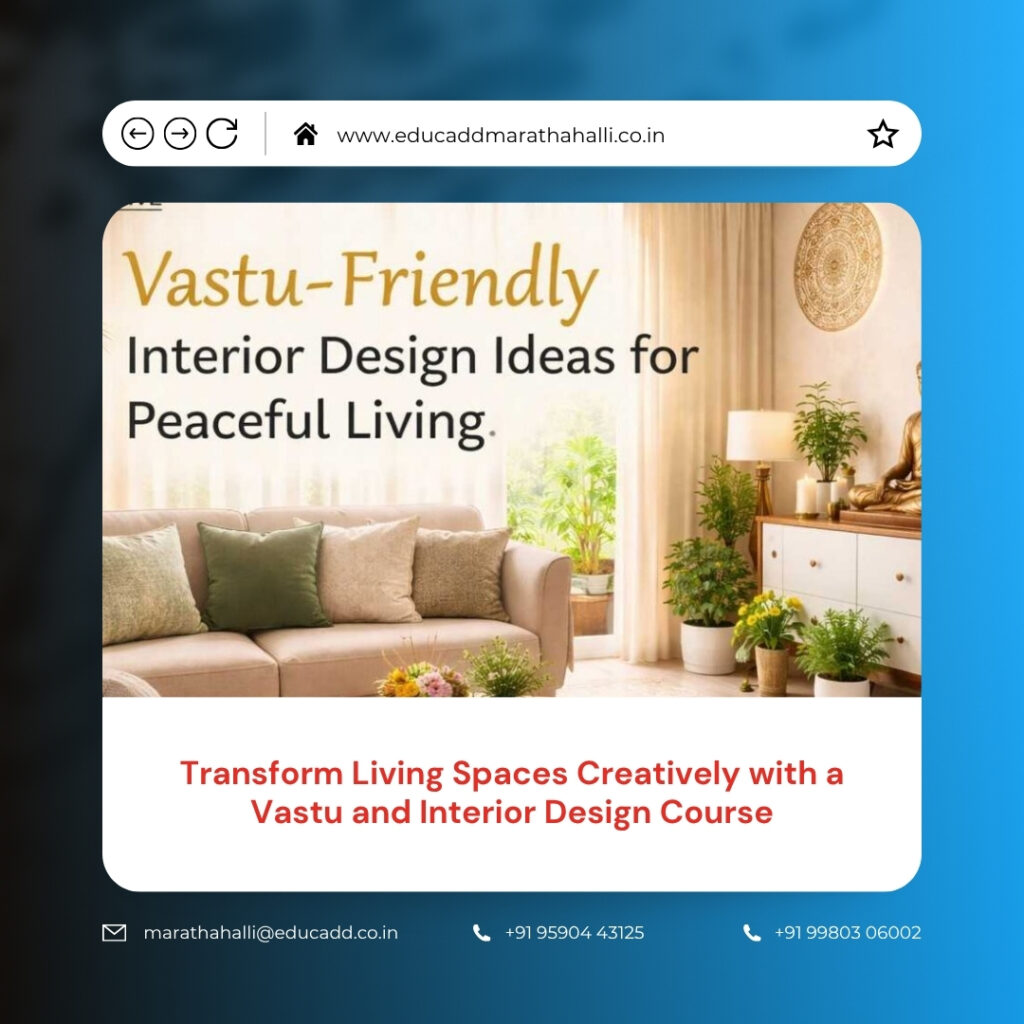
Vastu Interior Design Course
The following sections explain how this course builds creativity, strengthens career opportunities, improves practical understanding, and prepares students for a rewarding future in the interior design industry.
Understanding the Connection Between Vastu Interior Design Course
Vastu and interior design may come from different backgrounds, but they complement each other perfectly in modern spaces. Interior design improves the visual and functional quality of a room, while Vastu focuses on maintaining balance and positive energy within the environment. Together, they create interiors that feel attractive, organized, peaceful, and welcoming.
Modern homeowners often search for designs that combine elegance with emotional comfort. They want living rooms that encourage togetherness, bedrooms that support relaxation, kitchens that promote health, and workspaces that improve concentration. Therefore, interior designers who understand Vastu concepts can provide more complete and personalized solutions for clients.
A Vastu and Interior Design course teaches students how to integrate these concepts creatively rather than following rigid traditional methods. As a result, designers learn how to create modern interiors that satisfy both practical and emotional needs.
Rising Popularity of Vastu-Based Interior Planning
The popularity of Vastu-based interiors has grown significantly in recent years. Many people now believe that a properly planned environment can positively influence health, relationships, finances, and emotional well-being. Because of this belief, homeowners and business owners increasingly prefer spaces designed according to Vastu principles.
The design industry continues to evolve because clients expect more than decoration services. They now want interiors that improve quality of life while maintaining modern aesthetics. This growing expectation has created excellent opportunities for designers with specialized knowledge in Vastu-based planning.
Core Skills Developed Through the Course
A Vastu and Interior Design course focuses on developing technical, creative, and professional skills required in the design industry. Students receive detailed training that helps them understand space planning, aesthetics, material selection, and energy balance concepts.
One of the most important skills learned during the course is spatial planning. Designers must know how to organize rooms, furniture, and movement areas effectively so that the environment remains functional and comfortable. Proper planning improves usability and creates a better experience for occupants.
The course additionally covers software training, including applications such as AutoCAD, SketchUp, Revit, Photoshop, and 3ds Max. These tools allow students to prepare layouts, 3D models, and realistic presentations for clients.
Some major areas covered during training include:
- Furniture planning and layout creation
- Residential and commercial interior concepts
- Lighting and ceiling design techniques
- Material and texture selection
- Vastu principles for modern interiors
- 2D drafting and 3D visualization
- Client communication and project presentation
Along with technical skills, students improve creativity, observation, and problem-solving abilities. These qualities help professionals create customized interiors according to client expectations and space requirements.
Importance of Functional Space Planning
Space planning is one of the most essential aspects of successful interior design. Even a luxurious room can feel uncomfortable if the layout is poorly organized. Therefore, designers must ensure that every area supports smooth movement, convenience, and functionality.
A Vastu Interior Design Course teaches students how to maximize available space while maintaining balance and visual appeal. Designers learn how furniture placement, room dimensions, circulation paths, and storage solutions affect everyday living.
In modern cities, apartments and offices often have limited floor space. Consequently, designers need creative solutions that improve usability without making interiors feel crowded. Smart furniture arrangement and multifunctional design concepts help achieve this balance effectively.
Vastu principles also contribute to better space organization by guiding the positioning of rooms and important functional areas. Proper alignment can improve natural light, airflow, and energy movement within the space. As a result, interiors feel more comfortable and organized.
Therefore, designers with strong space-planning skills can create interiors that combine practicality, comfort, and positive energy in a highly effective way.
How Vastu Principles Influence Modern Interiors
Vastu Shastra is based on the idea that every space contains energy that influences the people living or working within it. This traditional system focuses on balancing natural elements such as earth, water, fire, air, and space to create harmony in built environments.
Modern interior designers use Vastu principles to improve the emotional and psychological comfort of spaces. For example, room orientation, entrance positioning, furniture arrangement, and color selection can influence the overall atmosphere of an interior.
Bedrooms designed according to Vastu recommendations often promote better relaxation and peaceful sleep. Similarly, workspaces aligned properly may encourage concentration, creativity, and productivity. Kitchens planned with directional balance can support health and family harmony.
A Vastu and Interior Design course teaches students how to apply these principles practically and professionally. As a result, they become capable of delivering balanced interiors that satisfy both modern expectations and traditional preferences.
Creative Opportunities in Residential Interior Design
Residential interior design remains one of the most rewarding fields for creative professionals. Every home reflects the personality, lifestyle, and emotional preferences of its occupants. Therefore, designers must create interiors that feel personal, comfortable, and visually engaging.
A Vastu and Interior Design course prepares students to handle different types of residential projects such as apartments, villas, duplex homes, luxury residences, and studio spaces. Designers learn how to customize layouts, furniture styles, lighting, and decorative themes according to client needs.
Living rooms require warm and inviting arrangements that encourage social interaction. Bedrooms need calming interiors that support relaxation and privacy. Kitchens must combine functionality, hygiene, and efficient workflow. Designers also focus on children’s rooms, dining spaces, balconies, and entertainment areas.
Since every client has unique expectations, residential projects provide endless opportunities for innovation and artistic expression.
Role of Technology in Modern Design Education
Technology has transformed the interior design industry completely. Earlier, designers relied mainly on hand-drawn sketches and physical models. However, modern software tools now allow professionals to create highly accurate and realistic visualizations.
A Vastu and Interior Design course includes software training that helps students present ideas professionally and manage projects efficiently. These tools improve design accuracy, save time, and enhance communication with clients.
Technology also improves client satisfaction because people can visualize complete interiors before execution begins. This reduces confusion and helps clients make faster decisions regarding layouts, materials, and color combinations.
Digital tools also simplify project coordination and teamwork. Designers can communicate effectively with architects, contractors, and vendors using digital plans and visual presentations. Therefore, students who develop strong software skills gain a major advantage in the modern design industry.
Commercial Interior Design and Professional Growth
Commercial interior design offers excellent opportunities for professionals interested in large-scale and business-oriented projects. Offices, retail stores, hotels, restaurants, educational institutions, and healthcare centers all require well-planned interiors that improve functionality and user experience.
Commercial spaces differ from residential interiors because they focus heavily on branding, productivity, customer engagement, and operational efficiency. Therefore, designers must understand both aesthetic concepts and business requirements.
A Vastu Interior Design Course trains students to work on commercial layouts that support organizational goals while maintaining visual appeal. Designers learn how to create professional office environments, attractive retail spaces, and welcoming hospitality interiors.
Commercial projects often involve larger budgets and long-term contracts, making them highly profitable for skilled professionals. Consequently, many designers choose to specialize in this sector after completing their training.
Practical Exposure and Industry-Based Learning
Practical learning is essential for developing professional confidence in interior design. While theoretical knowledge builds understanding, real-world experience teaches students how projects function in actual industry environments.
A Vastu and Interior Design course usually includes live projects, workshops, site visits, and hands-on assignments that help students gain practical exposure. These activities improve technical understanding and prepare learners for industry challenges.
Some major benefits of practical training include:
- Better understanding of real project execution
- Improved confidence in client communication
Practical assignments also help students build professional portfolios. A strong portfolio demonstrates creativity, technical ability, and project understanding, which increases job opportunities significantly.
Therefore, industry-based learning becomes a major factor in preparing students for successful careers in the competitive interior design field.
Entrepreneurship and Freelancing Opportunities
Interior design is one of the few creative professions that offers excellent entrepreneurial opportunities. Many professionals eventually start their own studios, consultancy firms, or freelance businesses after gaining experience in the industry.
A Vastu and Interior Design course develops both technical and managerial abilities that support entrepreneurship. Designers learn project planning, budgeting, vendor management, client handling, and presentation skills that are essential for running independent businesses.
Freelancing provides flexibility and creative freedom. Designers can choose project types, specialize in specific styles, and work according to their interests. Residential renovations, office interiors, cafe designs, and Vastu consultation services are common freelance opportunities.
Additionally, many clients now prefer personalized services from independent designers because they value customized attention and creative originality. Consequently, entrepreneurship has become an attractive career path for ambitious design professionals.
Sustainable and Eco-Friendly Interior Concepts
Sustainability has become an important priority in modern interior design. Clients increasingly prefer interiors that reduce environmental impact while maintaining style, comfort, and functionality.
A Vastu Interior Design Course introduces students to eco-friendly design practices such as energy-efficient lighting, natural ventilation, recycled materials, and sustainable furniture solutions.
Vastu principles naturally encourage balance with nature because they emphasize harmony among natural elements. Therefore, combining sustainable design with Vastu concepts creates interiors that feel peaceful, responsible, and environmentally conscious.
As awareness about environmental protection continues to increase, designers with knowledge of sustainable practices will remain highly valuable in future markets.
Benefits of Choosing Professional Design Training
Choosing a reputed institute can strongly influence career success in the design industry. Professional training centers provide updated curriculum, practical exposure, experienced faculty, and placement support that help students grow effectively.
A structured Vastu and Interior Design course ensures that students learn industry-relevant skills instead of outdated theoretical concepts. Institutes also provide access to professional software, workshops, and live project opportunities.
Experienced trainers guide students through practical challenges and industry expectations. Their knowledge helps learners understand client behavior, market trends, and professional standards more clearly.
Furthermore, learning in a professional environment encourages networking and collaboration with peers and industry experts. Consequently, students develop stronger confidence and professional exposure throughout their training journey.
Future Scope of Vastu and Interior Design Careers
The future of the Vastu and interior design industry looks extremely promising because modern lifestyles continue to evolve rapidly. Urban expansion, luxury housing, commercial development, and changing consumer preferences are creating constant demand for skilled professionals.
People increasingly understand the importance of comfortable and emotionally balanced interiors. Therefore, interior design is no longer viewed as a luxury service alone. It has become an essential part of modern living and working environments.
Future opportunities will continue growing across residential, commercial, hospitality, healthcare, retail, and educational sectors. Designers who continuously update their skills and follow emerging trends can achieve long-term success in this creative industry.
Conclusion
A Vastu Interior Design Course offers the perfect combination of creativity, technical learning, and professional growth. It helps students understand how to transform ordinary spaces into environments that support beauty, comfort, positivity, and functionality.
Professional training develops software skills, practical knowledge, communication abilities, and industry confidence required for successful careers. Whether students choose employment, freelancing, or entrepreneurship, the possibilities remain wide and rewarding.
As modern lifestyles continue evolving, the need for meaningful and harmonious spaces will increase even further. Therefore, pursuing a Vastu and Interior Design course can become an excellent career decision for creative individuals seeking stability, innovation, and long-term professional success.

