
Building Smarter Futures: Advanced BIM Coordination and Collaboration Training for Modern Construction Excellence
The construction industry is experiencing a profound transformation driven by digital innovation and integrated workflows. Traditional project methods, which often relied on isolated planning and fragmented communication, are steadily being replaced by intelligent systems that encourage collaboration and accuracy. Among these advancements, BIM Coordination Training Program has emerged as a critical pathway for professionals who aim to stay competitive and future-ready.
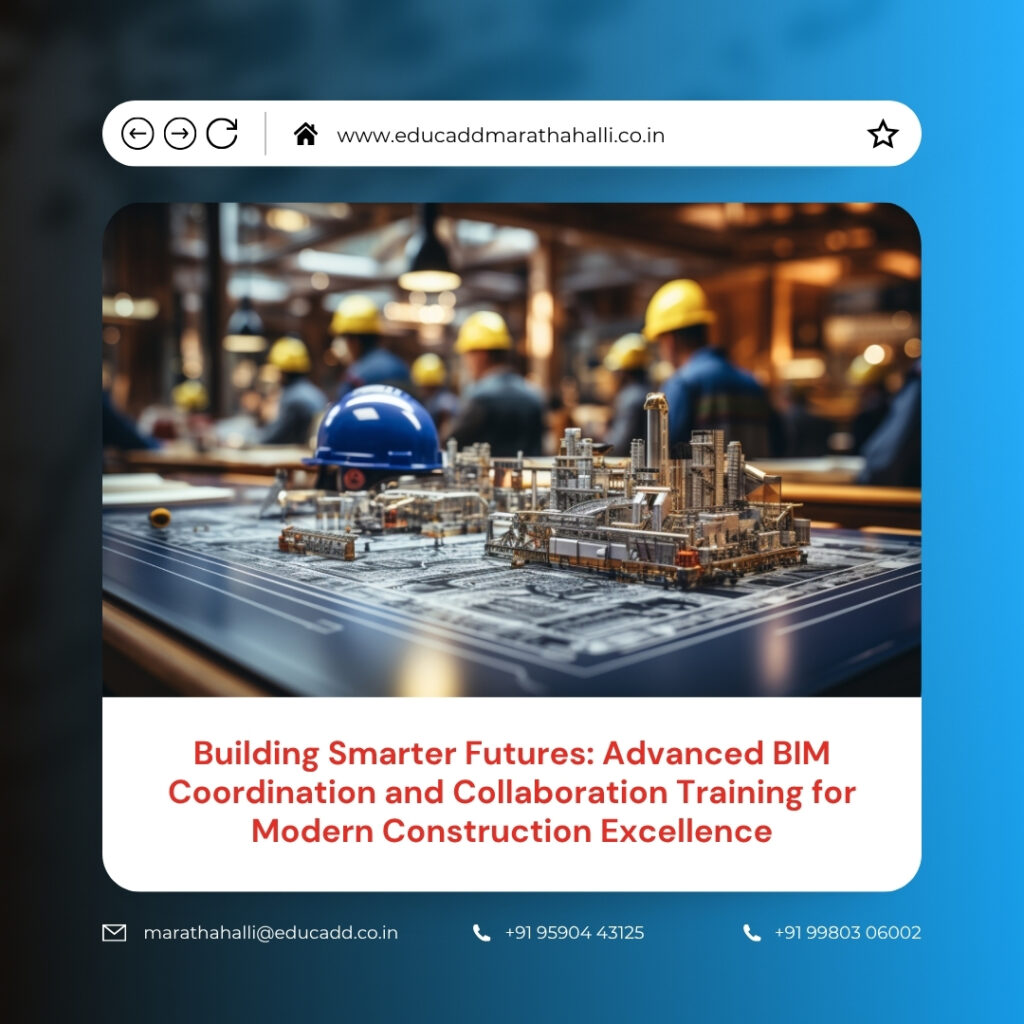
BIM Coordination Training Program
Building Information Modeling (BIM) goes beyond simple 3D modeling. It creates a shared digital environment where architects, engineers, contractors, and stakeholders can work together efficiently. Through proper coordination and collaboration, teams can detect issues early, streamline workflows, and ensure that projects meet deadlines and budgets. This blog explores how structured BIM Coordination Training Program in empowers professionals, enhances project outcomes, and prepares individuals for long-term success in a rapidly evolving industry.
1. Foundations of BIM Coordination in Modern Construction
BIM coordination forms the backbone of integrated project delivery. It involves combining various design disciplines into a unified digital model that reflects the entire structure. Instead of relying on separate drawings, teams work within a shared system that ensures consistency across all elements.
This approach allows professionals to identify discrepancies early in the design stage. As a result, conflicts between architectural, structural, and mechanical components can be resolved before construction begins. This proactive strategy significantly reduces costly errors and rework.
Furthermore, BIM coordination training introduces learners to structured workflows and standardized practices. These skills help professionals maintain accuracy and efficiency throughout the project lifecycle, making them valuable contributors to any construction team.
2. The Role of Collaboration in BIM-Driven Projects
Collaboration plays a vital role in ensuring the success of BIM-based projects. It enables multiple stakeholders to work together seamlessly, regardless of their location or discipline. Through collaborative platforms, teams can share updates, track progress, and make informed decisions in real time.
This interconnected approach enhances transparency and accountability. Every participant has access to the same data, which minimizes confusion and miscommunication. Consequently, project timelines are maintained, and productivity improves.
In addition, BIM collaboration encourages a culture of teamwork. Professionals learn to coordinate their efforts effectively, leading to stronger relationships and better project outcomes.
3. Essential Tools Covered in BIM Training Programs
BIM coordination and collaboration training provides hands-on experience with industry-relevant tools. These tools are designed to manage complex models, detect clashes, and facilitate communication among team members.
Key tools introduced during training include:
- Advanced software for model integration and clash analysis
- Cloud-based platforms for real-time collaboration and data sharing
By mastering these tools, professionals can streamline their workflows and handle complex project requirements with confidence. This technical proficiency is essential for achieving success in modern construction environments.
4. Mastering Clash Detection and Conflict Resolution
Clash detection is a fundamental aspect of BIM coordination. It involves identifying conflicts between different systems within a building model. For example, structural beams may intersect with plumbing lines, creating potential issues during construction.
Training programs focus on teaching effective techniques to resolve these conflicts. Instead of addressing problems on-site, professionals learn to fix them during the design phase. This approach saves time and reduces unnecessary expenses.
Moreover, learners develop critical thinking skills that enable them to analyze and prioritize issues. This ensures that conflicts are resolved efficiently, contributing to smoother project execution.
5. Strengthening Communication Through BIM Collaboration
Effective communication is essential for successful project delivery. BIM collaboration tools provide a centralized platform where team members can share information, provide feedback, and track changes.
This streamlined communication process reduces misunderstandings and ensures that everyone remains aligned with project objectives. As a result, teams can coordinate tasks more effectively and avoid delays.
Additionally, improved communication fosters trust among team members. When information flows freely, collaboration becomes more efficient, leading to better overall performance.
6. Advantages of Real-Time Data Integration
Real-time data integration is one of the most powerful features of BIM collaboration. It allows stakeholders to access updated project information instantly, ensuring that decisions are based on accurate data.
This capability eliminates the risk of working with outdated information. Consequently, errors are minimized, and project reliability increases. Teams can respond quickly to changes, maintaining project momentum.
Furthermore, real-time updates enable faster approvals and smoother workflows. This contributes to improved efficiency and timely project completion.
7. Coordinating Multiple Disciplines with BIM Technology
Modern construction projects involve various disciplines working together. BIM coordination ensures that these disciplines are integrated seamlessly within a single model.
For instance, architects, engineers, and contractors can collaborate on the same platform, reducing conflicts and improving efficiency. This unified approach enhances project planning and execution.
Additionally, BIM provides a clear visualization of the entire project. This helps teams understand how different components interact, leading to better decision-making and coordination.
8. Key Competencies Developed Through BIM Training
BIM coordination and collaboration training equips professionals with essential skills required in the construction industry. These skills go beyond technical knowledge and include communication and problem-solving abilities.
Some important competencies gained through training include:
- Expertise in 3D modeling and project visualization
- Strong coordination and teamwork capabilities
These skills enable professionals to handle complex projects effectively. As a result, they become valuable assets to their organizations and contribute to successful project delivery.
9. Enhancing Productivity with Streamlined BIM Workflows
BIM workflows are designed to improve productivity by integrating coordination and collaboration processes. Training programs teach professionals how to optimize these workflows for maximum efficiency.
By eliminating redundant tasks and improving coordination, projects can be completed faster and with greater accuracy. This leads to better resource utilization and reduced costs.
Moreover, streamlined workflows enhance overall project performance. Teams can focus on delivering high-quality results without unnecessary delays or complications.
10. Growing Demand for BIM Professionals in the Industry
The demand for skilled BIM professionals continues to rise as more organizations adopt digital construction practices. Companies are seeking individuals who can manage coordination and collaboration effectively.
This increasing demand creates numerous career opportunities for trained professionals. BIM expertise is highly valued, leading to better job prospects and higher earning potential.
Additionally, professionals with BIM skills are often involved in high-profile projects. This provides valuable experience and contributes to long-term career growth.
11. Real-World Applications of BIM Coordination
BIM coordination is widely used in various types of construction projects, including residential, commercial, and infrastructure developments. It plays a crucial role in improving project accuracy and efficiency.
For example, detailed 3D models guide construction activities, ensuring that every component is placed correctly. This reduces errors and enhances overall quality.
Furthermore, BIM supports project management by providing insights into timelines, costs, and resources. This ensures that projects are completed successfully and meet client expectations.
12. Addressing Challenges in BIM Adoption
Despite its many benefits, implementing BIM can present challenges. Organizations may face issues such as lack of expertise or resistance to new technologies.
BIM training programs help overcome these challenges by providing the necessary knowledge and skills. Professionals learn how to use BIM tools effectively and adapt to new workflows.
Additionally, proper training ensures a smooth transition from traditional methods to digital processes. This enables organizations to fully leverage the advantages of BIM.
13. Emerging Trends in BIM Coordination and Collaboration
The future of BIM is shaped by emerging technologies that enhance its capabilities. Innovations such as artificial intelligence, automation, and cloud computing are transforming BIM workflows.
These advancements improve accuracy, efficiency, and collaboration. As a result, BIM becomes an even more powerful tool for managing complex projects.
Professionals who stay updated with these trends will have a competitive advantage. Continuous learning and adaptation are essential for success in this evolving field.
14. The Importance of BIM Training for Career Advancement
BIM coordination and collaboration training is essential for professionals who want to advance their careers. The construction industry is increasingly relying on digital solutions, making BIM skills highly valuable.
Training programs provide practical experience and in-depth knowledge of BIM processes. This helps individuals build confidence and expertise in handling real-world projects.
Moreover, BIM training opens doors to global opportunities. Professionals can work on international projects and expand their career horizons, ensuring long-term success.
Conclusion
BIM Coordination Training Program is transforming the way construction projects are planned and executed. By integrating advanced tools and collaborative workflows, it enables professionals to deliver projects with greater accuracy and efficiency. This training not only enhances technical skills but also improves communication and teamwork, which are essential for modern construction practices.
As the industry continues to evolve, the importance of BIM will only grow. Professionals who invest in learning BIM coordination and collaboration will be well-positioned to succeed in this dynamic environment. With the right training and expertise, they can contribute to innovative projects and build a future-ready career in the construction industry.

