
From Concept to Creation: Transform Interior Design Ideas with SketchUp Mastery
Interior design has evolved far beyond traditional sketches and manual layouts. Today, digital tools have become essential for creating, visualizing, and presenting ideas with clarity and precision. Among these tools, SketchUp has emerged as a favorite for interior designers due to its simplicity and powerful modeling capabilities. Whether someone is just starting their journey or aiming to upgrade their professional skills, enrolling in a SketchUp Interior Design Mastery can be a game-changer. This blog explores how SketchUp enhances creativity, improves efficiency, and empowers designers to turn concepts into visually compelling realities.
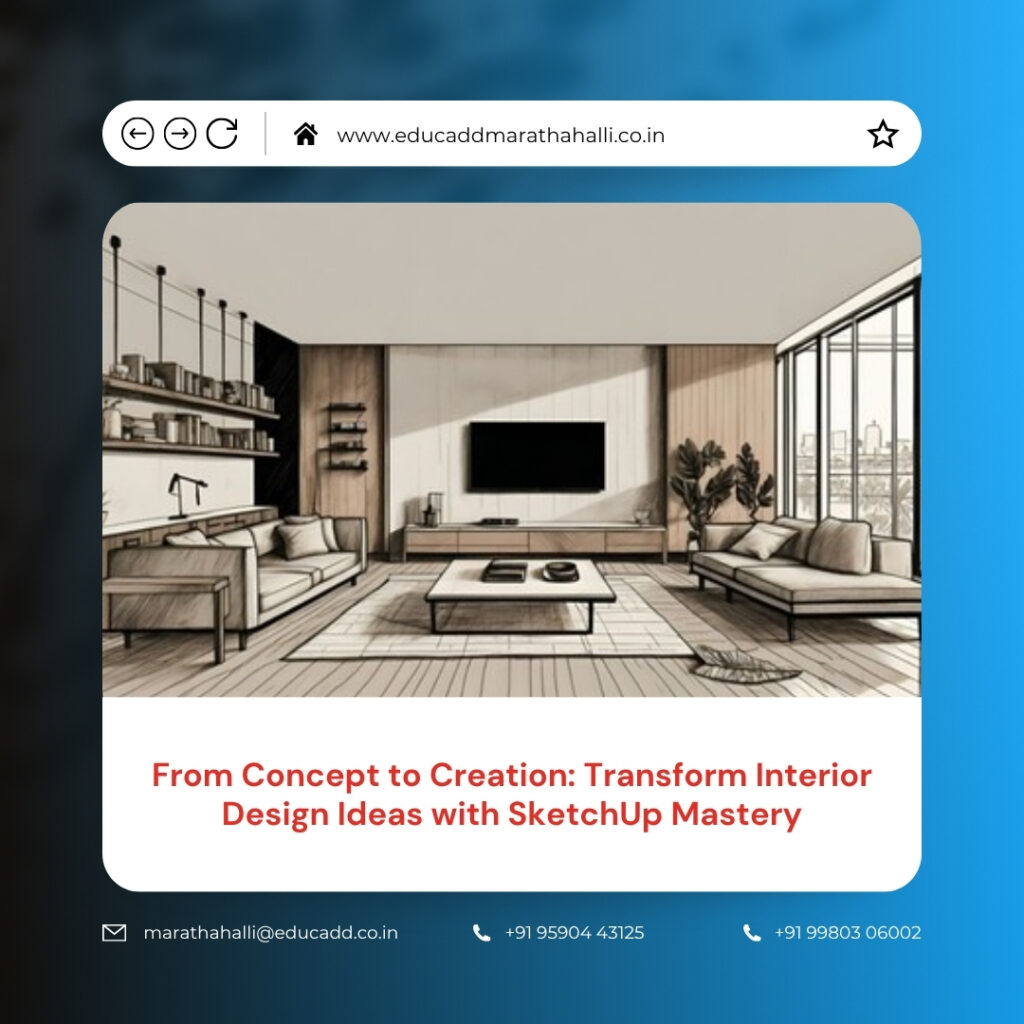
SketchUp Interior Design Mastery
1. The Growing Importance of SketchUp Interior Design Mastery
The interior design industry is becoming increasingly competitive, and professionals must adopt modern tools to stay relevant. SketchUp plays a vital role in this transformation by enabling designers to create accurate 3D models quickly. Unlike traditional methods, it allows real-time visualization, which helps in refining ideas before implementation.
Additionally, SketchUp bridges the gap between imagination and execution. Designers can experiment with layouts, materials, and lighting without physical limitations. This flexibility not only saves time but also reduces costly errors during project execution.
2. Building a Strong Foundation with SketchUp Basics
Every successful design journey begins with mastering the basics. A well-structured SketchUp course introduces learners to essential tools such as drawing, scaling, and navigation. These features form the foundation for creating detailed interior models.
Understanding how to organize models using groups and components is equally important. This ensures that designs remain clean and easy to edit. Once learners are comfortable with these fundamentals, they can confidently explore advanced techniques and workflows.
3. Designing Realistic Interior Environments
One of the most powerful aspects of SketchUp is its ability to create realistic interior spaces. Designers can apply textures, colors, and materials to different surfaces, making their models visually appealing. This level of detail helps clients understand how the final space will look.
Moreover, SketchUp supports various rendering tools that enhance realism. Designers can simulate lighting effects, shadows, and reflections, which add depth to their presentations. As a result, the design process becomes more interactive and engaging.
4. Key Advantages of Learning SketchUp for Interior Design
Learning SketchUp offers several practical benefits that directly impact a designer’s workflow and career growth:
- Simplifies complex design concepts into easy-to-understand 3D visuals
- Enhances client communication through detailed presentations
These advantages make SketchUp an essential skill for anyone pursuing a career in interior design. It not only improves productivity but also boosts confidence in presenting ideas.
5. Accelerating Design Workflow and Productivity
Efficiency is a critical factor in interior design projects. SketchUp enables designers to work faster by providing tools that streamline the modeling process. Pre-built components, templates, and libraries reduce the time required to create designs from scratch.
Furthermore, changes can be implemented quickly without affecting the overall structure of the model. This flexibility allows designers to adapt to client feedback and project requirements with ease, ensuring timely project completion.
6. Unlocking Creative Potential Through Visualization
Creativity is at the heart of interior design, and SketchUp provides the perfect platform to explore it. Designers can experiment with various layouts, furniture arrangements, and color combinations in a virtual environment.
By visualizing ideas in 3D, designers gain a better understanding of space and proportions. This leads to more innovative and functional designs that meet both aesthetic and practical requirements.
7. Enhancing Client Communication and Presentations
Clear communication is essential for successful interior design projects. SketchUp allows designers to present their ideas in a visually compelling manner. Instead of relying on technical drawings, they can showcase realistic 3D models.
This approach helps clients visualize the final outcome more effectively. It also reduces misunderstandings and ensures that the design aligns with client expectations, resulting in higher satisfaction levels.
8. Exploring Advanced Features and Extensions
After mastering the basics, designers can take advantage of SketchUp’s advanced features. Plugins and extensions expand the software’s capabilities, allowing for more detailed and efficient designs.
For instance, rendering tools can create photorealistic images, while other plugins assist with space planning and lighting analysis. These features help designers deliver professional-quality work that stands out in the market.
9. Career Opportunities with SketchUp Skills
Completing a SketchUp course opens up a wide range of career opportunities. Designers with strong 3D modeling skills are in high demand across various industries. From residential projects to commercial spaces, SketchUp expertise is highly valued.
Some common career paths include:
- Interior design specialist
- 3D visualization expert
These roles offer excellent growth potential and the opportunity to work on diverse projects. As digital design continues to evolve, the demand for skilled professionals is expected to rise.
10. Applying SketchUp in Residential Interior Projects
Residential interior design focuses on creating comfortable and personalized living spaces. SketchUp helps designers plan layouts that reflect the client’s lifestyle and preferences. Every detail, from furniture placement to color schemes, can be visualized accurately.
This level of precision ensures that the final design meets client expectations. It also allows designers to experiment with different styles and concepts before finalizing the design.
11. Designing Functional Commercial Spaces
Commercial interior design requires a balance between aesthetics and functionality. SketchUp enables designers to create layouts that maximize space utilization while maintaining visual appeal. Offices, retail stores, and hospitality spaces can be designed efficiently.
Additionally, designers can simulate how people will interact with the space. This helps in creating environments that enhance productivity and customer experience.
12. Improving Team Collaboration and Workflow
Interior design projects often involve collaboration between multiple stakeholders. SketchUp makes it easier for designers to share their models with clients, architects, and contractors. This ensures that everyone is on the same page.
Improved collaboration leads to better decision-making and fewer errors. It also speeds up the project timeline, resulting in more efficient project delivery.
13. Choosing the Best SketchUp Course for Your Needs
Selecting the right course is crucial for gaining the most value from your learning experience. A good SketchUp course should cover both fundamental and advanced concepts. It should also include practical assignments that help learners apply their knowledge.
Look for courses that offer hands-on training and real-world projects. This ensures that you develop skills that are directly applicable in professional settings, making you job-ready.
14. The Future of Interior Design with SketchUp
The future of interior design is closely tied to technological advancements. SketchUp continues to evolve with new features that enhance its usability and functionality. As digital tools become more advanced, designers will have greater opportunities to innovate.
Learning SketchUp today prepares designers for the future. It ensures that they remain competitive and capable of meeting the demands of a rapidly changing industry.
Conclusion
A SketchUp Interior Design Mastery is not just about learning software; it is about transforming the way designers think and work. By mastering SketchUp, designers can bring their ideas to life with clarity, precision, and creativity. From improving workflow efficiency to enhancing client communication, the benefits are extensive. As the interior design industry continues to grow, investing in SketchUp training can open doors to exciting career opportunities and long-term success.

