
From Classroom to Client Sites: Interior Design Training with Live Projects That Shapes Future Designers
Interior design has grown into a powerful career choice where creativity meets functionality. Today, clients expect more than visually appealing spaces. They want environments that reflect personality, improve usability, and align with modern trends. Because of this shift, aspiring designers must go beyond textbooks and gain practical experience. This is where Interior Design Live Training becomes highly valuable.
Unlike traditional programs, this type of training focuses on real-world exposure. Students learn how to handle actual design challenges while working on live assignments. As a result, they become more confident and capable. They also understand how the industry operates on a day-to-day basis.
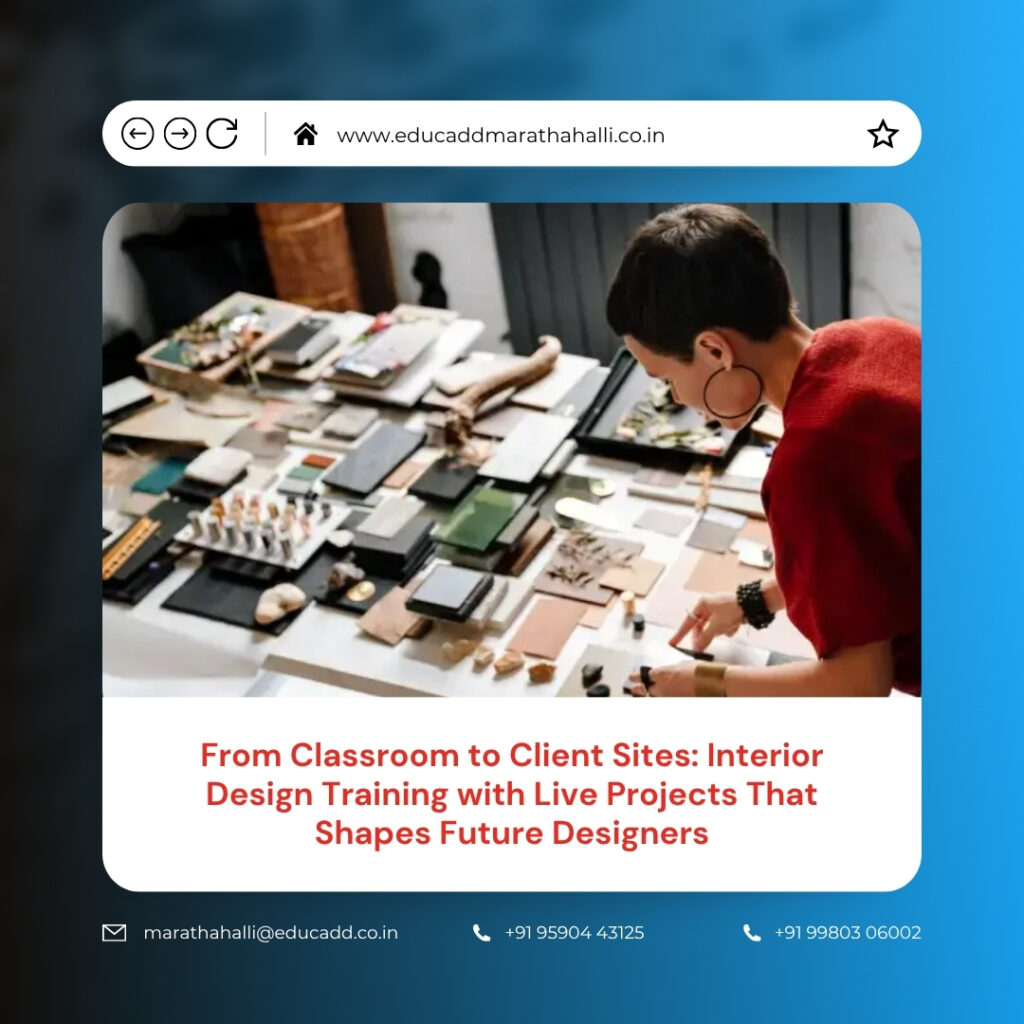
Interior Design Live Training
In this blog, we will explore how this approach to learning builds strong foundations for a successful interior design career. Each section will highlight key benefits and insights that make this training method highly effective.
1. The Evolving Landscape of Interior Design Education
Interior design education has undergone a significant transformation in recent years. Earlier, the focus was mainly on theory and artistic skills. However, the modern industry demands a blend of creativity, technical knowledge, and practical application.
Today’s training programs include modules on spatial planning, color psychology, lighting concepts, and digital tools. While these topics are essential, they are not enough on their own. Students must also understand how to apply these concepts in real-life situations.
Interior design training with live projects addresses this need effectively. It ensures that students not only learn concepts but also implement them. This approach creates a well-rounded learning experience that prepares students for professional roles.
2. The Importance of Interior Design Live Training Projects Exposure
Working on live projects changes the way students perceive design. Instead of imagining scenarios, they deal with real clients and actual spaces. This makes learning more engaging and meaningful.
Students face real constraints such as budget limits, space restrictions, and client expectations. These challenges teach them how to think practically. They also learn to adjust their designs based on real-time feedback.
As a result, students develop problem-solving skills that cannot be gained through theory alone. This experience plays a crucial role in shaping their professional mindset.
3. Connecting Conceptual Learning with Practical Execution
One of the biggest advantages of live project training is the seamless connection between theory and practice. Students first learn design principles in the classroom. Then, they apply those principles to real projects.
This process strengthens their understanding and improves retention. Instead of memorizing concepts, they experience them. This makes learning more effective and long-lasting.
Additionally, practical execution helps students identify areas for improvement. They receive feedback from mentors and clients, which helps them refine their skills over time.
4. Strengthening Client Interaction and Communication
Interior designers must communicate effectively with clients to succeed. They need to understand client requirements and translate them into workable designs. Live projects provide the perfect environment to develop these skills.
Students interact directly with clients during their training. They learn how to ask the right questions and present their ideas clearly. This builds confidence and improves professionalism.
Moreover, handling client feedback teaches students how to manage expectations. They learn to balance creativity with practicality, which is essential in real-world projects.
5. Mastering Industry-Standard Design Tools
Technology plays a major role in modern interior design. Designers use software to create layouts, visualizations, and presentations. Learning these tools is an important part of training.
With live projects, students use design software in real scenarios. They work on actual layouts and create realistic models. This hands-on experience improves their technical skills significantly.
Some key advantages include:
- Better understanding of software applications
- Ability to create professional presentations
These skills make students more competitive in the job market.
6. Developing Effective Space Planning Skills
Space planning is one of the most important aspects of interior design. It involves organizing spaces to maximize functionality and comfort. Live projects help students understand this concept in depth.
They work with real dimensions and layouts, which requires precision. They also consider factors such as movement flow and usability. This practical exposure improves their ability to design functional spaces.
Over time, students learn how to balance aesthetics with practicality. This skill is highly valued in the industry.
7. Gaining Knowledge of Materials and Finishes
Selecting the right materials is crucial for any design project. It affects both the appearance and durability of the space. Live project training provides hands-on experience with different materials.
Students explore various options such as wood, metal, fabric, and finishes. They learn about their properties and applications. This helps them make informed decisions during projects.
Key learning outcomes include:
- Understanding material quality and durability
- Learning cost-effective material selection
This knowledge ensures that designs are both attractive and practical.
8. Learning Budget Planning and Cost Management
Budget management is an essential skill for interior designers. Every project has financial limitations that must be respected. Live projects teach students how to work within these constraints.
They learn to allocate resources wisely and prioritize design elements. This helps them create cost-effective solutions without compromising quality.
In addition, students gain experience in estimating project costs. This skill is important for both freelance designers and professionals working in firms.
9. Improving Time Management and Project Coordination
Interior design projects often have strict deadlines. Managing time effectively is crucial for successful execution. Live projects provide valuable experience in handling timelines.
Students learn how to plan tasks and coordinate with different teams. They understand the importance of meeting deadlines and maintaining workflow efficiency.
This experience prepares them for the fast-paced nature of the industry. It also helps them develop discipline and responsibility.
10. Enhancing Creativity Through Real-World Challenges
Creativity is a key element of interior design. However, real-world challenges require designers to think beyond standard solutions. Live projects encourage this type of thinking.
Students face unique problems that require innovative ideas. They learn to adapt their designs based on practical constraints. This enhances their creative abilities.
Exposure to different types of projects also broadens their perspective. They become more versatile and capable of handling diverse design requirements.
11. Building a Professional and Impressive Portfolio
A strong portfolio is essential for launching a successful career. Live projects provide valuable content for creating an impressive portfolio.
Students can showcase real work, including concepts, layouts, and final results. This adds authenticity to their profile. Employers and clients prefer candidates with practical experience.
Important portfolio components include:
- Real project documentation
- Visual presentations and design concepts
A well-crafted portfolio increases job opportunities and client trust.
12. Understanding Industry Practices and Standards
Interior design involves more than creativity. It also requires knowledge of industry standards and regulations. Live project training introduces students to these aspects.
They learn about safety guidelines, design norms, and project workflows. This ensures that their designs are both creative and compliant.
Understanding industry practices also improves professionalism. Students become more confident in handling real projects.
13. Expanding Professional Network and Industry Exposure
Networking is an important part of career growth. Live projects provide opportunities to connect with industry professionals.
Students interact with clients, suppliers, and contractors. These connections can lead to future opportunities. They also gain insights into industry trends and practices.
Exposure to real projects helps students understand market demands. This knowledge is valuable for career planning and growth.
14. Preparing for Diverse Career Opportunities
Interior design offers a wide range of career paths. With live project experience, students are better prepared to explore these opportunities.
They can work in residential design, commercial projects, or specialized fields. Some may choose freelance careers, while others join design firms.
The skills gained through interior design training with live projects give them a competitive advantage. They are ready to handle real challenges and deliver quality work.
Conclusion
Interior design is a dynamic field that requires both creativity and practical expertise. While theoretical knowledge provides a foundation, real-world experience is what truly shapes a designer.
Interior Design Live Training with projects offers a complete learning experience. It bridges the gap between classroom education and professional practice. Students gain hands-on experience, develop essential skills, and build confidence.
This approach not only prepares them for the industry but also helps them stand out in a competitive market. As the demand for skilled designers continues to grow, choosing practical training becomes more important than ever.
In the end, investing in such training is not just about learning design. It is about building a career that is both successful and fulfilling.

