
From Site to Strategy: High-Impact Courses Every Project Engineer Must Master
Project Engineer Career Courses has moved far beyond traditional technical roles. Today, it sits at the intersection of engineering precision, business strategy, and digital innovation. Organizations expect project engineers to not only understand designs and processes but also to lead teams, manage budgets, and deliver projects on time. This shift has created a strong demand for professionals who are equipped with both technical expertise and advanced management capabilities.
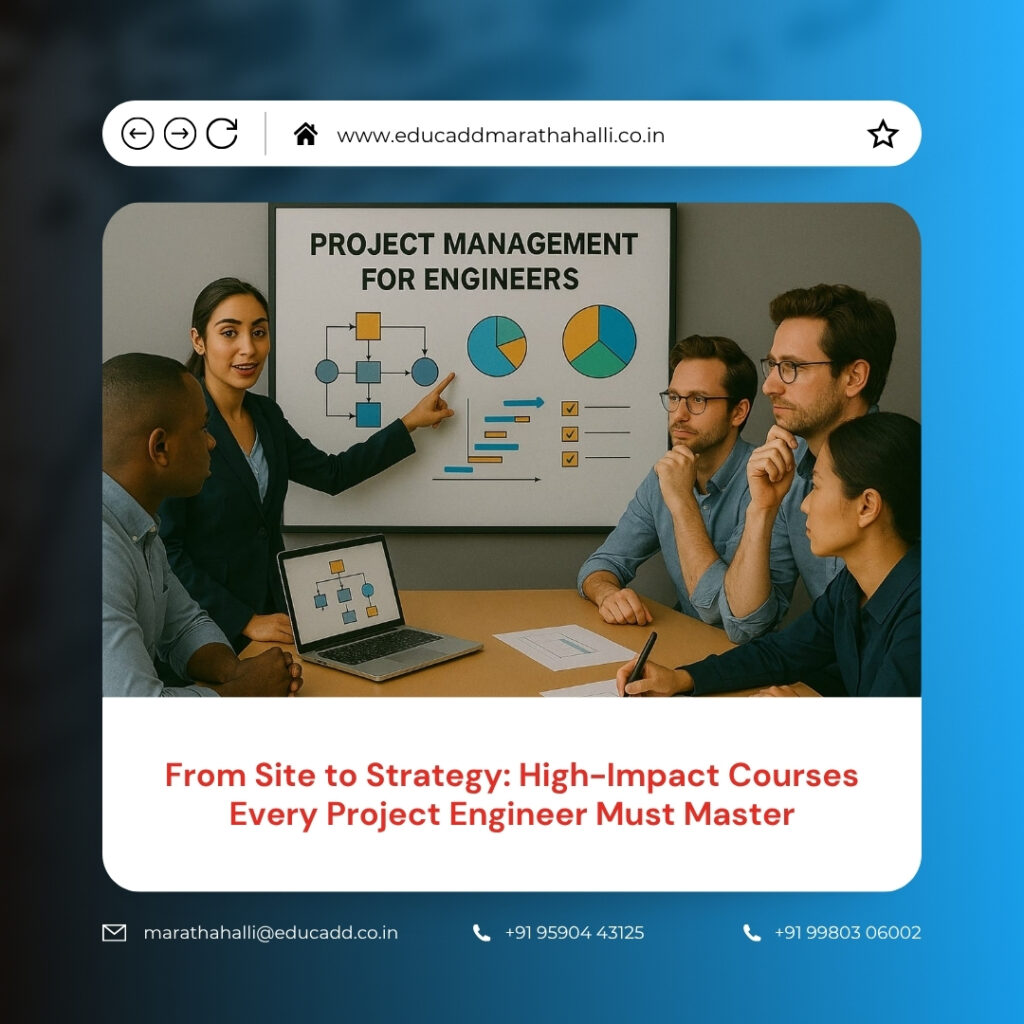
Project Engineer Career Courses
To remain competitive in this evolving environment, continuous learning is essential. The right course can transform a Project Engineer Career Courses into a high-performing professional capable of handling complex, multi-disciplinary projects. It can sharpen decision-making, improve communication, and enhance efficiency. This comprehensive blog explores the most impactful courses that can elevate a project engineer’s career, offering clarity on what to learn and why it matters.
1. The Growing Importance of Skill Enhancement for Project Engineers
Project engineers are no longer confined to technical supervision. Their responsibilities now include planning, coordination, budgeting, and execution. As projects become larger and more complex, the need for structured knowledge becomes increasingly important. Engineers who rely solely on academic learning often find themselves unprepared for real-world challenges.
Professional courses help bridge this gap by introducing practical concepts and tools used in modern industries. They provide insights into project workflows, resource management, and stakeholder engagement. Moreover, structured learning ensures that engineers can adapt to industry changes quickly. With competition increasing, those who invest in skill enhancement gain a significant advantage in career growth.
2. Mastering Project Management with PMP Certification
The Project Management Professional certification stands as one of the most respected credentials worldwide. It equips project engineers with a structured approach to managing projects efficiently. The course focuses on essential areas such as planning, execution, monitoring, and closing projects successfully.
Engineers who complete this certification develop strong leadership abilities. They learn to manage teams, handle risks, and maintain quality standards. Furthermore, the certification improves credibility, making professionals more attractive to employers. It is especially beneficial for those aiming to transition into senior or managerial roles.
3. Enhancing Planning Skills Through Primavera P6
Effective planning is the backbone of successful project execution. Primavera P6 is a widely used software that enables engineers to create detailed project schedules and manage resources efficiently. Learning this tool can significantly improve a project engineer’s ability to handle large-scale projects.
This course teaches how to define project activities, allocate resources, and track progress in real time. Engineers can identify potential delays and take corrective actions before issues escalate. As industries continue to adopt advanced planning tools, proficiency in Primavera becomes a valuable asset for career advancement.
4. Simplifying Project Execution with Microsoft Project
Microsoft Project offers a user-friendly platform for managing tasks, timelines, and resources. It is particularly useful for small and medium-sized projects. Project engineers who understand this tool can streamline workflows and improve overall efficiency.
The course provides knowledge on setting milestones, assigning responsibilities, and monitoring progress. It also enhances collaboration among team members. By mastering Microsoft Project, engineers can ensure better organization and timely delivery of projects.
5. Transforming Construction Projects with BIM Training
Building Information Modeling has revolutionized the construction and infrastructure sectors. It integrates design, planning, and execution into a single digital environment. For project engineers, this means better coordination and fewer errors.
A BIM course introduces 3D modeling, data integration, and project visualization techniques. Engineers learn how to collaborate effectively with architects and contractors. This approach not only improves accuracy but also reduces project costs. As digital construction becomes the norm, BIM skills are increasingly in demand.
6. Specialized Knowledge Through Construction Project Management Courses
Construction projects involve unique challenges such as site management, safety regulations, and contract handling. Courses focused on construction project management provide in-depth knowledge tailored to these requirements. They prepare engineers to handle real-world scenarios with confidence.
- Gain practical insights into on-site problem solving
- Learn compliance with safety and legal standards
Such programs are ideal for civil engineers who want to move into leadership roles within the construction industry. They provide a strong foundation for managing large and complex projects.
7. Adapting to Change with Agile and Scrum Training
In today’s fast-paced work environment, flexibility is crucial. Agile and Scrum methodologies offer a dynamic approach to project management. These frameworks emphasize iterative progress, continuous feedback, and team collaboration.
Project engineers who undergo Agile training learn to break projects into manageable phases. This allows for quick adjustments and improved efficiency. Scrum certification further enhances teamwork and accountability. Together, these skills enable engineers to thrive in rapidly changing environments.
8. Managing Uncertainty with Risk Management Courses
Every project comes with uncertainties that can impact outcomes. Risk management courses equip engineers with the tools to identify and address potential challenges. This proactive approach is essential for maintaining project stability.
Engineers learn how to assess risks, develop mitigation strategies, and monitor potential threats. This training improves decision-making and ensures smoother project execution. Organizations value professionals who can anticipate problems and implement effective solutions.
9. Improving Efficiency with Six Sigma Certification
Six Sigma focuses on enhancing quality and reducing errors in processes. For project engineers, this methodology is highly beneficial. It provides a structured approach to analyzing and improving workflows.
- Identify inefficiencies and eliminate process defects
- Enhance productivity and ensure consistent quality
Through this certification, engineers gain skills in data analysis and problem-solving. These abilities contribute to better project outcomes and increased client satisfaction.
10. Strengthening Technical Foundations with AutoCAD Training
AutoCAD remains one of the most widely used tools in engineering design. Even for project engineers who are not directly involved in drafting, understanding design principles is essential. This knowledge helps in interpreting drawings and coordinating with design teams.
The course teaches how to read and analyze technical drawings accurately. It also improves communication between engineers and designers. With strong technical foundations, project engineers can ensure smoother project execution.
11. Developing Leadership and Communication Skills
Project engineers often lead teams and interact with multiple stakeholders. Strong leadership and communication skills are therefore essential. Courses in this area focus on team management, conflict resolution, and effective communication.
Engineers learn how to motivate teams, handle disagreements, and make informed decisions. Clear communication ensures that everyone involved in the project stays aligned. These skills play a crucial role in achieving project success.
12. Mastering Financial Control with Cost Management Courses
Cost management is a critical aspect of project engineering. Without proper financial control, projects can quickly exceed budgets. Courses in this domain teach engineers how to plan and manage expenses effectively.
Engineers learn techniques for cost estimation, budgeting, and financial tracking. This knowledge helps in minimizing wastage and maximizing profitability. Professionals with strong cost management skills are highly valued across industries.
13. Leveraging Technology with Digital Tools and Analytics
The integration of digital tools has transformed project management. Courses in digital project management and analytics help engineers stay updated with modern technologies. These tools enable better tracking, forecasting, and decision-making.
Engineers learn how to use software for performance analysis and reporting. Data-driven insights allow for more accurate planning and improved efficiency. As technology continues to evolve, these skills become increasingly important.
14. Gaining Expertise Through Industry-Specific Certifications
Different industries have unique requirements for project engineers. Specialized certifications provide targeted knowledge that aligns with specific sectors. Whether it is oil and gas, IT, or manufacturing, these programs enhance expertise.
Such certifications improve credibility and open doors to niche opportunities. They also provide insights into industry standards and best practices. By choosing the right specialization, engineers can accelerate their career growth.
Conclusion
The journey of a Project Engineer Career Courses is one of continuous learning and adaptation. As industries evolve, so do the expectations placed on professionals. Relying solely on technical knowledge is no longer sufficient. Engineers must develop a diverse skill set that includes management, technology, and communication.
By enrolling in the right courses, project engineers can enhance their capabilities and stay ahead of the competition. Each certification adds value, strengthens expertise, and improves career prospects. The key is to choose courses that align with personal goals and industry demands.
Ultimately, investing in professional development is an investment in long-term success. With the right training and mindset, project engineers can transform their careers and take on leadership roles with confidence.

