
Revolutionizing Engineering Excellence: Design Optimization Using Simulation Tools for Smarter Innovation
In today’s fast-evolving engineering landscape, businesses are expected to deliver innovative, cost-effective, and high-performance solutions faster than ever before. Traditional design approaches, which relied heavily on physical prototyping and manual testing, are no longer sufficient to meet these demands. This is where Design Optimization Simulation Tools becomes a game changer. It empowers engineers to evaluate multiple design possibilities in a virtual environment before any physical model is built.
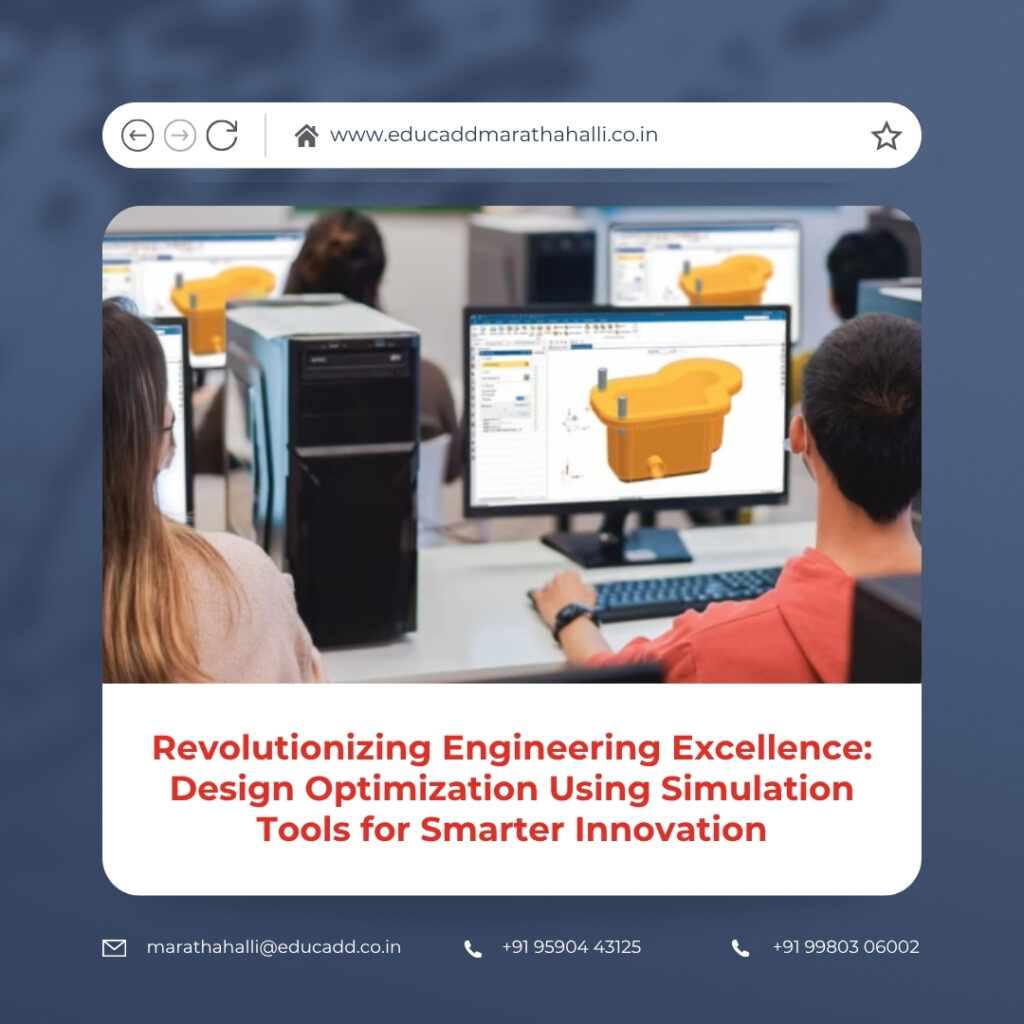
Design Optimization Simulation Tools
By leveraging advanced simulation technologies, organizations can significantly reduce development time, minimize risks, and enhance product performance. These tools allow engineers to predict real-world behavior, refine designs, and make data-driven decisions with confidence. As industries continue to embrace digital transformation, Design Optimization Simulation Tools is becoming an essential part of the product development lifecycle.
1. What Is Design Optimization and Why It Matters
Design Optimization Simulation Tools is the systematic process of improving a product or system to achieve the best possible performance within defined constraints. Engineers focus on variables such as material usage, geometry, and functionality to meet specific objectives. These objectives may include reducing weight, increasing durability, or enhancing efficiency.
Simulation tools play a crucial role in this process. They allow engineers to test different configurations and identify the most effective design without physically building each variation. As a result, the optimization process becomes faster and more accurate. This approach not only improves product quality but also ensures that resources are used efficiently.
2. Evolution of Simulation in Engineering Design
Engineering design has evolved significantly over the years. In the past, designers relied on calculations, experience, and physical testing to validate their ideas. While these methods were effective, they were time-consuming and expensive.
With the introduction of simulation tools, the design process has become more streamlined and efficient. Modern software enables engineers to create digital models and simulate real-world conditions with high precision. This advancement has reduced the need for multiple prototypes and accelerated product development cycles.
Furthermore, simulation tools have become more accessible and user-friendly. Even small and medium-sized businesses can now take advantage of these technologies to improve their designs and remain competitive.
3. Core Technologies Behind Simulation Tools
Design Optimization Simulation Tools are powered by advanced technologies that enable accurate analysis of complex systems. Finite element analysis (FEA) is used to evaluate structural behavior, while computational fluid dynamics (CFD) helps analyze fluid flow and heat transfer.
In addition, multi-body dynamics and thermal analysis provide deeper insights into system performance. These technologies work together to create a comprehensive simulation environment.
Engineers can combine these methods to study interactions between different components. This holistic approach ensures that designs perform well under various conditions, leading to better outcomes.
4. Key Advantages of Simulation-Driven Optimization
Simulation-based design optimization offers several important benefits that enhance both efficiency and innovation.
-
Faster development cycles: Engineers can test and refine designs quickly without waiting for physical prototypes.
-
Cost savings: Reduced material usage and fewer design iterations lower overall project expenses.
Moreover, simulation tools encourage experimentation. Engineers can explore unconventional ideas and optimize designs without the fear of failure. This flexibility leads to more innovative and effective solutions.
5. Boosting Product Performance Through Virtual Testing
One of the biggest advantages of simulation tools is their ability to improve product performance. Engineers can analyze how designs respond to various conditions, such as stress, temperature, and pressure.
By identifying potential weaknesses early, they can make necessary adjustments before production begins. This ensures that the final product meets performance expectations.
Additionally, simulation allows for continuous improvement. Engineers can refine designs based on test results, leading to higher efficiency and better functionality.
6. Minimizing Errors and Enhancing Design Accuracy
Errors in design can lead to costly consequences, including product failures and delays. Simulation tools help minimize these risks by providing accurate and reliable data.
Engineers can simulate extreme scenarios and evaluate how designs behave under stress. This helps them identify potential issues and resolve them before they become critical problems.
As a result, the overall accuracy of the design process improves. Decisions are based on data rather than assumptions, leading to more reliable outcomes.
7. Encouraging Collaboration and Team Efficiency
Modern engineering projects require collaboration among multiple teams. Simulation tools facilitate this by providing a shared platform for design and analysis.
Teams can review simulation results, share insights, and make decisions collectively. This improves communication and ensures that everyone is aligned with project goals.
Cloud-based simulation platforms further enhance collaboration. Engineers can access data and work together from different locations, increasing productivity and efficiency.
8. Industry Applications of Simulation-Based Design
Simulation-driven design optimization is widely used across various industries, each benefiting in unique ways.
-
Automotive sector: Engineers optimize vehicle safety, aerodynamics, and fuel efficiency.
-
Construction industry: Simulation helps improve structural integrity and reduce material waste.
In addition, aerospace companies use simulation to ensure safety and performance under extreme conditions. Manufacturing industries rely on it to enhance production processes and product quality. These applications highlight the versatility of simulation tools.
9. Integration of Artificial Intelligence in Optimization
Artificial intelligence is playing a transformative role in design optimization. AI algorithms analyze large datasets and identify patterns that may not be visible to human engineers.
These systems can suggest design improvements, automate repetitive tasks, and optimize complex processes. This reduces the workload on engineers and allows them to focus on innovation.
Moreover, machine learning models continuously improve as they process more data. This enhances the accuracy and reliability of simulations, making them even more valuable.
10. Digital Twins for Real-Time Design Improvement
Digital twin technology is another major advancement in simulation-driven design. It involves creating a virtual replica of a physical system that can be monitored and analyzed in real time.
By integrating real-world data, digital twins provide valuable insights into system performance. Engineers can use this information to optimize designs and improve efficiency.
This approach also supports predictive maintenance. Potential issues can be identified and addressed before they lead to failures, reducing downtime and costs.
11. Challenges in Adopting Simulation Tools
Despite their many benefits, simulation tools come with certain challenges. High initial investment and the need for skilled professionals can be barriers for some organizations.
Additionally, accurate simulations depend on high-quality data. Incomplete or incorrect data can lead to unreliable results.
However, these challenges can be overcome through proper training and strategic planning. Organizations that invest in simulation tools often see significant returns in the long run.
12. Best Practices for Effective Optimization
To fully leverage simulation tools, organizations should follow a structured approach. Defining clear objectives and constraints is essential for successful optimization.
Engineers should also validate simulation models regularly to ensure accuracy. Using high-quality data and reliable software further enhances results.
Collaboration among teams is equally important. By involving different stakeholders, organizations can gain diverse perspectives and improve decision-making.
13. Emerging Trends in Simulation Technology
The future of simulation-driven design optimization looks promising. Advances in cloud computing and high-performance computing are making simulations faster and more accessible.
Automation is also playing a significant role. Routine tasks are increasingly handled by intelligent systems, allowing engineers to focus on complex challenges.
Furthermore, integration with other technologies, such as the Internet of Things (IoT), is enhancing the capabilities of simulation tools. This leads to more accurate and efficient design processes.
14. Contribution to Sustainable Engineering Solutions
Sustainability is becoming a key focus in engineering. Simulation tools help organizations design environmentally friendly products and processes.
Engineers can optimize material usage, reduce waste, and improve energy efficiency. This not only benefits the environment but also reduces costs.
Additionally, simulation helps ensure compliance with environmental regulations. Organizations can achieve sustainability goals while maintaining high performance and quality standards.
Conclusion
Design Optimization Simulation Tools has fundamentally changed the way engineering solutions are developed. It enables organizations to create high-performance, cost-effective, and reliable designs with greater efficiency. By leveraging advanced technologies such as artificial intelligence and digital twins, businesses can achieve a new level of precision and innovation.
As industries continue to evolve, the importance of simulation-driven optimization will only grow. Companies that embrace these tools will gain a competitive advantage, improve their processes, and deliver superior products. Ultimately, simulation tools are not just a technological advancement—they are a vital component of modern engineering success.

