
Zero Trust Security Model: Building an “Always Verify” Defense for the Digital Age
Modern organizations operate in a borderless digital environment where employees work remotely, applications run in the cloud, and data flows constantly between platforms. This transformation has improved productivity, yet it has also expanded the attack surface for cybercriminals.The Zero Trust Security Model addresses this critical weakness by removing the concept of implicit trust. Every user, device, and connection must be verified continuously before access is granted. Attackers frequently bypass outer defenses using stolen credentials, phishing campaigns, and compromised devices. Once inside, they move laterally and access sensitive resources without resistance.
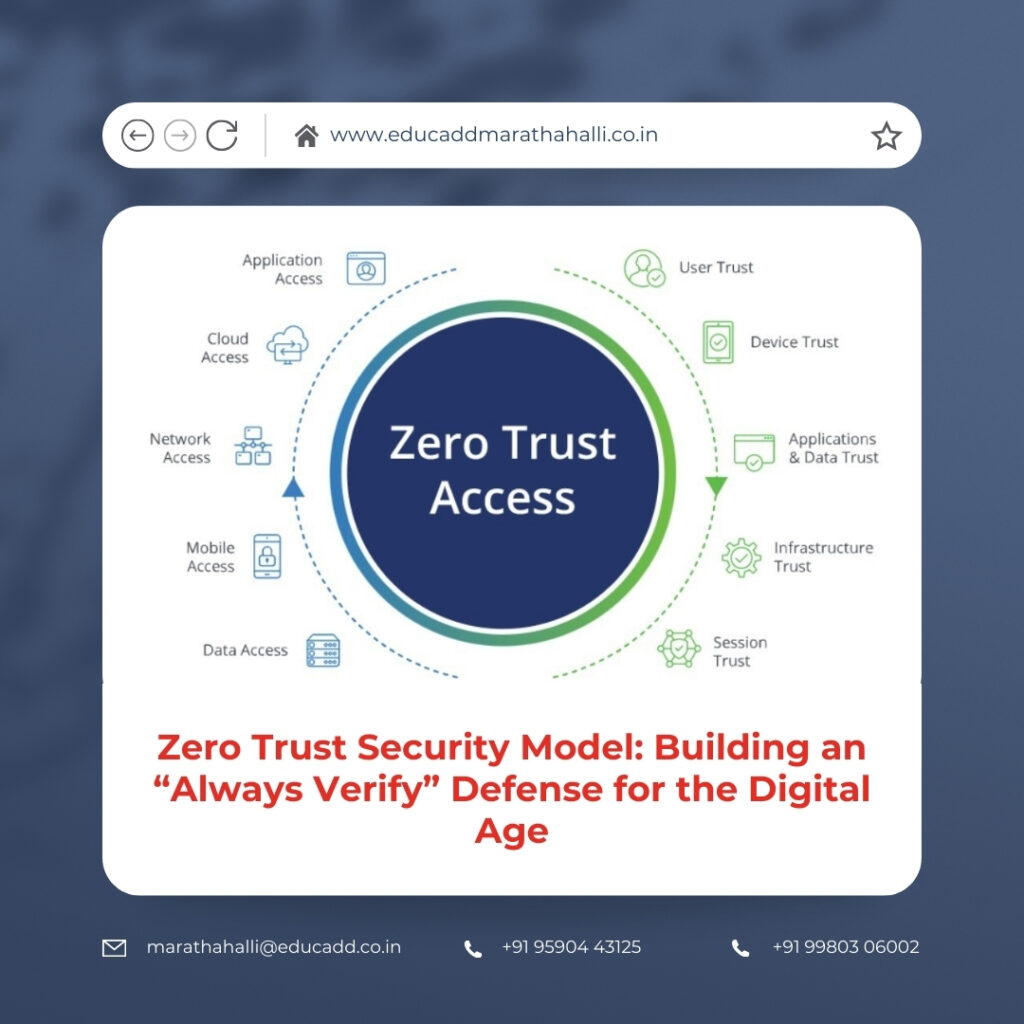
Zero Trust Security Model
Traditional security strategies relied on strong perimeter defenses, assuming that everything inside the corporate network could be trusted. That assumption no longer holds true.This approach reshapes cybersecurity into a dynamic system that adapts to modern threats. By implementing strict identity validation, intelligent monitoring, and granular access controls, organizations can dramatically reduce their risk exposure while maintaining operational flexibility.
1. The Fundamental Concept Behind Zero Trust Security
The Zero Trust Security Model is centered on a straightforward but powerful principle: trust must never be assumed. In older frameworks, users who passed initial authentication were often allowed to roam freely within the network. That level of unrestricted access created opportunities for malicious actors to exploit vulnerabilities unnoticed. Zero Trust eliminates this risk by requiring verification at every stage of interaction. Each request to access a system, application, or dataset must be authenticated and authorized based on multiple contextual factors. These factors include identity credentials, device security posture, geographic location, and behavioral patterns. By evaluating these signals continuously, organizations maintain strict control over digital interactions. This method ensures that trust is temporary, conditional, and constantly reassessed.
2. The Limitations of Traditional Perimeter-Based Security
Perimeter-focused security models were effective when businesses stored data in centralized servers and employees worked within office premises. Firewalls, secure gateways, and intrusion detection systems formed strong protective boundaries. However, digital transformation has dissolved those boundaries. Cloud services allow employees to access resources from anywhere, while mobile devices connect through various networks. As a result, attackers no longer need to breach a single wall to infiltrate systems.
They exploit weak passwords, unpatched software, or human error instead. Traditional models fail because they emphasize external defense while neglecting internal verification. The Zero Trust Security Model shifts focus from location-based trust to identity-based validation. Security controls follow users and devices wherever they operate, creating a consistent protection framework across distributed environments.
3. Core Pillars That Support the Zero Trust Framework
Several foundational elements work together to strengthen the Zero Trust Security Model. These pillars ensure that every digital interaction is examined carefully before authorization is granted.
• Continuous authentication verifies identities throughout each session rather than only during login.
• Least-privilege policies restrict users to the minimum access required for their responsibilities.
By combining these practices, organizations reduce opportunities for misuse and prevent unauthorized exposure to sensitive resources. Furthermore, layered defenses limit the potential damage of compromised credentials or insider threats.
4. Strong Identity Authentication as a Security Cornerstone
Identity authentication forms the backbone of Zero Trust architecture. Every access attempt must confirm that the user requesting entry is legitimate. This process involves advanced authentication mechanisms that go beyond simple passwords. Multi-factor authentication requires users to provide multiple verification elements, such as biometric scans, hardware tokens, or one-time passcodes. These layers make unauthorized access significantly more difficult. Adaptive authentication strengthens protection further by analyzing contextual information such as login time, device type, and geographic origin. If unusual patterns emerge, the system demands additional verification. This dynamic approach ensures that security remains robust without unnecessarily disrupting legitimate users.
5. Device Trust and Endpoint Security Measures
Devices serve as gateways to digital resources, making their security essential. A compromised laptop or smartphone can expose an entire network to malicious software. The Zero Trust Security Model addresses this vulnerability by evaluating device integrity before granting access. Security systems examine whether operating systems are updated, antivirus programs are active, and configurations meet compliance standards. Devices that fail to satisfy these requirements are blocked automatically. Endpoint monitoring solutions also track real-time activity to detect suspicious behavior such as unauthorized installations or unusual data transfers. These measures prevent infected devices from becoming entry points for broader cyberattacks.
6. Micro-Segmentation to Contain Potential Breaches
Micro-segmentation divides networks into smaller zones with independent access controls. This strategy prevents attackers from moving freely across systems after gaining entry. Each segment operates as an isolated environment where specific authentication rules apply. Even if a breach occurs in one segment, other areas remain protected. This containment approach significantly reduces the scale of potential damage. Moreover, micro-segmentation improves visibility by allowing security teams to monitor traffic patterns within each zone. Unusual communication attempts trigger alerts immediately, enabling faster incident response. Such precise control strengthens overall network resilience.
7. Implementing Least-Privilege Access Control Policies
Least-privilege access ensures that users receive only the permissions necessary to complete their tasks. Broad access rights increase exposure to accidental misuse and deliberate exploitation. The Zero Trust Security Model enforces strict role-based access policies that define who can interact with specific resources. Employees cannot access files, systems, or applications beyond their authorization scope. This approach minimizes the consequences of compromised accounts by limiting what attackers can achieve. Regular permission reviews further enhance security by removing outdated privileges. Such disciplined governance reduces internal vulnerabilities while maintaining operational efficiency.
8. Continuous Monitoring for Real-Time Threat Detection
Proactive monitoring is essential for identifying threats before they escalate. The Zero Trust Security Model relies on advanced analytics tools that observe user behavior, network activity, and system changes continuously. Artificial intelligence and machine learning algorithms establish normal activity baselines and identify deviations instantly. For example, sudden large data transfers or login attempts from unfamiliar regions raise immediate alerts. Security teams can investigate and neutralize suspicious activity before significant harm occurs. This real-time awareness transforms cybersecurity from a reactive process into a preventive strategy that stops breaches early.
9. Protecting Data Through Comprehensive Encryption
Encryption safeguards sensitive information by converting it into unreadable code. Only authorized parties with decryption keys can interpret protected data. The Zero Trust Security Model mandates encryption for both stored information and data transmitted across networks. This ensures confidentiality even if attackers intercept communications. Strong encryption protocols protect financial transactions, intellectual property, customer records, and internal communications. Secure encryption also supports compliance with data protection regulations. By integrating encryption across digital ecosystems, organizations create an additional defense layer that reinforces access controls and identity verification systems.
10. Supporting Secure Remote and Hybrid Work Models
Remote and hybrid work arrangements have introduced new security challenges for organizations worldwide. Employees connect from diverse locations using various personal and corporate devices. These flexible setups expand vulnerability to cyber threats. The Zero Trust Security Model addresses these risks by validating every connection regardless of user location. Secure access gateways, identity verification tools, and device compliance checks ensure that remote interactions remain protected. Centralized policy enforcement simplifies management across distributed teams. Employees gain seamless access to necessary resources while organizations maintain strict oversight of digital activities.
11. Organizational Advantages of Zero Trust Adoption
Implementing the Zero Trust Security Model delivers multiple strategic benefits that extend beyond basic protection.
• Lower probability of large-scale data breaches
• Enhanced visibility into user behavior and system interactions
Additionally, organizations experience faster incident response, improved compliance readiness, and reduced operational downtime. Stronger defenses build customer trust and protect brand reputation. Over time, financial savings emerge as breach recovery costs decline and productivity disruptions decrease.
12. Common Obstacles in Zero Trust Implementation
Despite its advantages, implementing Zero Trust architecture presents several challenges. Legacy infrastructure may not support modern authentication technologies, requiring costly upgrades. Integration across diverse platforms can also create technical complexities. Employee resistance may arise due to increased verification steps that appear inconvenient. However, organizations can overcome these barriers through structured planning and phased deployment. Providing cybersecurity awareness training helps employees understand the importance of strict access controls. Gradual implementation minimizes disruptions while ensuring smooth adaptation to new security protocols.
13. Technologies That Power Zero Trust Ecosystems
A combination of advanced technologies enables effective Zero Trust implementation. Identity and Access Management platforms control authentication and authorization processes. Multi-factor authentication systems strengthen user verification. Endpoint Detection and Response solutions monitor device activity continuously. Cloud-based Secure Access Service Edge frameworks integrate networking and security capabilities into unified platforms. Artificial intelligence enhances threat detection by analyzing massive datasets rapidly. When these technologies operate together, they create an intelligent ecosystem where every access request undergoes rigorous validation before approval.
14. The Evolving Future of Zero Trust Cybersecurity
The cybersecurity landscape continues to evolve as emerging technologies reshape digital ecosystems. Cloud-native platforms, Internet of Things devices, and artificial intelligence applications introduce new complexities and risks. Traditional security models cannot adapt quickly to these changes. The Zero Trust Security Model offers a flexible framework designed to evolve alongside technological advancements. Continuous authentication mechanisms, granular access controls, and intelligent monitoring systems provide scalable protection for expanding infrastructures. As cyber threats grow more sophisticated, Zero Trust principles will become foundational elements of global cybersecurity strategies.
Conclusion
Digital transformation demands a smarter and more adaptive approach to cybersecurity. The Zero Trust Security Model replaces outdated trust assumptions with continuous verification and strict access governance. Every user, device, and application must prove legitimacy before interacting with protected resources. Through identity authentication, endpoint security, micro-segmentation, encryption, and real-time monitoring, organizations build layered defenses that reduce vulnerabilities significantly. Although implementation requires careful planning and investment, long-term advantages far outweigh initial efforts. Businesses achieve stronger compliance, improved visibility, faster threat response, and greater operational resilience. As remote work expands and cloud adoption accelerates, Zero Trust becomes an essential foundation for protecting modern digital environments. Organizations that embrace this security framework position themselves for sustained growth, stronger stakeholder confidence, and a safer digital future.

