
Mastering the Craft: The Complete Skill Blueprint for Aspiring Professional Interior Designers
Professional Interior Design Skills has evolved into a sophisticated profession that blends artistry, engineering, psychology, and business strategy. It is no longer limited to choosing paint colors or arranging furniture attractively. Instead, it involves shaping environments that influence how people live, work, interact, and feel. A thoughtfully designed space can enhance productivity in an office, promote relaxation at home, strengthen brand identity in retail stores, and elevate guest experiences in hospitality environments. Therefore, interior designers carry a responsibility that extends far beyond aesthetics.
Professional Interior Design Skills
To thrive in this dynamic field, individuals must cultivate a wide range of abilities. Talent alone does not guarantee success. Instead, professional excellence develops through continuous learning, technical expertise, emotional intelligence, and strategic thinking. This detailed guide explores the comprehensive skill blueprint required to build a rewarding career in Professional Interior Design Skills. Each section highlights critical competencies that aspiring designers must develop in order to succeed confidently and sustainably.
1. Creative Intelligence and Concept Development
At the heart of Professional Interior Design Skills lies creative intelligence. However, creativity in this field goes beyond imagination. It involves structured ideation, thoughtful experimentation, and the ability to translate abstract inspiration into tangible design concepts. A professional interior designer must generate innovative solutions that align with client goals, spatial constraints, and budget considerations.
Creative intelligence enables designers to craft compelling themes. For instance, a contemporary workspace may demand minimalism and transparency, while a luxury residence might emphasize warmth and texture. Designers draw inspiration from art, architecture, culture, travel, and technology. They synthesize these influences into cohesive narratives that define the project’s identity.
Moreover, concept development requires clarity. Designers must articulate their ideas through mood boards, sketches, and presentations. Every color, material, and furniture choice should connect logically to the overall vision. When creativity aligns with intention, the resulting environment feels purposeful rather than accidental. Consequently, creative intelligence forms the foundation of professional interior design practice.
2. Mastery of Design Fundamentals
Although innovation drives excitement, strong design fundamentals ensure stability. Principles such as balance, contrast, proportion, scale, rhythm, and harmony guide every successful interior. Without understanding these concepts, even the most imaginative idea may fail in execution.
Balance prevents visual discomfort. A room overloaded on one side feels unstable, whereas symmetrical or asymmetrical balance creates equilibrium. Scale and proportion ensure that furniture dimensions align with room size. Oversized elements overwhelm small spaces, while undersized pieces disappear in expansive areas.
Furthermore, rhythm introduces movement through repetition of patterns, textures, or colors. Harmony ensures cohesion among various elements. When designers apply these principles deliberately, the space communicates clarity and sophistication. Therefore, mastery of design fundamentals remains indispensable for anyone pursuing professional excellence in interior design.
3. Spatial Awareness and Layout Planning
Effective space utilization distinguishes professionals from amateurs. Interior designers must analyze architectural structures carefully before developing layouts. Every project begins with evaluating dimensions, circulation patterns, structural columns, windows, and service areas.
Spatial awareness allows designers to create environments that support natural movement. Clear pathways enhance comfort and accessibility. Functional zoning separates areas according to purpose. In residential spaces, this might involve dividing living, dining, and relaxation zones seamlessly. In commercial environments, designers must consider workflow efficiency and safety regulations.
Additionally, ergonomic planning ensures user comfort. Furniture heights, workstation dimensions, and seating arrangements must accommodate human proportions. When designers prioritize usability, spaces feel intuitive rather than restrictive. Thus, spatial intelligence stands as a core professional competency.
4. Technical Drawing and Digital Proficiency
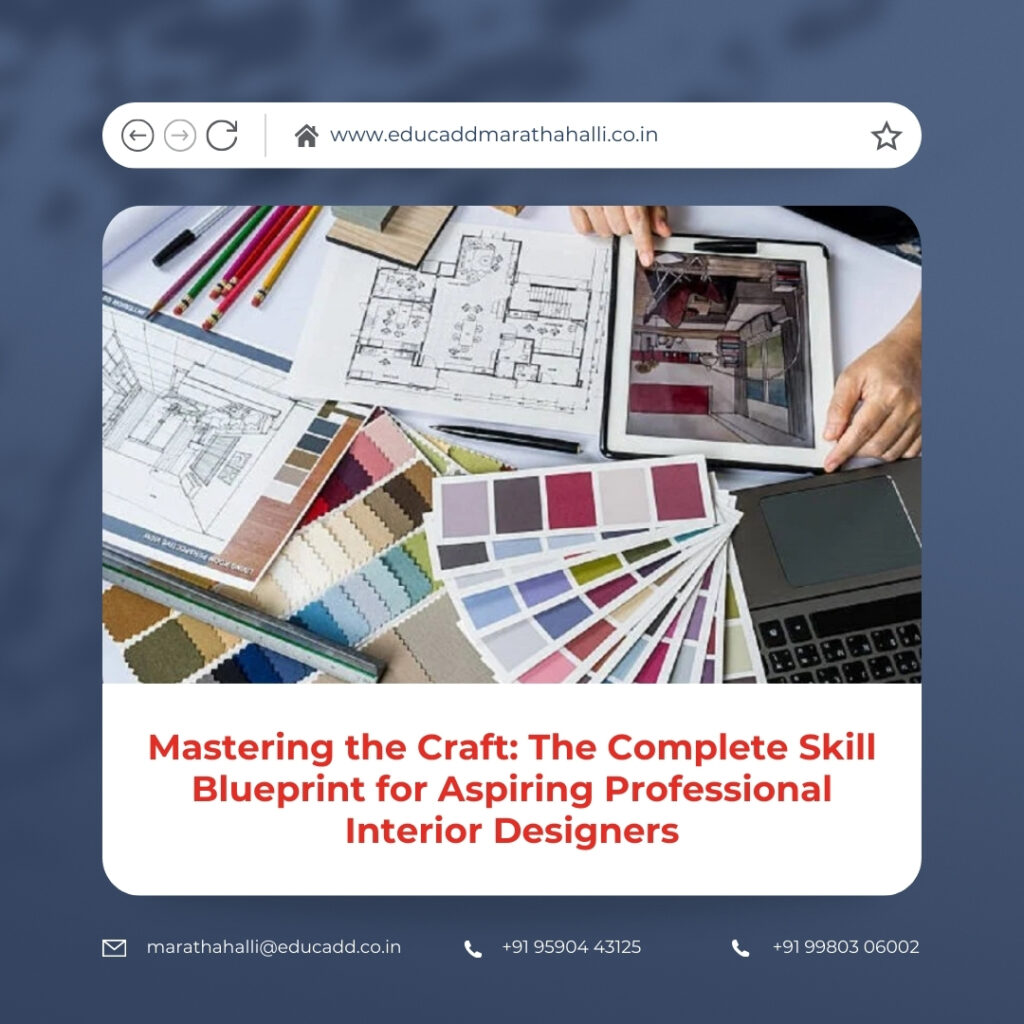
Modern interior design relies heavily on digital tools. Professional designers must possess strong technical drawing skills and proficiency in design software. Floor plans, elevations, sections, and detailed layouts communicate ideas clearly to contractors and clients.
Software programs such as AutoCAD, SketchUp, and Revit enhance precision and efficiency. Three-dimensional renderings allow clients to visualize the final outcome before construction begins. This capability reduces misunderstandings and supports informed decision-making.
In addition, digital tools assist with material selection, lighting simulations, and furniture placement. Designers who master these technologies gain a competitive advantage. Technical proficiency streamlines workflow and elevates presentation quality. Therefore, digital literacy remains essential in contemporary interior design practice.
5. Material Knowledge and Finishing Expertise
Every design project involves selecting materials that influence durability, aesthetics, and sustainability. Professional interior designers must understand the characteristics of wood, metal, glass, stone, fabric, and composite materials.
Material knowledge ensures practical decision-making. For instance, high-traffic commercial spaces require durable flooring, while luxury residences may prioritize texture and elegance. Designers must evaluate maintenance requirements, cost implications, and environmental impact before finalizing selections.
Finishes also require careful coordination. Wall treatments, cabinetry surfaces, lighting fixtures, and hardware details must complement each other. A cohesive finish palette enhances visual unity. Therefore, deep understanding of materials significantly strengthens design outcomes.
6. Lighting Design and Ambience Creation
Lighting transforms interior environments dramatically. It shapes mood, enhances architectural features, and improves functionality. Professional designers must integrate natural and artificial lighting strategically.
Layered lighting combines ambient, task, and accent sources. Ambient lighting establishes overall illumination. Task lighting supports specific activities such as reading or cooking. Accent lighting highlights focal points like artwork or textured walls.
Furthermore, designers must consider energy efficiency and sustainability. Modern lighting solutions offer advanced controls that reduce power consumption. By balancing aesthetics with practicality, designers create inviting and efficient spaces. Thus, lighting expertise remains a vital skill within the profession.
7. Communication and Client Relationship Management
Interior design involves continuous collaboration. Designers interact with clients, architects, contractors, suppliers, and project managers. Therefore, effective communication plays a central role in project success.
Active listening allows designers to understand client expectations deeply. Clear presentations help translate ideas into understandable formats. Written documentation ensures alignment regarding timelines, budgets, and deliverables.
Additionally, relationship management builds trust. Clients often invest significant emotional and financial resources into projects. Designers must demonstrate empathy, professionalism, and transparency. Strong communication strengthens reputation and encourages repeat business.
8. Budgeting and Financial Planning
Creativity must align with financial reality. Professional interior designers need strong budgeting skills to manage project costs effectively. Accurate cost estimation prevents overspending and protects client trust.
Designers allocate funds across materials, labor, furniture, and installation services. They negotiate with vendors and compare quotations to achieve optimal value. Transparent financial tracking ensures accountability throughout the project lifecycle.
Moreover, commercial projects require awareness of return on investment. Well-designed spaces can attract customers and increase brand credibility. Financial literacy enhances decision-making and supports sustainable business growth.
9. Project Management and Organizational Excellence
Professional Interior Design Skills projects involve multiple phases and stakeholders. Therefore, project management skills ensure timely and efficient execution. Designers coordinate procurement, supervise installations, and monitor quality standards.
Detailed scheduling aligns contractors and suppliers effectively. Organized documentation simplifies communication and prevents errors. Proactive planning anticipates potential risks and prepares contingency solutions.
When designers maintain structured workflows, projects progress smoothly. Organizational excellence enhances reliability and builds professional credibility.
10. Problem-Solving and Adaptability
Unforeseen challenges often arise during design projects. Material shortages, structural limitations, and client revisions require quick adjustments. Professional designers must approach obstacles with calm determination.
Problem-solving involves analyzing alternatives and implementing practical solutions. Adaptability ensures resilience in dynamic environments. Designers who remain flexible can transform setbacks into opportunities for improvement.
Moreover, the design industry evolves continuously. Trends shift, technology advances, and sustainability standards increase. Designers must embrace change and update their skills consistently. Adaptability sustains long-term success.
11. Sustainability and Environmental Responsibility
Modern interior design emphasizes environmental awareness. Clients increasingly seek eco-friendly solutions that reduce environmental impact. Designers must integrate sustainable practices into their projects.
This includes selecting low-emission materials, energy-efficient systems, and recyclable furnishings. Designers also optimize natural ventilation and daylight usage. Sustainable design enhances indoor air quality and promotes well-being.
By prioritizing environmental responsibility, designers contribute positively to global sustainability goals. Green design expertise strengthens professional reputation and market relevance.
12. Attention to Detail and Quality Control
Precision distinguishes exceptional designers. Small details influence overall perception significantly. Misaligned patterns, inconsistent finishes, or poorly installed fixtures can compromise visual harmony.
Professional interior designers inspect every element thoroughly before project completion. They ensure consistency in color tones, material textures, and alignment. Attention to detail reflects commitment to excellence.
Furthermore, quality control protects client investment. Careful supervision prevents costly corrections and ensures durability. Therefore, meticulous observation remains an indispensable professional trait.
13. Networking and Industry Engagement
Strong industry connections enhance career growth. Interior designers benefit from relationships with suppliers, craftsmen, contractors, and consultants. Networking expands access to resources and innovative products.
Industry exhibitions, seminars, and workshops provide exposure to emerging trends. Continuous engagement broadens perspective and fosters collaboration opportunities.
Additionally, maintaining an updated portfolio and digital presence strengthens professional visibility. Designers who actively participate in industry communities remain competitive and informed.
14. Continuous Learning and Professional Development
Interior design demands lifelong learning. As technology advances and design philosophies evolve, professionals must update their knowledge consistently. Certifications, advanced courses, and specialized workshops enhance expertise.
Exploring global design movements broadens creative insight. Studying architecture, art history, and cultural influences enriches conceptual development. Designers who invest in self-improvement remain adaptable and innovative.
Commitment to growth not only enhances skills but also builds confidence. Continuous learning ensures relevance in an increasingly competitive industry.
Conclusion
Becoming a Professional Interior Design Skills requires more than passion for beautiful spaces. It demands a balanced combination of creativity, technical knowledge, strategic planning, financial awareness, and emotional intelligence. Each skill reinforces the others, forming a comprehensive framework for success.
Aspiring designers who dedicate themselves to mastering these competencies can transform their creative aspirations into thriving careers. Through persistence, continuous learning, and disciplined practice, they can shape environments that inspire, comfort, and empower people daily. Interior design is both an art and a science, and those who commit to refining their craft will leave a lasting impact on the spaces they create.

