
From Clicks to Customers: Mastering Marketing Funnel Optimization with Advanced Data Analytics
Digital marketing has evolved far beyond simple traffic generation. Today, businesses operate in a highly competitive ecosystem where customer attention is limited and expectations are high. Brands invest heavily in advertising, content marketing, and social media campaigns. However, without a structured system to convert interest into revenue, even the most creative campaigns fail to deliver meaningful results. This is where Marketing Funnel Data Analytics becomes a powerful growth strategy.
Every interaction a prospect has with your brand leaves a digital footprint. Website visits, ad clicks, email opens, product views, and purchase history all generate valuable information. When businesses analyze this data systematically, they gain deep insight into customer behavior. Instead of relying on assumptions, they make informed decisions that improve engagement, increase conversions, and maximize return on investment.
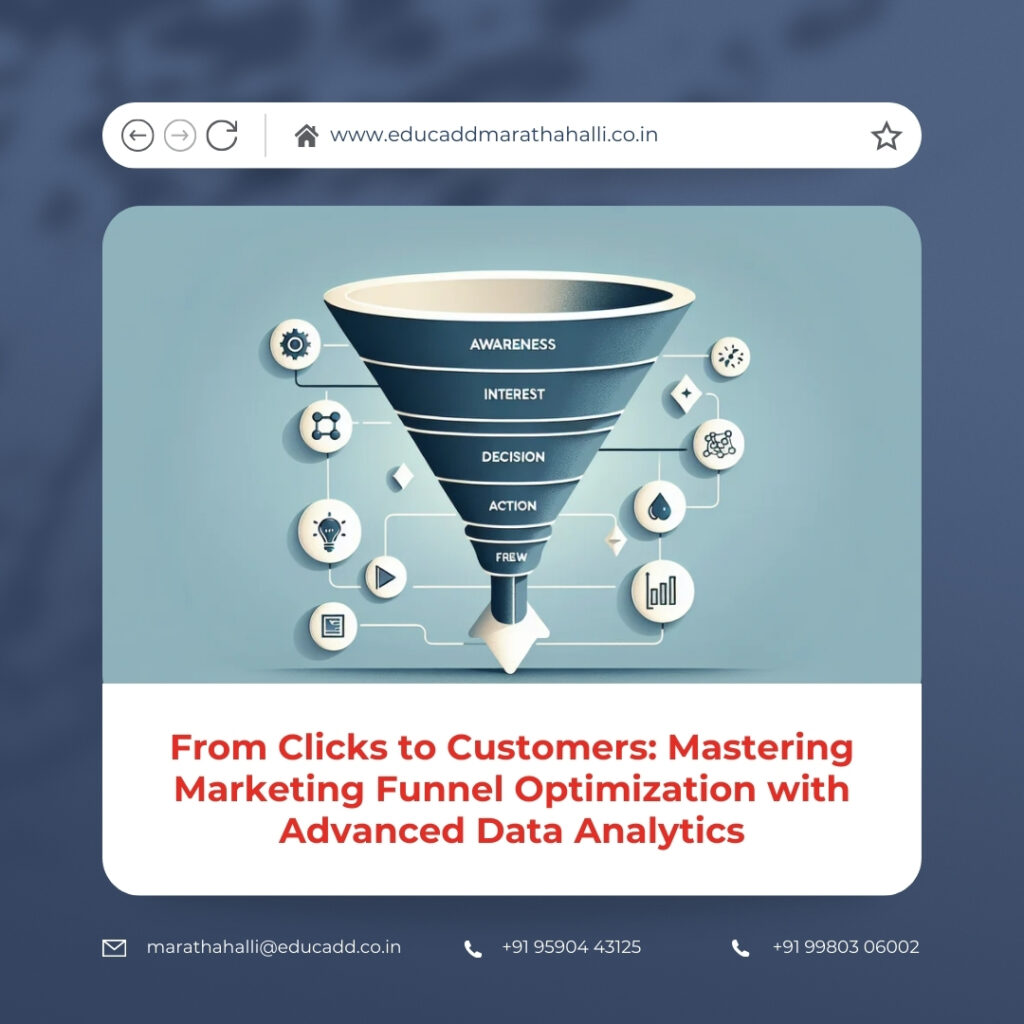
Marketing Funnel Data Analytics
A marketing funnel represents the journey a customer takes from discovering a brand to becoming a loyal advocate. Yet, many organizations treat the funnel as a static model. In reality, modern customer journeys are dynamic and multi-touch. Therefore, marketers must use analytics to understand how users move across touchpoints and where drop-offs occur. By refining each stage strategically, companies transform fragmented campaigns into cohesive revenue systems.
This comprehensive guide explores how to implement marketing funnel optimization using data analytics effectively. You will discover frameworks, techniques, performance metrics, testing methodologies, and strategic approaches that empower businesses to drive predictable growth in an increasingly data-driven marketplace.
1. The Evolution of the Modern Marketing Funnel
The concept of the marketing funnel has existed for decades, yet its structure has changed significantly. Earlier models followed a simple linear path: awareness, interest, desire, and action. While this framework offered clarity, it failed to account for complex digital behavior. Today, customers interact with brands across multiple channels before making a decision.
The modern funnel includes awareness, consideration, conversion, retention, and advocacy. Each stage reflects a different level of intent and engagement. At the top, prospects discover your brand through search engines, paid ads, social media platforms, or referrals. During consideration, they evaluate alternatives, read reviews, and compare pricing. Conversion marks the point of purchase or lead submission. Retention focuses on maintaining engagement, while advocacy turns satisfied customers into promoters.
Marketing Funnel Data Analytics allows businesses to track movement across these stages. Instead of guessing why prospects drop off, companies can examine behavioral signals, engagement patterns, and conversion metrics. As a result, optimization becomes strategic rather than reactive.
Furthermore, digital journeys rarely follow a straight line. Customers may revisit websites multiple times, switch devices, or engage with various marketing channels before converting. Therefore, analyzing cross-channel interactions is essential for accurate funnel mapping and strategic decision-making.
2. Establishing a Data-Driven Mindset
Optimization begins with mindset transformation. Organizations that rely solely on intuition often struggle with inconsistent results. Although creativity remains essential, data provides measurable direction. Businesses that prioritize analytics cultivate clarity and accountability.
Marketing Funnel Data Analytics requires leadership commitment. Teams must value measurable outcomes over assumptions. For example, instead of launching campaigns based on trends alone, marketers should analyze historical performance data to identify patterns.
Moreover, a data-driven culture encourages experimentation. Teams continuously test variations of messaging, landing pages, and offers. They measure performance carefully and refine strategies based on results. This iterative process produces sustainable improvement rather than temporary success.
Additionally, aligning marketing and sales teams strengthens optimization efforts. When departments share data and insights, they gain a unified understanding of customer journeys. Consequently, businesses reduce friction between lead generation and revenue realization.
3. Defining Clear Funnel Objectives and Metrics
Effective optimization requires measurable objectives. Without clear targets, performance evaluation becomes subjective. Marketing funnel optimization using data analytics begins by defining key performance indicators for each stage of the funnel.
At the awareness stage, marketers track impressions, reach, traffic volume, and engagement rates. These metrics reveal how effectively campaigns capture attention. During consideration, they monitor bounce rates, session duration, content downloads, and lead submissions.
Conversion metrics include conversion rate, cost per acquisition, average order value, and revenue per visitor. Retention metrics measure repeat purchase rate, churn rate, and customer lifetime value. Advocacy metrics focus on referrals, reviews, and net promoter scores.
By assigning specific KPIs to each stage, businesses create structured evaluation systems. Furthermore, aligning metrics with broader business objectives ensures strategic coherence. A startup may prioritize acquisition growth, while an established company may focus on increasing lifetime value.
4. Building a Unified Data Infrastructure
Data exists across multiple platforms, including website analytics tools, advertising dashboards, CRM systems, and email marketing platforms. However, fragmented data limits visibility. Marketing funnel optimization using data analytics demands integration across these sources.
By connecting tools through APIs or centralized dashboards, companies create a single source of truth. This unified infrastructure allows teams to track customer journeys comprehensively. For example, integrating website analytics with CRM data reveals which traffic sources generate high-value customers.
Data accuracy remains critical. Businesses should remove duplicates, correct inconsistencies, and standardize tracking parameters. Clean data improves reliability and prevents misleading conclusions.
Moreover, privacy compliance must remain a priority. Organizations should collect data transparently and adhere to regulations. Responsible data management builds trust and ensures sustainable analytics practices.
5. Gaining Deep Insight into Customer Behavior
Understanding user behavior unlocks meaningful optimization opportunities. Instead of focusing solely on traffic numbers, marketers should analyze interaction patterns.
Heatmaps reveal where users click and scroll. Session recordings show navigation behavior. Funnel visualization tools identify drop-off points between pages. Marketing funnel optimization using data analytics uses these insights to uncover friction areas.
Segmentation enhances analysis accuracy. Businesses can compare behavior across demographics, devices, or traffic sources. For example, mobile users may experience higher drop-off rates due to design limitations. Identifying such patterns enables targeted improvements.
Behavioral cohorts also provide long-term insight. By grouping users based on acquisition date or campaign source, marketers measure retention trends and engagement changes over time. This perspective supports strategic planning and forecasting.
6. Strengthening the Awareness Stage
The top of the funnel often receives significant investment. However, high traffic alone does not guarantee revenue. Marketing funnel optimization using data analytics ensures awareness campaigns attract qualified prospects rather than random visitors.
Analyzing keyword performance helps refine SEO strategies. Evaluating click-through rates and engagement metrics reveals which advertising creatives resonate with audiences. Marketers can then allocate budgets toward high-performing channels.
Audience insights from advertising platforms provide demographic and behavioral data. By analyzing this information, businesses tailor messaging to match user intent.
Content analytics further enhance awareness strategies. Tracking page views, shares, and time spent on content identifies topics that generate interest. Businesses can replicate successful themes and eliminate underperforming content.
7. Elevating Consideration with Personalization
During consideration, prospects seek reassurance and value clarity. Personalized experiences significantly increase engagement at this stage. Marketing funnel optimization using data analytics leverages user data to deliver tailored content.
Dynamic website elements display relevant recommendations based on browsing history. Automated email sequences respond to user actions. Personalized messaging builds trust and shortens decision cycles.
Predictive analytics enhances personalization further. By analyzing historical behavior, businesses anticipate user preferences and suggest appropriate products or services. This proactive approach reduces hesitation and increases progression toward conversion.
Retargeting campaigns also benefit from behavioral data. By addressing specific concerns or abandoned pages, marketers maintain engagement and encourage return visits.
8. Driving Conversions Through Continuous Testing
Conversion rate optimization focuses on improving the percentage of visitors who take desired actions. Small changes often yield substantial impact. Marketing funnel optimization using data analytics relies heavily on structured experimentation.
A/B testing compares variations of headlines, images, calls to action, and layouts. Multivariate testing evaluates combinations of elements. Statistical significance ensures reliable conclusions.
Analyzing checkout abandonment rates identifies friction points. Simplifying forms, clarifying pricing, and enhancing trust signals often improve performance.
Furthermore, data-driven copywriting enhances persuasion. By studying user behavior, marketers craft messaging aligned with customer motivations. Continuous testing transforms conversion optimization into a disciplined growth practice.
9. Increasing Retention and Customer Value
Customer acquisition costs continue to rise. Therefore, retention strategies play a vital role in profitability. Marketing funnel optimization using data analytics identifies patterns that influence repeat purchases.
Churn analysis reveals why customers disengage. Businesses can implement targeted re-engagement campaigns before customers leave permanently. Loyalty programs and personalized offers strengthen relationships.
Lifetime value analysis prioritizes high-value segments. Predictive modeling estimates future purchasing behavior. Consequently, companies allocate resources strategically to maximize long-term revenue.
Retention-focused optimization fosters stability and sustainable growth rather than short-term spikes.
10. Leveraging Automation and Artificial Intelligence
Automation enhances efficiency and scalability. AI-powered tools process large datasets quickly and uncover hidden patterns. Marketing Funnel Data Analytics benefits significantly from machine learning capabilities.
Predictive lead scoring ranks prospects based on conversion probability. Automated workflows nurture leads with relevant content. Chatbots provide instant responses, improving user experience.
AI-driven recommendation engines increase average order value. These technologies enable personalized interactions at scale, enhancing both engagement and profitability.
11. Understanding Attribution and Channel Contribution
Attribution modeling clarifies how marketing channels influence conversions. Relying solely on last-click attribution oversimplifies customer journeys.
Marketing funnel optimization using data analytics incorporates multi-touch attribution models. These models distribute credit across multiple interactions, providing a comprehensive view of performance.
By analyzing channel contribution accurately, businesses allocate budgets more effectively. They recognize the value of upper-funnel activities and optimize investments strategically.
12. Implementing Real-Time Monitoring Systems
Optimization requires continuous evaluation. Real-time dashboards provide immediate visibility into performance metrics. Marketing funnel optimization using data analytics thrives on agility and responsiveness.
When conversion rates decline suddenly, teams can investigate quickly. Visual dashboards simplify complex data for stakeholders, improving alignment and decision-making.
Frequent monitoring supports iterative improvements. Instead of waiting for quarterly reviews, marketers adjust strategies proactively.
13. Addressing Challenges in Data-Driven Optimization
Despite its advantages, optimization presents challenges. Data overload can overwhelm teams. Therefore, focusing on meaningful metrics remains essential.
Cross-functional collaboration ensures effective implementation. Marketing, sales, and analytics teams must align goals and share insights.
Privacy regulations demand responsible data collection. Transparency builds trust and safeguards reputation.
Leadership support also plays a crucial role. Encouraging experimentation and learning from data fosters innovation and resilience.
14. Creating a Sustainable Optimization Framework
Long-term success requires structured processes. Marketing funnel optimization using data analytics should follow a repeatable cycle: define objectives, collect data, analyze performance, test improvements, and implement successful strategies.
This iterative approach drives incremental gains that compound over time. Businesses that embed analytics into their culture adapt quickly to market shifts.
Ultimately, optimization becomes an ongoing journey rather than a one-time project. Companies that master this discipline build predictable revenue engines and competitive advantages that sustain growth.
Conclusion
In a digital economy defined by rapid change and intense competition, strategic insight determines success. Marketing Funnel Data Analytics transforms scattered marketing efforts into cohesive growth systems. By analyzing each stage of the funnel carefully, businesses uncover friction points, enhance personalization, and refine conversion pathways.
Through continuous testing, retention strategies, automation, and accurate attribution, organizations gain clarity and control over performance. Data replaces guesswork with measurable progress.
When companies commit to structured optimization and cultivate a data-driven culture, they unlock sustainable revenue growth. Marketing no longer depends on isolated campaigns. Instead, it becomes a predictable, scalable engine powered by insight, precision, and continuous improvement.

