
Revolutionizing Healthcare: How AI is Shaping the Future of Digital Health
The healthcare landscape is undergoing a profound transformation. Traditional methods of patient care, while effective in the past, are no longer sufficient in today’s fast-paced, data-driven world. Enter Artificial Intelligence (AI) – a technology that is not only revolutionizing medical procedures but also redefining how Healthcare IT operates at every level. AI has the power to analyze enormous volumes of data, detect patterns, and generate insights that were previously impossible to achieve. By integrating AI in Digital Health systems, hospitals, clinics, and health networks are moving toward a more proactive, personalized, and precise form of care. This shift signals the dawn of a new digital health era where patient outcomes are improved, efficiency is heightened, and healthcare professionals are empowered with intelligent tools that amplify their expertise.
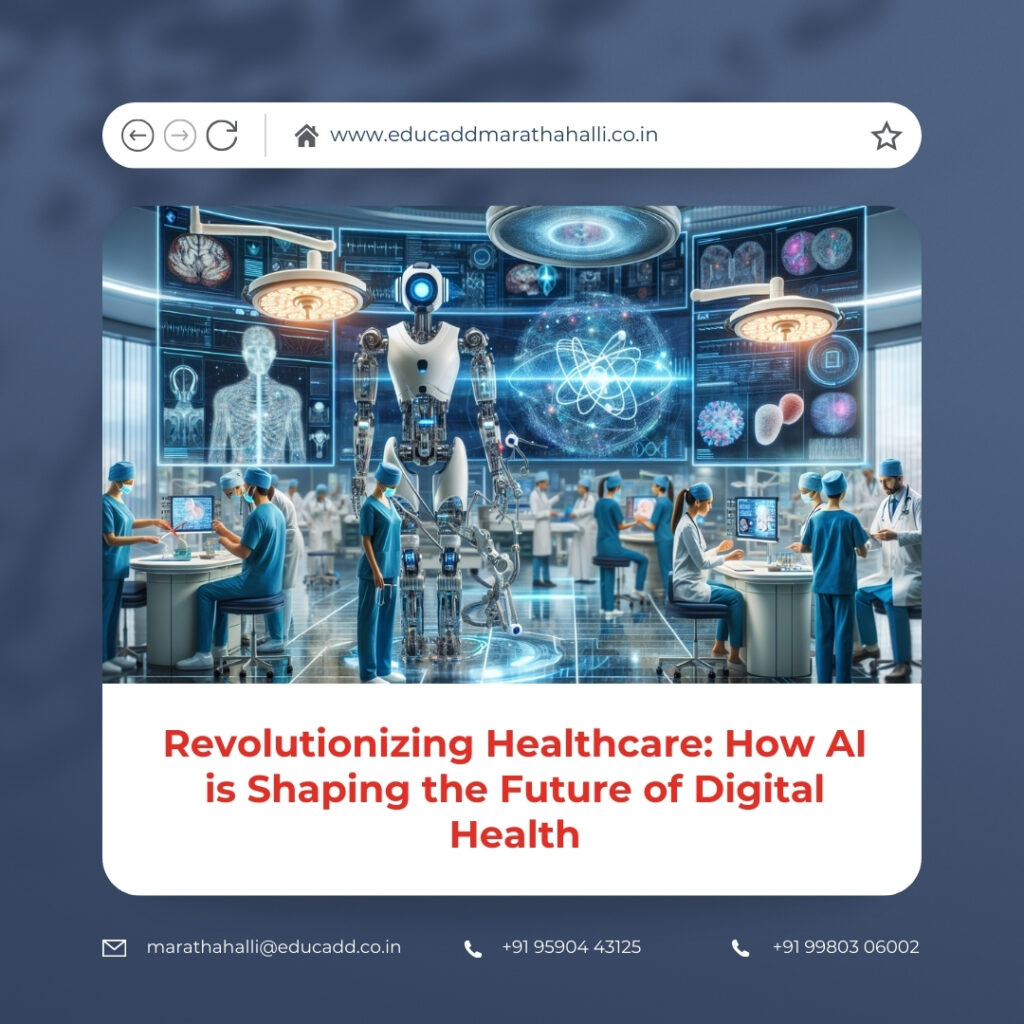
AI in Digital Health
1. AI in Healthcare IT: Redefining the Core of Digital Health
AI in Digital Health is not just a technological upgrade; it is a paradigm shift. Leveraging machine learning, deep learning, natural language processing, and advanced analytics, AI transforms raw medical data into actionable intelligence. Modern Healthcare IT platforms are no longer mere record-keeping tools—they actively interpret patient data, medical images, lab results, and real-time monitoring metrics. AI systems continuously learn from each interaction, enhancing accuracy and reliability over time. This combination of data processing and adaptive intelligence allows clinicians to make more informed decisions while streamlining hospital operations. Consequently, AI has become the backbone of digital health, ensuring that technology works in tandem with human expertise rather than in isolation.
2. The Journey of Healthcare IT: From Digital Records to Intelligent Systems
Healthcare IT has progressed significantly over the last two decades. Early digital systems focused on replacing paper records with electronic formats. While this increased accessibility and reduced storage challenges, it also generated massive volumes of unstructured data. AI has now entered the picture to solve these complexities. By analyzing and structuring this information, AI transforms Healthcare IT from a passive storage system into a proactive decision-making platform. Hospitals are no longer limited to reactive care; they can predict disease outbreaks, optimize staffing, and plan resources effectively. This evolution represents a critical leap forward in digital health, where information translates directly into actionable healthcare strategies.
3. Transforming Diagnostics Through AI
Diagnostics is arguably one of the most significant areas impacted by AI in Healthcare IT. Traditional diagnostic procedures often rely on human interpretation of medical images, lab reports, and patient histories. AI, however, introduces the capability to analyze vast datasets with unparalleled speed and precision. Algorithms can detect early-stage cancers, neurological disorders, and cardiovascular anomalies that may escape human detection. When integrated with Healthcare IT systems, AI not only accelerates diagnosis but also provides secondary validation to clinicians. This dual layer of analysis minimizes errors, ensures faster treatment initiation, and ultimately enhances patient survival rates, positioning AI as a critical tool for the future of diagnostic medicine.
4. AI-Powered Clinical Decision Support: Smarter Choices, Better Outcomes
Clinical Decision Support Systems (CDSS) powered by AI assist healthcare professionals in making informed decisions at the point of care. These systems synthesize patient history, lab results, and current research to recommend treatment plans that are both evidence-based and personalized. AI-integrated Healthcare IT ensures these insights are presented seamlessly within clinicians’ workflows. The advantage lies in improved consistency and reduced variability in patient care, while maintaining clinician control and judgment. As healthcare becomes more complex, these intelligent systems are essential for navigating the nuances of modern medical practice, enabling more accurate diagnoses, precise treatment plans, and ultimately, better patient outcomes.
5. Personalized Medicine: Tailoring Treatments to Individual Needs
One of the most transformative applications of AI in digital health is personalized medicine. Each patient is unique, with distinct genetics, medical histories, and environmental influences. AI in Digital Health to analyze these variables and recommend treatments tailored to individual profiles. This approach minimizes the traditional trial-and-error methods, reducing adverse reactions and improving effectiveness. Patients receive care that is truly customized, fostering trust, engagement, and adherence to treatment plans. By empowering clinicians with data-driven insights, AI transforms Healthcare IT from a generalist tool into a highly specific, patient-centered resource that supports the broader goals of digital health innovation.
6. Predictive Analytics: Moving From Reactive to Proactive Care
Predictive analytics is a game-changer for healthcare organizations. AI systems evaluate historical patient data, real-time vitals, and other health indicators to anticipate potential complications or hospital readmissions. This predictive capability allows healthcare providers to intervene before conditions worsen, shifting care from reactive to proactive. For example, AI can flag early signs of sepsis in hospitalized patients or predict heart failure risk in outpatient populations. Beyond individual care, predictive analytics also supports public health initiatives by identifying trends in disease outbreaks and patient behaviors. These insights enable a more strategic allocation of resources and demonstrate how AI in Healthcare IT drives efficiency while improving outcomes.
7. Operational Efficiency: Streamlining Healthcare Systems
Healthcare operations often involve intricate processes, from patient scheduling to supply chain management. AI integration within Healthcare IT systems enhances operational efficiency significantly. Intelligent scheduling algorithms optimize appointment times, reduce patient wait times, and improve clinician utilization. Automated coding and billing processes reduce errors and administrative burdens. Supply chain management powered by AI anticipates demand for medical equipment and pharmaceuticals, preventing shortages or overstocking. By automating these critical operational functions, AI frees healthcare professionals to focus on patient care, creating a system that is both cost-effective and highly responsive—a hallmark of advanced digital health infrastructure.
8. Enhancing Patient Engagement Through AI
Patient engagement is crucial to effective healthcare delivery. AI-powered digital tools, such as chatbots, virtual assistants, and remote monitoring platforms, ensure patients remain connected with their providers at all times. These tools answer questions, track medication adherence, schedule appointments, and even detect symptom changes. Integrated within Healthcare IT systems, AI ensures that patient communication is timely, accurate, and personalized. Higher engagement levels lead to better adherence to treatment plans and improved health outcomes. In essence, AI bridges the gap between hospital walls and patients’ daily lives, reinforcing the value of continuous, interactive digital health experiences.
9. Data Management and Interoperability: Making Healthcare Systems Smarter
Healthcare generates enormous quantities of data daily. Managing and making sense of this information is critical for delivering quality care. AI enhances Healthcare IT by enabling data interoperability across different systems and platforms. It standardizes formats, reconciles inconsistencies, and ensures data integrity. AI also detects anomalies or gaps in records, enhancing the reliability of information used for clinical decisions. Seamless integration of data across departments, hospitals, and networks facilitates coordinated care, real-time analytics, and effective reporting. As digital health expands, AI-driven data management becomes an indispensable component of smarter, more connected healthcare systems.
10. Security and Ethical Considerations in AI-Powered Healthcare
With the proliferation of AI in healthcare, cybersecurity and ethics cannot be ignored. Healthcare IT systems house highly sensitive patient information, making them prime targets for cyberattacks. AI enhances security by detecting irregular patterns, identifying vulnerabilities, and responding to potential breaches swiftly. Ethical considerations, including fairness, transparency, and accountability, are equally important. AI systems must avoid bias in patient care decisions, ensuring equitable treatment for all individuals. Establishing governance frameworks and regulatory compliance protocols ensures that AI contributes positively to healthcare while protecting patient rights and privacy, maintaining trust in the digital health ecosystem.
11. AI and Telemedicine: Expanding Access and Improving Remote Care
Telemedicine has revolutionized healthcare delivery, especially in underserved and remote regions. AI significantly enhances telemedicine platforms by providing tools for remote diagnostics, monitoring, and care coordination. Wearable devices and home monitoring systems feed real-time patient data to AI-enabled Healthcare IT platforms. Clinicians can detect anomalies, track chronic conditions, and offer timely interventions without in-person visits. AI ensures that telehealth services are accurate, efficient, and scalable. This integration demonstrates how AI expands access to healthcare, bridging geographic and socioeconomic gaps while ensuring the continuity of high-quality care in the digital health era.
12. Workforce Empowerment: Supporting Clinicians With AI Tools
AI does not aim to replace healthcare professionals but to augment their capabilities. By automating repetitive and time-consuming tasks such as documentation, scheduling, and routine analysis, AI allows clinicians to dedicate more time to patient care. Training platforms using AI can simulate complex clinical scenarios, enhancing skill development and decision-making confidence. These tools reduce burnout and improve job satisfaction, which is critical in high-stress healthcare environments. By empowering the workforce, AI ensures that healthcare professionals remain effective, engaged, and capable of delivering exceptional care, complementing the goals of digital health innovation.
13. Challenges and Considerations in Implementing AI
Despite its transformative potential, implementing AI in Healthcare IT comes with challenges. Data quality and availability can impact algorithm accuracy. Integrating AI with existing legacy systems often requires substantial technical and organizational effort. Regulatory approval processes necessitate rigorous testing and validation to ensure safety and compliance. Additionally, clinician acceptance and change management are crucial to successful adoption. Overcoming these challenges requires collaboration between technology developers, healthcare providers, and policymakers. Properly addressing these obstacles transforms them into opportunities for innovation, ensuring AI delivers maximum value within digital health frameworks.
14. The Road Ahead: AI as the Future of Digital Health
The trajectory of healthcare is increasingly intertwined with AI advancements. Healthcare IT systems will continue evolving into highly intelligent, predictive, and personalized platforms. AI-driven insights will enable earlier interventions, better patient engagement, and optimized resource utilization. Collaboration between human expertise and artificial intelligence will define successful healthcare delivery models. Institutions embracing AI strategically will set new standards in quality, efficiency, and innovation. The integration of AI within Healthcare IT signifies not only a technological shift but also a cultural transformation in healthcare, one that prioritizes patient-centered, data-driven care for the digital age.
Conclusion
AI in Digital Health represents a monumental step forward for digital health. From diagnostics to operational efficiency, personalized care to remote monitoring, AI reshapes every facet of healthcare delivery. While challenges such as cybersecurity, ethics, and integration remain, they are not insurmountable. Thoughtful deployment, combined with clinician expertise, ensures that AI becomes a trusted partner in patient care. By embracing AI today, healthcare organizations pave the way for a smarter, more efficient, and more compassionate future—one where technology empowers humans to deliver healthcare at its highest potential.

