
Mastering Electrical Infrastructure: Cable Tray, Raceway & Lighting Design in CADD
Modern infrastructure projects demand a meticulous approach to electrical design. Whether it’s commercial complexes, industrial plants, or smart residential buildings, the layout of electrical systems significantly impacts efficiency, safety, and maintainability. Cable Tray, Raceway & Lighting Design in Electrical Infrastructure CADD Design has emerged as a critical tool for electrical engineers. This technology allows professionals to translate complex electrical requirements into precise, error-free, and execution-ready designs. By leveraging Electrical CADD, engineers can optimize layouts, coordinate with multiple disciplines, and ensure compliance with international standards.
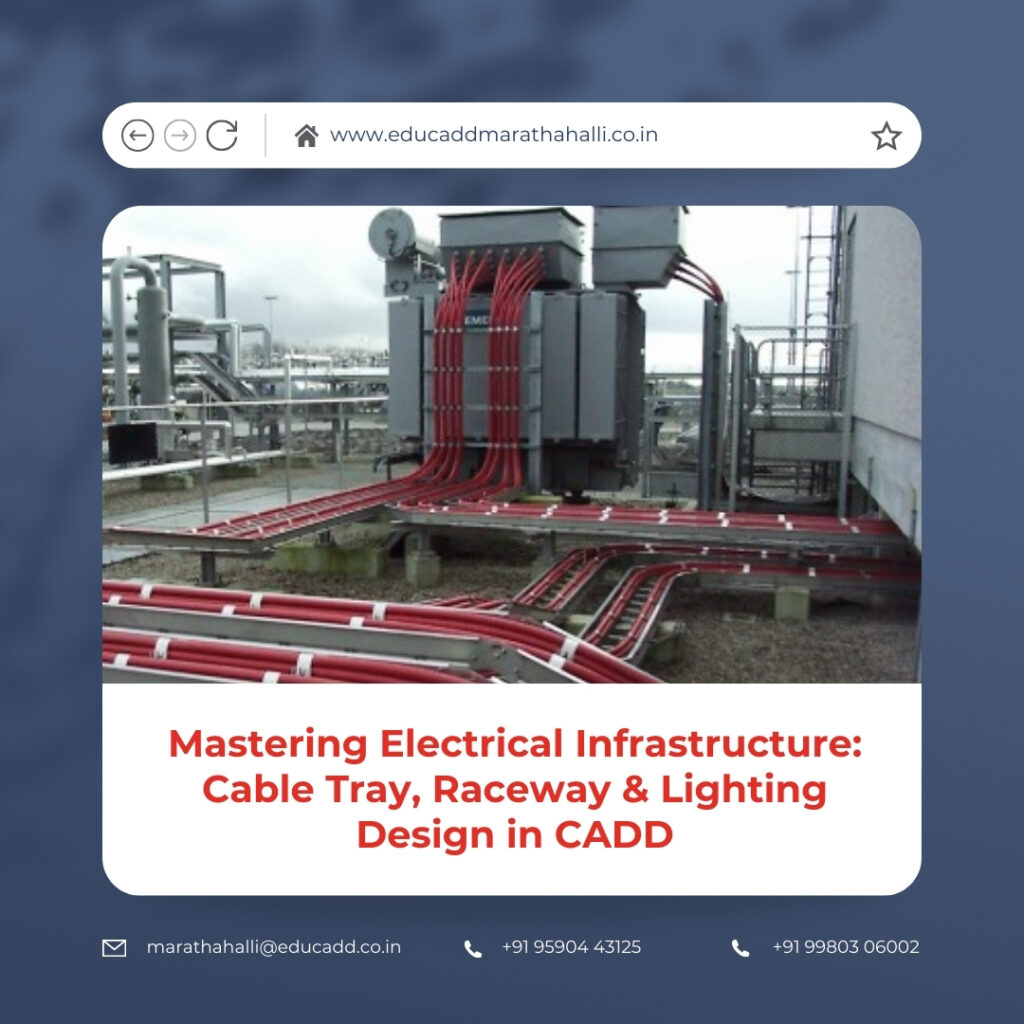
Electrical Infrastructure CADD Design
This blog explores the practical applications, methodologies, and advantages of using Electrical CADD to design cable trays, raceways, and lighting systems while highlighting its relevance in today’s fast-paced construction environment.
1. The Role of Electrical CADD in Modern Construction
Electrical systems today integrate automation, communication networks, and energy-efficient technologies. Traditional manual drafting often fails to cope with these complexities. Electrical Infrastructure CADD Design, or Computer-Aided Design for electrical projects, allows engineers to produce accurate digital models. These models provide precise measurements, realistic representations, and clear documentation. By employing Electrical CADD, designers can simulate layouts, verify clearances, and anticipate installation challenges before reaching the field. This proactive approach reduces costly mistakes, streamlines workflow, and enhances collaboration between electrical, mechanical, and architectural teams.
2. Understanding Cable Tray Systems
Cable trays are vital for supporting, routing, and organizing electrical wiring in both commercial and industrial facilities. They prevent cable damage, allow easy maintenance, and provide flexibility for future upgrades. Electrical CADD enables engineers to design multiple types of trays, including ladder, perforated, solid bottom, and wire mesh configurations. Designers can calculate load capacities, ensure heat dissipation, and plan segregation for power and communication cables. Moreover, using Electrical CADD ensures tray routes comply with regulatory requirements while minimizing material usage and installation challenges. Accurate cable tray planning improves system reliability and operational safety.
3. Advanced Cable Tray Routing Techniques
Routing cable trays is not just about connecting points A and B; it requires strategic planning to avoid clashes with other services. Electrical CADD simplifies this by providing layered drawings and 3D modeling. Designers can evaluate tray paths in both plan and elevation views, reducing errors and ensuring smooth cable flow. The software supports precise placement of bends, reducers, and vertical drops, minimizing cable strain. Additionally, designers can simulate future expansion to accommodate extra circuits. As a result, projects achieve faster installation times, lower material costs, and fewer on-site modifications.
4. Introduction to Raceway Systems
Raceways serve as protective conduits for electrical cables. They shield wiring from mechanical damage, moisture, and environmental hazards. Common raceway types include conduits, surface-mounted channels, and trunking systems. Electrical CADD allows designers to accurately model raceways, choose appropriate sizes, and maintain proper clearances. By visualizing raceways digitally, engineers can prevent overcrowding, maintain separation between high- and low-voltage circuits, and optimize the overall layout. A well-designed raceway system enhances safety, simplifies maintenance, and ensures compliance with industry standards.
5. Conduit Layout Precision in Electrical CADD
Conduits are essential for directing wires through ceilings, walls, and floors. Designing conduit layouts manually often leads to errors in bends, offsets, and terminations. Electrical CADD allows designers to create exact conduit runs, including detailed annotations for junction boxes and pull points. It also provides tools for measuring lengths, angles, and bends, preventing cable damage during installation. By using Electrical CADD, designers ensure that conduits are easy to install, safe, and aligned with other building systems, reducing the risk of misalignment and costly rework.
6. Coordinating Raceways with Building Services
Modern buildings host multiple utilities in compact spaces. Raceways must coexist with plumbing, HVAC, fire protection, and communication systems. Electrical CADD enables integrated design by allowing overlays of multiple service drawings. Designers can detect clashes, adjust pathways, and ensure adequate spacing. This level of coordination eliminates conflicts during construction and reduces on-site modifications. Furthermore, coordinated layouts improve overall project efficiency, ensuring that electrical systems are safe, functional, and maintainable throughout the building’s lifecycle.
7. Principles of Lighting Design in Electrical CADD
Lighting design is a critical component of electrical planning. It impacts energy efficiency, safety, and occupant comfort. Electrical CADD supports precise placement of luminaires, calculation of illumination levels, and documentation of control circuits. Designers can plan for uniform light distribution, avoid glare, and optimize fixture types. Advanced CADD tools allow simulation of daylight integration, occupancy sensors, and zoning controls. By leveraging Electrical CADD, lighting systems are designed to be both energy-efficient and aesthetically aligned with the architectural vision, creating spaces that are functional and comfortable.
8. Lighting Calculations and Standard Compliance
Compliance with lighting standards is crucial for workplace safety and efficiency. Electrical CADD integrates lux level calculations, uniformity ratios, and photometric data into the design. This ensures that spaces meet regulatory and occupational requirements. Designers can also produce detailed reports and documentation for approval by authorities. By embedding compliance within the design phase, Electrical CADD reduces the risk of post-construction corrections and ensures that lighting installations meet operational standards from the start.
9. Energy-Efficient Lighting Strategies
Sustainability has become a key priority in electrical design. Electrical CADD allows the integration of energy-efficient technologies such as LED fixtures, daylight harvesting systems, and occupancy-based controls. Designers can group lighting circuits for maximum efficiency and minimize unnecessary energy consumption. By documenting circuit arrangements and control sequences, Electrical CADD ensures that lighting systems are not only compliant but also optimized for lower operational costs. This contributes to greener buildings and long-term energy savings.
10. Emergency Lighting Design and Planning
Emergency lighting is critical in maintaining safety during power outages or evacuations. Electrical CADD supports detailed planning for exit signs, escape route illumination, and backup circuits. Designers can clearly mark emergency circuits, battery backup units, and power sources in the drawings. This clarity simplifies approvals and facilitates accurate installation and testing. Properly designed emergency lighting ensures building occupants’ safety and helps organizations meet stringent regulatory requirements.
11. Integration of Cable Tray, Raceway, and Lighting Systems
The greatest value of Electrical CADD lies in integration. Designers can work on cable trays, raceways, and lighting layouts within a single, coordinated platform. This ensures consistent elevation levels, optimal routing, and clear separation of circuits. Electrical CADD supports clash detection and load calculations, allowing designers to foresee potential conflicts and resolve them digitally. Integrated design reduces construction errors, enhances operational efficiency, and ensures that all electrical systems perform as intended without interference.
12. Documentation and Standardization in Electrical CADD
Standardized documentation is essential for effective communication between stakeholders. Electrical CADD provides tools for applying consistent symbols, layers, and annotation styles. Engineers can automatically generate schedules, legends, and material lists. This standardization improves clarity during construction, maintenance, and audits. Well-documented designs allow contractors to install systems accurately and provide clients with reliable references for future modifications or expansions. Electrical CADD ensures that documentation is thorough, professional, and accessible.
13. Advantages of Electrical CADD for Stakeholders
Electrical CADD benefits everyone involved in a project. Engineers can design faster and with fewer errors. Contractors receive clear and precise installation guidance, reducing delays and cost overruns. Clients gain confidence through accurate visualizations and detailed documentation. Additionally, Electrical CADD enables accurate material estimation, improving budget control and procurement efficiency. The combination of accuracy, clarity, and collaboration provided by Electrical CADD results in higher-quality projects and improved stakeholder satisfaction.
14. Career and Professional Growth with Electrical CADD Expertise
Electrical engineers skilled in Cable Tray, Raceway & Lighting Design in CADD are highly sought after. Mastery of these tools enhances employability in construction firms, EPC contractors, and design consultancies. Certified professionals can handle complex projects, coordinate multidisciplinary teams, and deliver compliant designs efficiently. Knowledge of Electrical CADD also opens opportunities for leadership roles in design and project management. As electrical systems continue to evolve, proficiency in Electrical CADD will remain a critical differentiator for career growth and long-term success.
Conclusion
Designing modern electrical systems requires precision, foresight, and integration. Cable Tray, Raceway & Lighting Design in Electrical Infrastructure CADD Design empowers engineers to achieve these goals. From optimized cable routing and safe conduit layouts to energy-efficient lighting solutions, Electrical CADD transforms design concepts into practical, buildable systems. By reducing errors, facilitating collaboration, and ensuring compliance, Electrical CADD adds immense value to every stage of construction. Professionals equipped with these skills not only improve project outcomes but also secure a competitive advantage in an increasingly complex and technology-driven industry.

