
The Art and Science of Kitchen & Bathroom Design: A Comprehensive Guide to Building Smart, Stylish, and Sustainable Spaces
Kitchen Bathroom Design Guide have evolved far beyond their traditional roles. Today, they represent lifestyle, comfort, and efficiency within a home. A well-designed kitchen supports daily cooking, family interactions, and social gatherings, while a thoughtfully planned bathroom promotes hygiene, relaxation, and wellness. Learning kitchen and bathroom design is no longer optional for professionals in construction or interiors. Homeowners, real estate developers, and design students now recognize the long-term value of these spaces. This guide explores kitchen and bathroom design in depth, covering planning, functionality, aesthetics, materials, and modern innovations. Each section offers practical insights to help you design spaces that perform well, look refined, and remain relevant for years.
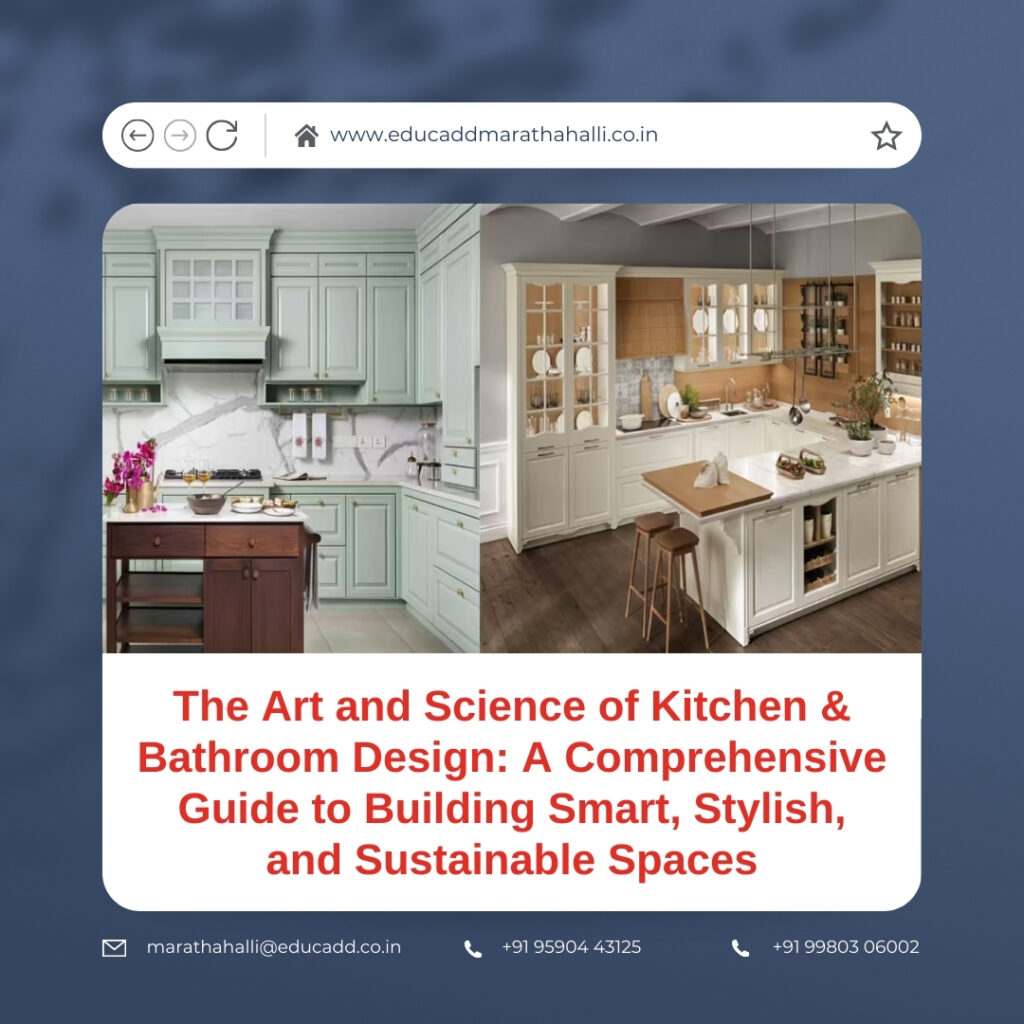
Kitchen Bathroom Design Guide
1. Foundations of Kitchen and Bathroom Design Thinking
Every successful kitchen or bathroom begins with clear design thinking. This stage focuses on understanding user needs, lifestyle patterns, and spatial limitations. Kitchens require efficiency and flow, while bathrooms demand privacy and comfort. Designers study how users move, store items, and interact with fixtures. Proportion, balance, and symmetry guide visual harmony. Functional priorities always come first, followed by aesthetic choices. When the design process starts with strong fundamentals, the final outcome feels natural and purposeful. These foundations prevent common mistakes and ensure that the space supports everyday activities without unnecessary complexity.
2. Intelligent Space Planning for Seamless Movement
Space planning defines how comfortably a kitchen or bathroom operates. In kitchens, proper zoning separates cooking, preparation, cleaning, and storage areas. Popular layouts include straight, L-shaped, U-shaped, and island kitchens, each suited to specific room sizes. Bathrooms rely on efficient placement of washbasins, toilets, and bathing areas. Clear circulation paths reduce congestion and improve safety. Smart space planning also considers door swings, ventilation access, and maintenance clearance. When movement feels effortless, the design enhances user satisfaction and long-term usability.
3. Ergonomic Design for Everyday Comfort
Ergonomics plays a crucial role in both kitchens and bathrooms. Counter heights, cabinet depths, and appliance placement directly affect comfort and posture. Poor ergonomics can lead to strain and inefficiency over time. Designers follow standard measurements while adapting them to user needs. Pull-out drawers, adjustable shelves, and wall-mounted fixtures improve accessibility. Bathrooms benefit from well-positioned mirrors, seating areas, and support features. Ergonomic design ensures that spaces remain comfortable for users of all ages, making daily routines smoother and more enjoyable.
4. Material Selection: Balancing Performance and Aesthetics
Materials define durability, maintenance, and visual appeal. Kitchens require surfaces that resist heat, stains, and scratches, while bathrooms demand moisture-resistant finishes. Designers carefully evaluate flooring, countertops, wall finishes, and cabinetry materials. Choices such as quartz, granite, ceramic tiles, and waterproof laminates offer both performance and style. Texture and finish also influence how light interacts with surfaces. Selecting the right materials ensures longevity and reduces repair costs. Thoughtful material choices create spaces that look refined while standing up to daily use.
5. Storage and Cabinet Design for Organized Living
Storage solutions determine how functional a kitchen or bathroom feels. Poor storage leads to clutter, while smart cabinetry promotes organization. Kitchens benefit from tall units, corner solutions, pull-out pantries, and drawer organizers. Bathrooms require compact yet efficient storage for toiletries and cleaning supplies. Custom cabinetry maximizes available space and supports specific user needs. Well-designed storage keeps surfaces clean and improves hygiene. When everything has a defined place, the space feels calm, efficient, and visually appealing.
6. Lighting Strategies for Function and Ambience
Lighting transforms the look and usability of kitchens and bathrooms. A layered lighting approach works best, combining ambient, task, and accent lighting. Kitchens require focused lighting over work areas and softer illumination for dining zones. Bathrooms need even lighting around mirrors and safe lighting in wet areas. LED fixtures provide energy efficiency and design flexibility. Proper lighting enhances visibility, highlights textures, and sets the mood. A well-lit space feels welcoming, safe, and comfortable throughout the day.
7. Plumbing and Electrical Coordination
Behind-the-scenes systems play a major role in long-term performance. Plumbing design ensures proper water flow, drainage, and pressure control. Electrical planning supports appliances, lighting, and safety features. Early coordination between designers and technical experts prevents costly modifications later. Waterproof fittings, concealed pipelines, and organized wiring improve reliability. Proper planning also simplifies maintenance. When infrastructure aligns with design intent, kitchens and bathrooms perform efficiently for many years.
8. Color, Texture, and Visual Harmony
Color choices influence how spaces feel and appear. Light colors create an open and airy atmosphere, especially in compact kitchens and bathrooms. Darker tones add sophistication when used selectively. Designers also balance matte and glossy finishes to control reflections. Textures add depth and character without overwhelming the space. A cohesive color palette connects different elements and creates visual harmony. Thoughtful use of color and texture enhances mood while maintaining timeless appeal.
9. Ventilation and Moisture Management
Proper ventilation protects both health and materials. Kitchens generate heat and odors, while bathrooms produce steam and humidity. Exhaust systems, windows, and natural airflow reduce moisture buildup. Effective ventilation prevents mold, peeling finishes, and unpleasant smells. It also improves indoor air quality. Designers integrate ventilation solutions without compromising aesthetics. A well-ventilated kitchen or bathroom feels fresh, clean, and comfortable every day.
10. Safety and Compliance in Design
Safety considerations guide every design decision. Slip-resistant flooring, rounded edges, and secure fittings reduce accident risks. Electrical safety remains critical in wet areas. Designers follow building codes and industry standards to ensure compliance. Fire safety, gas line placement, and accessibility features also matter. Safe design protects users and adds long-term value to the property. When safety integrates seamlessly into design, users feel confident and at ease.
11. Technology and Smart Features in Modern Spaces
Technology continues to redefine kitchens and bathrooms. Smart appliances, touchless faucets, and automated lighting improve efficiency and hygiene. Digital controls allow users to manage temperature, lighting, and water usage easily. Smart mirrors and storage systems enhance convenience. These features also support energy and water conservation. Integrating technology thoughtfully ensures that spaces remain modern and adaptable to future needs.
12. Sustainable Design and Environmental Responsibility
Sustainability has become a core design principle. Water-saving fixtures, energy-efficient lighting, and eco-friendly materials reduce environmental impact. Designers prioritize long-lasting products to minimize waste. Sustainable kitchens and bathrooms lower utility costs and promote healthier living environments. Responsible design choices benefit both users and the planet. Sustainability also increases property value and aligns with modern lifestyle expectations.
13. Budget Planning and Value Optimization
Budget planning ensures that design goals remain achievable. Designers identify priorities and allocate resources accordingly. Smart material substitutions and modular solutions help control costs. Transparent budgeting prevents delays and compromises during execution. Value-driven design focuses on durability and performance rather than short-term trends. With proper planning, it is possible to achieve high-quality results within a defined budget.
14. Professional Growth and Opportunities in Design
Expertise in kitchen and bathroom design opens diverse career opportunities. Interior designers, kitchen planners, and renovation consultants benefit from specialized knowledge. Demand continues to grow due to urban development and lifestyle changes. Professional training enhances technical skills, creativity, and client communication. Designers who master these spaces contribute significantly to residential and commercial projects. A strong foundation in design principles supports long-term career success.
Conclusion
Kitchen Bathroom Design Guide how people live, work, and relax within their homes. A well-designed space combines functionality, comfort, aesthetics, and sustainability. From planning and materials to lighting and technology, every detail matters. By understanding design principles and applying them thoughtfully, you can create spaces that perform beautifully over time. Whether you are designing for yourself or for clients, a comprehensive approach ensures that kitchens and bathrooms remain efficient, elegant, and future-ready.

