
Mastering Marketing Funnels for Lead Generation: A Complete Growth Framework for Attracting, Engaging, and Converting the Right Audience
In the digital-first economy, businesses can no longer rely on isolated marketing activities to generate consistent leads. Marketing Funnels Lead Generation Posting content, running ads, or sending emails without a clear structure often results in wasted budgets and poor conversions. What successful brands do differently is build systems that guide prospects from curiosity to commitment. This system is known as a marketing funnel. When you truly understand and apply marketing funnels for lead generation, your marketing becomes intentional, measurable, and scalable.
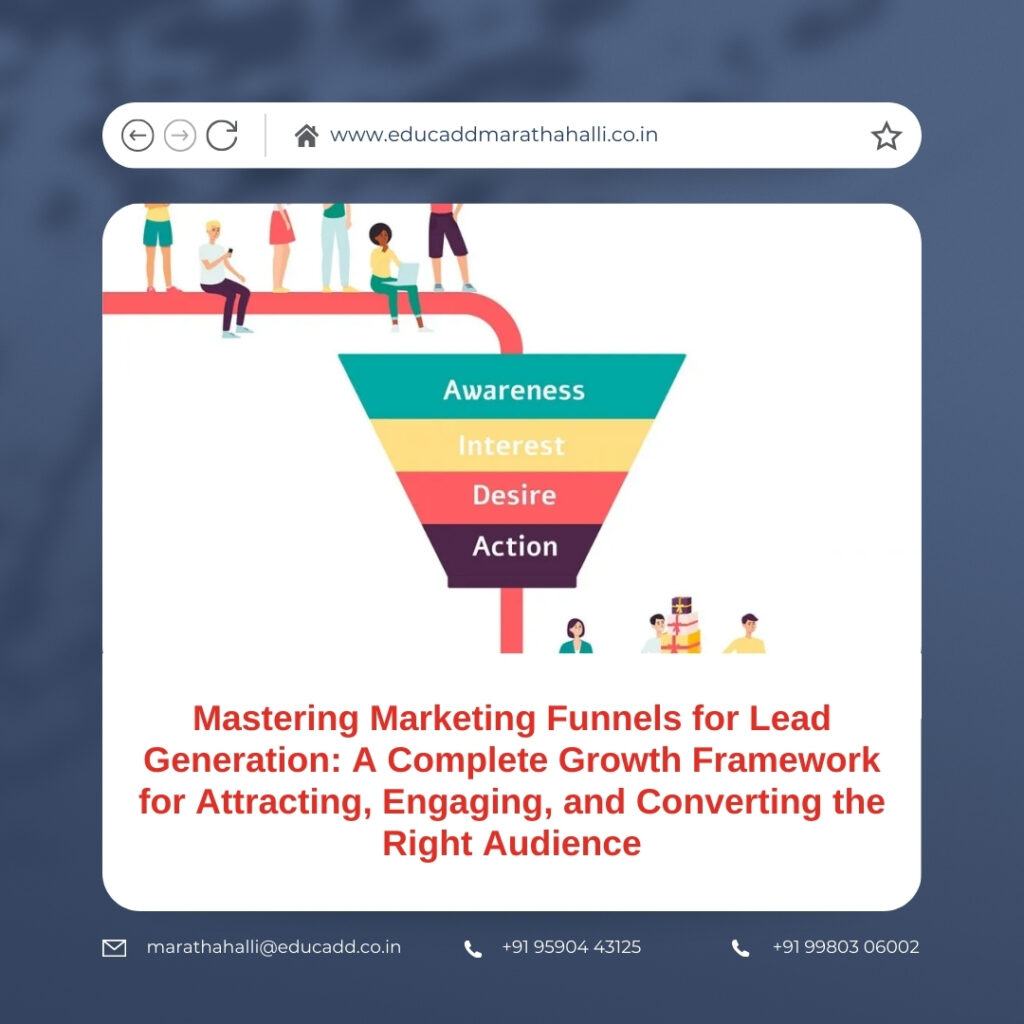
Marketing Funnels Lead Generation
This comprehensive guide is designed to help you master marketing funnels for lead generation from the ground up. It explains every stage in detail, highlights proven strategies, and connects marketing psychology with practical execution. Whether you are a beginner or an experienced marketer, this blog will give you a clear, step-by-step framework to build funnels that attract qualified prospects, nurture trust, and convert interest into high-value leads.
1. The Foundation of Marketing Funnels and How They Work
A marketing funnel is a structured pathway that represents the journey a potential customer takes before becoming a lead or buyer. Instead of pushing people directly toward a sale, funnels focus on gradual engagement. Each stage of the funnel serves a specific purpose and aligns with the mindset of the audience at that moment. This approach makes marketing feel helpful rather than intrusive.
When you work with marketing funnels for lead generation, you shift from aggressive selling to value-driven communication. At the top, people discover your brand. In the middle, they explore solutions and build trust. At the bottom, they feel confident enough to take action. This structure ensures that prospects receive the right message at the right time, which significantly improves lead quality and conversion rates.
2. Why Marketing Funnels Are Essential for Sustainable Lead Generation
Modern buyers are more informed and cautious than ever. They research extensively before sharing personal information or making decisions. Marketing funnels for lead generation support this behavior by offering clarity and guidance instead of pressure. Funnels allow businesses to nurture relationships while respecting the buyer’s pace.
Another major advantage of funnels is predictability. With a well-designed funnel, you can forecast lead volume, identify bottlenecks, and improve performance through data. This makes growth more controlled and less dependent on guesswork. When businesses adopt marketing funnels for lead generation, they gain consistency, efficiency, and long-term stability in their marketing efforts.
3. Understanding Buyer Psychology Within a Funnel Structure
Every successful funnel is rooted in human psychology. People move through stages of awareness, consideration, and decision based on emotions, logic, and trust. Marketing funnels for lead generation work because they align with how people naturally think and decide.
At the early stage, curiosity drives attention. In the middle, logic and comparison dominate. At the final stage, reassurance and confidence matter most. Funnels that respect these psychological shifts feel natural and persuasive. When you understand buyer psychology, you can design messaging that reduces resistance and increases engagement throughout the funnel.
4. Top-of-Funnel Strategy: Attracting the Right Attention
The top of the funnel is where awareness begins. The goal here is to attract people who are actively experiencing a problem or exploring an opportunity. Content at this stage should educate, inform, or inspire without selling aggressively. Blogs, social media posts, videos, podcasts, and SEO-driven content perform especially well.
Marketing funnels for lead generation become effective only when the right audience enters the funnel. Broad messaging often attracts unqualified traffic that never converts. Focused topics, clear positioning, and strong value propositions help attract people who are genuinely interested. This ensures higher engagement as prospects move deeper into the funnel.
5. Creating Content That Pulls Prospects Into Your Funnel
Content is the entry point to your funnel, and its quality directly impacts lead generation success. High-performing content addresses real problems, answers common questions, and provides immediate value. It establishes authority while building curiosity for deeper engagement.
When developing content for marketing funnels for lead generation, clarity matters more than creativity alone. Each piece should have a purpose and a clear next step. Well-placed calls to action guide readers toward lead magnets or additional resources. Over time, this approach builds trust and positions your brand as a reliable solution provider.
6. Middle-of-Funnel Strategy: Converting Interest Into Engagement
The middle of the funnel is where casual visitors become serious prospects. At this stage, people recognize their problem and actively seek solutions. Your role is to educate further, address doubts, and demonstrate expertise. This is where lead capture typically happens.
Marketing funnels for lead generation rely heavily on lead magnets during this phase. Resources such as guides, webinars, templates, and free tools work well because they offer practical value. Clear landing pages and concise messaging improve conversion rates. The middle of the funnel filters out low-intent users and nurtures high-potential leads.
7. Designing Lead Magnets That Deliver Real Value
A lead magnet should solve a specific problem quickly and clearly. Generic offers often fail because they lack relevance. Effective marketing funnels for lead generation use lead magnets that align closely with the audience’s immediate needs.
Strong lead magnets communicate benefits clearly and set accurate expectations. Visual design, persuasive copy, and simplicity all contribute to higher sign-up rates. When prospects feel they gained value instantly, trust increases, and engagement continues throughout the funnel.
8. Lead Nurturing Through Strategic Communication
Once a prospect enters your funnel, nurturing becomes critical. Lead nurturing involves consistent communication that educates, reassures, and builds familiarity. Email marketing remains one of the most effective tools for this purpose, especially when paired with automation.
Marketing funnels for lead generation perform best when nurturing messages feel personalized and timely. Each interaction should move the prospect closer to clarity and confidence. Educational emails, case studies, and insights help maintain interest without overwhelming the audience.
9. Bottom-of-Funnel Strategy: Turning Prospects Into Qualified Leads
The bottom of the funnel focuses on conversion. Prospects now understand their problem and trust your expertise. They need a clear reason to take the final step. Offers such as consultations, demos, trials, or strategy calls work effectively here.
Marketing funnels for lead generation must remove final objections at this stage. Testimonials, success stories, and transparent information increase confidence. Clear calls to action and simple processes reduce friction. When the value is obvious and the risk feels low, conversions increase naturally.
10. The Role of Landing Pages in Funnel Optimization
Landing pages serve as conversion points within funnels. Unlike regular web pages, landing pages focus on a single objective. They eliminate distractions and guide visitors toward one action. Strong headlines, benefit-driven copy, and visual hierarchy improve results.
Marketing funnels benefit from landing pages that match the intent of the traffic source. Consistent messaging builds trust and reduces confusion. Continuous testing and refinement help maximize performance over time.
11. Measuring Funnel Success With Meaningful Metrics
Data-driven decision-making is essential for funnel improvement. Metrics such as traffic quality, conversion rates, engagement levels, and drop-off points reveal how prospects move through the funnel. These insights highlight strengths and weaknesses.
Marketing funnels improve through optimization, not guesswork. Regular analysis allows marketers to adjust messaging, offers, and design elements. Small changes often lead to significant improvements in lead volume and quality.
12. Avoiding Common Funnel Mistakes That Reduce Conversions
Many funnels fail due to complexity or misalignment. Asking for too much information early creates resistance. Inconsistent messaging across stages causes confusion. Poor follow-up reduces trust.
Successful marketing funnels for lead generation remain simple, focused, and audience-centric. Each stage should feel like a natural progression. Clarity, consistency, and relevance prevent friction and support long-term success.
13. Scaling Lead Generation With Automation and Technology
Automation allows funnels to operate efficiently at scale. Email workflows, CRM systems, and retargeting tools help manage large volumes of leads without sacrificing personalization. Automation ensures timely follow-ups and consistent communication.
Marketing funnels for lead generation become more powerful when automation supports strategy rather than replacing it. Behavior-based triggers deliver relevant messages based on user actions. This approach increases engagement while saving time and resources.
14. Aligning Marketing Funnels With Sales for Better Results
A funnel works best when marketing and sales teams collaborate closely. Clear definitions of qualified leads ensure smooth handoffs. Shared data and feedback loops improve both funnel performance and closing rates.
Marketing funnels for lead generation create transparency across departments. Everyone understands where prospects are in the journey and what actions are needed next. This alignment strengthens conversions and supports sustainable business growth.
Conclusion
Marketing Funnels Lead Generation transforms the way businesses attract and convert prospects. Funnels bring structure, clarity, and purpose to marketing efforts, replacing random tactics with a reliable system. They help businesses build trust, deliver value, and guide prospects toward confident decisions.
By understanding buyer psychology, designing value-driven content, and optimizing each stage, you can create marketing funnels for lead generation that produce consistent, high-quality leads. When strategy, execution, and measurement work together, lead generation becomes predictable, scalable, and impactful.

