
Designing Homes That Speak Style: Your Complete Guide to Mastering Residential Interior Styling
A well-styled home feels warm, balanced, and expressive. It tells a story about the people living in it. Learning Residential Interior Styling Guide gives you the ability to shape this story with intention. As modern homeowners seek spaces that comfort, inspire, and support their lifestyle, interior styling has become a vital skill. Through thoughtful planning, smart decisions, and creative expression, you can transform rooms into personal sanctuaries.
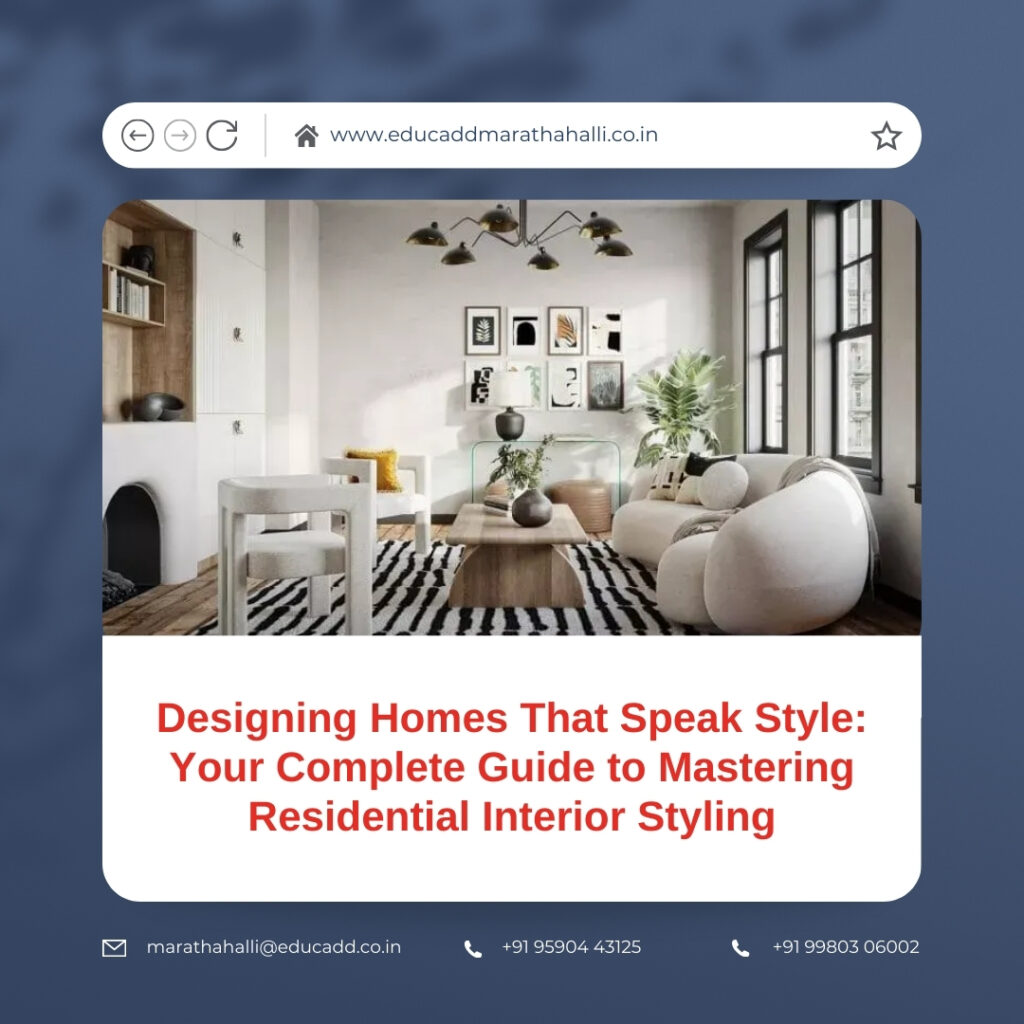
Residential Interior Styling Guide
This guide explores the foundations, techniques, and practical approaches to mastering residential interior styling. Whether you want to upskill for professional work or simply enhance your own living space, the principles shared here will help you design rooms that feel beautiful and purposeful.
1. The Essence of Interior Styling in Residential Spaces
Interior styling is far more than arranging furniture and adding décor pieces. It is the art of shaping a room with intention while considering how people live, move, and feel. When you immerse yourself in learning Residential Interior Styling Guide, you begin by understanding the human experience within a home. Every corner reflects daily routines, emotions, and personal habits.
A home’s visual harmony depends on how well you combine elements like light, texture, color, and shape. The moment you enter a room, your eyes search for order and connection. This is why cohesion is the heart of interior styling. When each element relates well to the next, the room feels complete.
Another vital aspect of styling is space behavior. Rooms behave differently based on furniture placement, circulation pathways, and natural light direction. A living room may require open movement, while a study room may demand structure and focus. By observing how people use spaces, you create styling plans that enrich their everyday life.
Design psychology is another powerful foundation. Colors influence mood; patterns shift energy; textures create comfort. Soft fabrics add warmth, while sleek materials add modernity. The interplay of these factors shapes the emotional output of the room. Once you master these principles, your styling gains depth and purpose.
Above all, residential styling thrives on personalization. Every home carries stories. Every homeowner has a lifestyle that deserves expression. The more you understand this essence, the more meaningful your designs become.
2. Planning Fundamentals That Drive Perfect Styling Decisions
Great styling begins long before you place a single item in the room. Planning is what helps ideas take shape. When learning interior styling for residential projects, you must build a structured plan that ensures clarity from start to finish.
Start with detailed measurements. Knowing the dimensions of each wall, window, and doorway is essential. Incorrect measurements lead to pieces that feel oversized or misplaced. A plan based on proper scale enhances flow and visual balance.
Next, explore the room’s natural advantages. Identify the areas with the best light. Notice shadows during the day. Observe how the room feels in the morning and at night. These observations determine the placement of mirrors, seating, art, and lighting fixtures.
Develop a mood board early in the process. Mood boards gather inspiration, fabrics, color palettes, and textures. They act as your styling compass. Whenever you feel uncertain, the board refocuses your decisions.
Color planning is just as important. Colors hold emotional power. Warm tones create intimate atmospheres. Cool hues energize a space. Neutral shades offer timeless grace. Choose a base tone and then build two or three supporting shades. This helps keep harmony throughout the room.
Furniture planning, too, shapes the room’s experience. Analyze the function before selecting pieces. Does the space support relaxation, productivity, conversation, or rest? Choose furniture that complements the purpose. Large rooms may need anchor pieces. Smaller rooms benefit from multipurpose furniture and clean silhouettes.
Lighting is the final pillar of planning. Light defines how styles appear, how textures stand out, and how colors look. Use layers of lighting—ambient for general illumination, task lighting for specific activities, and accent lighting for artistic impact. Balanced lighting creates depth and character.
Good planning saves time, money, and effort. It sets the stage for flawless styling execution.
3. Creative Styling Techniques That Elevate Residential Interiors
Styling is the stage where creativity shines. It transforms a planned room into a living experience. When you practice interior styling for residential projects, this stage becomes your opportunity to express mood, personality, and visual identity through curated setups.
Start by identifying a focal point in every room. It could be a striking art piece, a bold light fixture, a feature wall, or an elegant piece of furniture. The focal point anchors the room and guides the placement of supporting elements. Without it, the space may feel scattered.
Composition plays an important role in styling. Use symmetry for balance and calmness. Use asymmetry to bring spontaneity and character. Both approaches work well depending on the desired vibe. For example, placing two identical lamps on each side of a bed creates symmetry. However, pairing a tall vase with a low sculpture introduces dynamic asymmetry.
Layering enhances depth. Layer textiles like throws, cushions, area rugs, and bedding to add comfort and richness. Layer art pieces by mixing large frames with smaller ones. Layer accessories on tables and shelves without crowding them.
Decorative accessories give life to a room. Plants add freshness, books add personality, candles add warmth, and ceramics add artistic charm. Choose accessories that enhance the theme. Avoid filling spaces just because they are empty. Effective styling focuses on intention over quantity.
The rule of three is a helpful styling technique. Grouping items in odd numbers creates natural movement for the eyes. This rule works well for consoles, coffee tables, and shelving units.
Finally, always balance negative space. Not every surface must be decorated. Empty spaces help other elements shine. This approach keeps the room breathable and visually organized.
4. Mastering Materials, Colors, and Textures for Impact
Material selection defines the character of a home. When learning interior styling for residential projects, you will explore how each material contributes something unique to a room’s personality. The right mix can turn a simple room into a luxurious experience.
Wood is warm and grounding. It works beautifully in living rooms, kitchens, and bedrooms. Metals offer sleekness and sophistication, ideal for modern and industrial themes. Glass adds openness and enhances reflections. Stone adds strength and luxury. Fabric textures like velvet, linen, cotton, and wool create comfort and tactile variation.
Choose materials based on the homeowner’s needs. Families with active children may require stain-resistant fabrics and durable surfaces. People who enjoy minimalism may prefer smooth finishes. Those who love coziness might choose soft textures and warm tones.
Color harmony is equally important. Colors build the room’s atmosphere. Start with a primary shade. Then add accent hues that complement or contrast the base. Contrasting colors add drama. Complementary tones add calmness. Neutrals work as connectors.
Patterns enrich the visual language. Geometric patterns feel modern. Floral patterns feel soft. Ethnic patterns add culture. When mixing patterns, vary their scale. Allow one bold pattern to lead, while the others support quietly.
Texture makes rooms feel alive. Smooth and rough textures create balance. Pairing a plush rug with a sleek console table introduces contrast. Mixing woven baskets with polished surfaces adds warmth and structure.
A well-designed room feels intentional when materials, colors, textures, and patterns complement one another.
5. Practical Skills That Bring Styling Concepts to Life
Knowledge becomes powerful only when applied effectively. Learning interior styling for residential projects means developing hands-on skills that help turn theoretical understanding into real transformations.
Start by practicing room assessments. Enter a space and identify what is working and what needs attention. Observe lighting, proportions, color balance, and clutter. These evaluations sharpen your eye.
Experiment with rearranging furniture. Small changes can significantly shift how a room feels. Try different layouts. Move pieces to improve flow. Create zones for specific activities.
Develop a habit of photographing your work. Photos reveal details that you might miss while standing in the room. They help you evaluate shadows, proportions, spacing, and the overall visual narrative.
Communication is essential when styling for clients. Understand their daily routines, preferences, dislikes, and comfort levels. Ask questions that reveal their expectations. Styling becomes more accurate when rooted in genuine understanding.
Budget management is another important skill. Styling doesn’t require extravagant spending. Sometimes, repurposing items creates stunning results. Mixing premium pieces with affordable finds can give a room a polished look without stretching the budget.
Time management is key for smooth project execution. Styling involves planning, sourcing, arranging, and revising. Staying organized helps you maintain quality while meeting deadlines.
When these practical skills blend with creative vision, interior styling becomes a rewarding artform that enhances everyday living.
Conclusion
Mastering Residential Interior Styling Guide empowers you to shape homes with beauty, comfort, and intention. It teaches you how to balance creativity with structure, how to select elements that complement each other, and how to design rooms that feel both functional and expressive. With consistent practice, a strong understanding of color, lighting, materials, and layout, you can bring harmony to any living space. Whether you aim to become a professional stylist or simply want to elevate your own home, these principles will help you create interiors that reflect personality, purpose, and timeless charm.

