
Transforming Spaces: Real Student Projects in Interior Design from Concept to Completion
Are you curious about what truly happens behind the scenes of interior design courses? Real student projects in interior design from concept to completion reveal the depth of creativity, practical skills, and industry readiness these courses provide. By following how students transform a blank space into a beautiful, functional environment, you gain insight into the power of experiential learning. Let’s delve into how these projects shape future designers while aligning with market trends and personal expression.
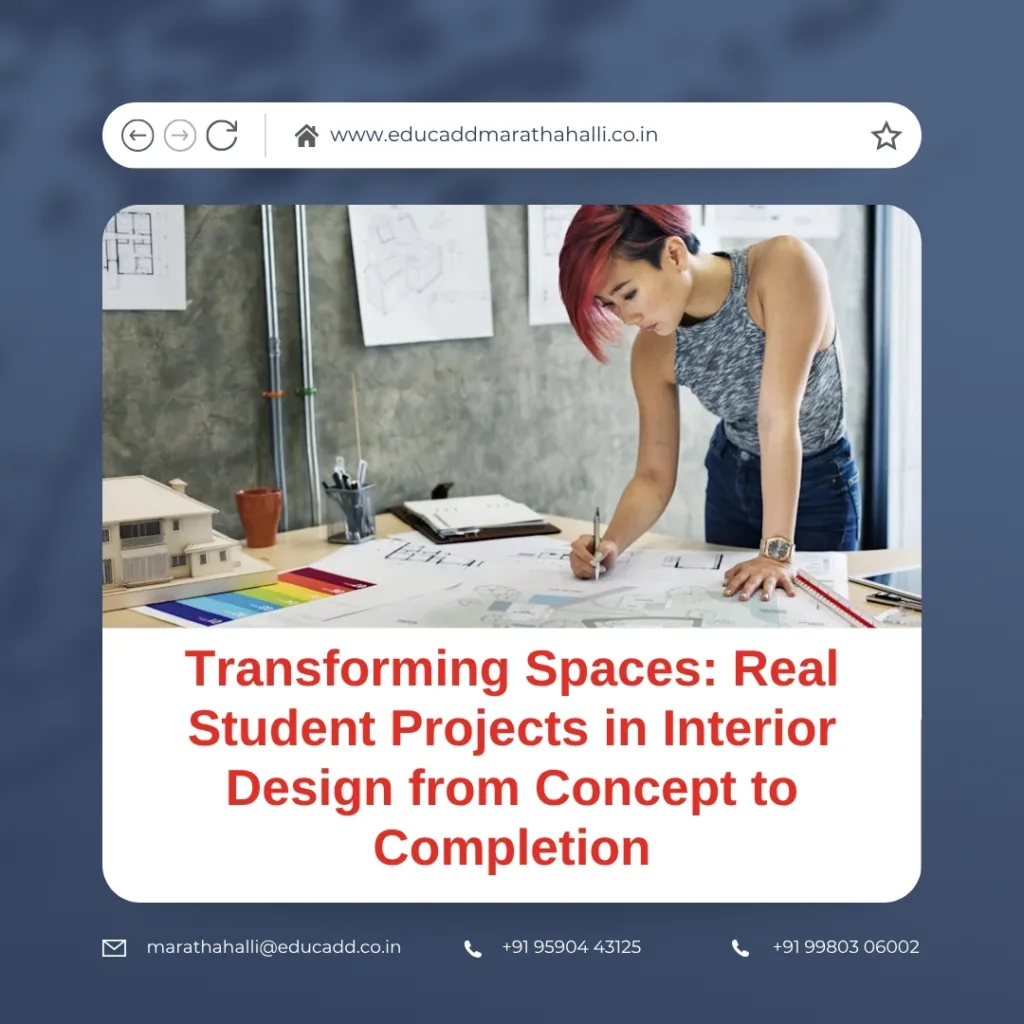
Real student interior design project transforming space from concept to completion
1️⃣ The Journey Begins: Understanding the Client Brief
Every real student project in interior design from concept to completion starts with a clear understanding of the client’s requirements. Typically, mentors simulate client meetings, helping students practice active listening, client needs analysis, and space assessment. Since clients may have a mix of emotional desires and functional expectations, students learn to balance both effectively.
Moreover, this stage allows them to define the project scope, timeline, and budget, which are critical for managing real-world projects. By working on these real student projects, learners experience the challenges of interpreting vague client requirements and translating them into a structured plan. Therefore, this early phase builds the confidence required to handle actual clients in the industry.
Additionally, brainstorming sessions are organized, allowing students to visualize possibilities. Here, they explore mood boards, Pinterest references, and sketches to convey their design intent clearly to their mentors and peers. While this stage appears simple, it is the backbone of every successful interior design project.
2️⃣ Concept Development and Design Planning
After understanding the client brief, students proceed to concept development. In this phase, real student projects in interior design from concept to completion transform ideas into tangible plans. To achieve this, students create:
✅ Space plans
✅ Furniture layouts
✅ Lighting plans
✅ Material boards
As they develop their concepts, they learn to maintain balance between aesthetics and functionality. Because each client’s lifestyle differs, the design plan is personalized while adhering to ergonomic and safety standards.
Furthermore, software tools such as AutoCAD, SketchUp, and Revit are used to create accurate layouts and 3D visualizations. Using these tools, students can present professional-level designs to clients and receive constructive feedback.
At this stage, many students also explore sustainable materials and eco-friendly design practices, ensuring that their projects align with current trends in green design. As they refine their concepts, they develop the resilience to adapt to client changes and real-world challenges.
3️⃣ Execution and Supervised Implementation
Now comes the exciting part where designs come to life. During real student projects in interior design from concept to completion, students get hands-on exposure to the execution process. They learn about vendor coordination, material procurement, and on-site supervision, which are essential skills for any interior designer.
In many design schools, students visit live sites to oversee how carpentry, painting, flooring, and electrical works align with their plans. Under supervision, they understand the workflow, handle conflicts, and learn the art of problem-solving on site.
While some mistakes may happen during this phase, these become valuable lessons that enhance decision-making skills. Additionally, students gain confidence in communicating with contractors, understanding pricing structures, and ensuring quality standards are maintained.
Furthermore, students learn to prepare project timelines and Gantt charts to track progress efficiently. As they implement their designs, they experience the satisfaction of seeing their vision manifest in a physical space, which boosts their motivation to pursue this career further.
4️⃣ Styling, Staging, and Final Presentation
Once execution is complete, the final touches of styling and staging elevate the design. This stage in real student projects in interior design from concept to completion focuses on:
✅ Selecting decor elements
✅ Arranging furniture aesthetically
✅ Adding soft furnishings
✅ Incorporating lighting accents
While the technical design stages are crucial, styling brings personality to the space. Students learn how to enhance visual harmony through color palettes, textures, and statement decor. This phase also teaches them to work with real budgets, ensuring the space looks luxurious without overspending.
Additionally, students document the entire journey, including before-and-after images, mood boards, material samples, and 3D renders. These presentations are showcased during portfolio reviews and exhibitions, helping students build a professional portfolio that attracts clients and employers.
Moreover, this final stage allows students to reflect on their choices and understand client feedback, refining their skills for future projects.
5️⃣ Lessons Learned and Career Readiness
Real student projects in interior design from concept to completion teach more than design skills; they build confidence, client-handling capabilities, and project management expertise. Through these projects, students learn to:
✅ Communicate effectively with clients and vendors
✅ Adapt designs based on site challenges
✅ Work within time and budget constraints
✅ Develop an eye for detail
Furthermore, these projects help students build a portfolio that showcases their creativity and technical proficiency, which is essential for internships and job placements. Many design institutes also encourage students to publish their project case studies on professional platforms like LinkedIn and Behance, helping them attract freelance opportunities.
Because of these hands-on experiences, students graduate with industry-ready skills, making them stand out in a competitive job market. By participating in real projects, they also discover their niche, whether it is residential interiors, commercial spaces, hospitality design, or sustainable design.
Why Real Student Projects Matter in Interior Design
Real student projects in interior design from concept to completion bridge the gap between theory and practice. While classroom learning builds foundational knowledge, practical projects help students understand how to:
✅ Interpret client briefs into actionable plans
✅ Balance creativity with functionality
✅ Adapt to changing client needs
✅ Solve real-world design challenges
Additionally, these projects help students develop collaboration skills, as interior design often requires teamwork across various departments, including architecture, electrical, carpentry, and decor. Students also learn how to handle client expectations with professionalism, manage disagreements tactfully, and deliver on promises.
Because the design industry is evolving rapidly, these real-world projects allow students to stay updated with current trends, such as:
✅ Sustainable design practices
✅ Smart home integration
✅ Space optimization for small homes
✅ Biophilic design principles
Conclusion: Your Path to Becoming a Confident Interior Designer
Ultimately, Student Interior Design Projects from concept to completion provide invaluable experience, shaping students into confident and capable designers ready to step into the professional world. By working on real projects, students gain practical insights into design, project management, and client handling, all of which are crucial for a successful interior design career.
If you are considering a career in interior design, choose a program that offers practical projects and industry exposure. Because the best way to learn interior design is by doing, these projects will help you understand your creative style while aligning it with market demands.
So, are you ready to transform your design dreams into reality? Dive into real student projects and experience how your ideas can shape spaces and lives, one design at a time.

