
Bringing Interiors to Life: Mastering 3D Visualization for Interior Design
Interior design has always combined creativity with functionality, but the process of communicating ideas has historically posed challenges. Flat sketches, mood boards, or even photographs often fall short of conveying the true feel of a space. Today, designers face increasing client expectations for clarity, precision, and immersive visualization before any construction or renovation begins. 3D Interior Design Visualization bridges this gap by transforming conceptual ideas into detailed, realistic digital models. This technology allows designers to showcase every element of a space—lighting, textures, furniture, and color palettes—before the first brick is laid. By providing a clear visual representation, it fosters better understanding, stronger collaboration, and faster approvals, ensuring that creative visions are executed flawlessly.
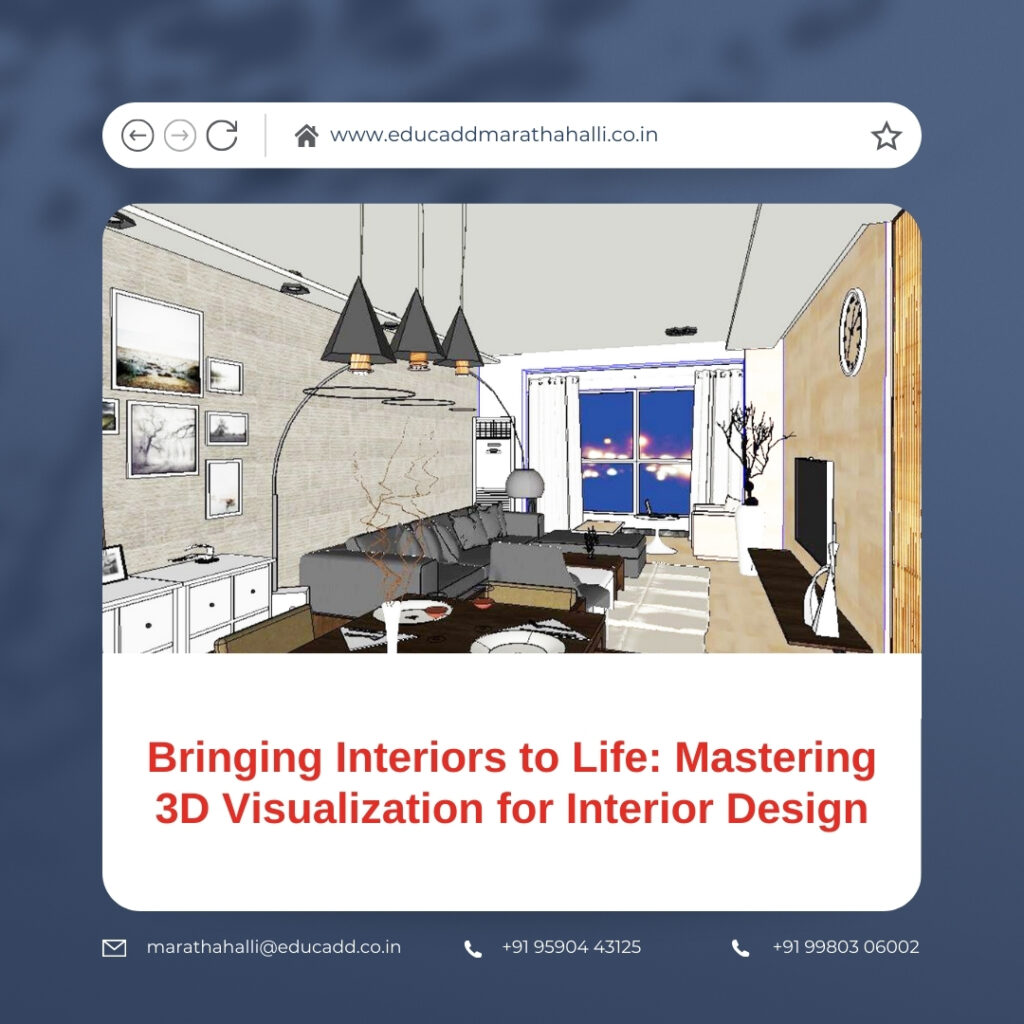
3D Interior Design Visualization
1. Understanding the Core of 3D Interior Design Visualization
At its essence, interior design visualization involves creating highly detailed digital models of interior spaces using specialized 3D software. Unlike traditional 2D plans, these models convey depth, proportion, and realistic context. Designers can model furniture, fixtures, lighting, and material finishes in exact detail, providing clients with a tangible sense of the final outcome. The digital approach also allows for rapid experimentation with layouts, textures, and color schemes, giving designers flexibility while maintaining accuracy. By bridging imagination with technical execution, 3D visualization has become an indispensable tool in modern interior design workflows.
2. The Power of 3D Software in Modern Interiors
3D Interior Design Visualization is the backbone of professional interior design. Platforms such as 3ds Max, Revit, SketchUp, Blender, and AutoCAD enable designers to build realistic models with precision and artistic freedom. These programs offer features like lighting simulation, texture mapping, and rendering engines that replicate real-world environments. Designers can quickly test multiple design options, adjust layouts, and refine aesthetics without physical limitations. The software’s ability to combine creativity with technical accuracy reduces errors, speeds up decision-making, and ensures that the final built space mirrors the envisioned concept.
3. From Imagination to Immersive Digital Spaces
Traditional design representations often leave room for misinterpretation. Flat drawings or sketches can only hint at scale, lighting, and spatial relationships. 3D visualization eliminates this uncertainty by converting ideas into immersive digital spaces. Clients can explore rooms from multiple perspectives, observe proportions accurately, and understand the flow of the space. This approach provides an emotional connection, enabling clients to feel and experience the environment before construction begins. As a result, the design approval process becomes smoother, revisions are minimized, and the client-decision journey becomes more confident and informed.
4. Elevating Client Communication and Decision-Making
Clear communication is crucial in interior design, and 3D visualization enhances it exponentially. Clients often struggle to interpret technical drawings or verbal explanations, but 3D renders make concepts instantly understandable. Designers can walk clients through realistic representations, highlighting every design decision and material choice. Immediate visual feedback allows clients to provide precise input, fostering collaboration and ensuring their vision aligns with the designer’s plan. Transparent visualization builds trust, strengthens client relationships, and reduces misunderstandings, which often lead to costly redesigns or delays.
5. Realism Through Advanced Rendering Technologies
The realism achieved by modern rendering engines is remarkable. Advanced 3D software accurately simulates natural and artificial lighting, shadows, textures, and reflections, giving materials lifelike qualities. Wood grains, marble veining, metallic finishes, and fabric textures appear visually authentic. Designers can adjust lighting scenarios to show how spaces look during different times of day or under various artificial lighting setups. This level of realism allows clients to make informed choices, ensures that expectations match the final outcome, and significantly reduces the risk of on-site errors.
6. Optimizing Spatial Layouts and Functionality
Effective interior design goes beyond aesthetics—it prioritizes functionality. 3D visualization provides designers with precise spatial analysis tools to optimize circulation, furniture arrangement, and overall space efficiency. Virtual models allow for testing multiple configurations, ensuring that every corner serves a purpose without sacrificing style. For compact or multifunctional spaces, this tool is invaluable, as it allows designers to anticipate challenges, refine designs, and maximize usability. The result is interiors that are not only visually appealing but also highly practical and comfortable for their intended users.
7. Experimenting Freely with Materials and Colors
One of the most transformative advantages of 3D visualization is the freedom to experiment. Designers can test countless combinations of colors, textures, and finishes without physical samples or costly trials. Wall paints, flooring types, fabrics, and furniture finishes can be modified instantly, allowing for rapid comparison and informed decision-making. Clients can visualize multiple design options side by side, gaining clarity about their preferences. This iterative process ensures a harmonious blend of elements and avoids unexpected design conflicts during execution.
8. Enhancing Ambiance with Lighting Design
Lighting is one of the most influential factors in interior design, shaping mood, atmosphere, and functionality. Through 3D visualization, designers can simulate both natural daylight and artificial lighting setups accurately. By adjusting the intensity, placement, and type of lighting, designers can demonstrate how light interacts with surfaces, materials, and textures. Proper visualization of lighting allows clients to experience the intended ambiance, ensures visual comfort, and supports the overall aesthetic and functional goals of the space. Thoughtful lighting design, tested digitally, contributes significantly to the success of any interior project.
9. Cost and Time Efficiency in Design Execution
Implementing interior design projects can be expensive, and revisions during construction often drive up costs. By using 3D visualization, designers reduce uncertainty and prevent costly on-site errors. Clients finalize selections in advance, avoiding unnecessary material wastage or labor modifications. Design iterations happen virtually, saving both time and money. This proactive approach allows projects to stay on budget and schedule, increasing client satisfaction and enhancing the professional credibility of designers.
10. Facilitating Collaboration Between Stakeholders
Interior design projects involve multiple stakeholders—designers, contractors, suppliers, and clients. 3D models act as a unified visual reference for everyone involved. Contractors can accurately understand design intent, vendors can provide precise material estimates, and clients can monitor progress effectively. This collaborative environment reduces miscommunication, ensures consistency, and fosters accountability throughout the project lifecycle. 3D visualization thus serves as a vital communication bridge, aligning all parties toward a shared vision and ensuring seamless project execution.
11. Virtual Walkthroughs for Deeper Client Engagement
Virtual walkthroughs take interior design visualization to an interactive level. Using advanced 3D tools, designers can create simulations that allow clients to explore interiors as if physically present. Clients can navigate rooms, examine details, and experience space proportions accurately. This interactive engagement strengthens emotional connections and helps clients feel confident in their design decisions. Virtual walkthroughs also serve as a compelling marketing tool, allowing design firms to showcase their capabilities and differentiate themselves in a competitive industry.
12. Diverse Applications Across Residential, Commercial, and Retail Spaces
The versatility of 3D interior design visualization spans multiple sectors. In residential design, it helps homeowners understand personalized layouts and aesthetics. Commercial interiors benefit from functional planning, employee flow optimization, and brand alignment. Retail spaces utilize visualization to enhance customer experience and maximize product display impact. Regardless of project type, visualization ensures clarity, precision, and efficiency. It empowers designers to tailor solutions to diverse client needs while maintaining high design quality across all sectors.
13. Career Growth and Skill Development in 3D Visualization
As the industry increasingly embraces 3D technologies, the demand for skilled visualizers continues to rise. Designers proficient in 3D software enjoy a competitive edge, whether working independently or in collaboration with firms globally. Mastering these tools enhances both creative expression and technical competency, allowing professionals to deliver superior results. Continuous innovation in software ensures that visualizers remain in demand, opening opportunities for career growth, specialization, and recognition in the interior design field.
14. Future Trends in Interior Design Visualization
The future of interior design visualization is both dynamic and promising. Technologies such as virtual reality (VR), augmented reality (AR), and AI-driven rendering are reshaping how spaces are imagined and experienced. Designers will be able to create interactive, real-time experiences where clients can modify elements on the fly. AI will assist in generating design suggestions and predicting client preferences, while VR and AR will make immersive walkthroughs a standard practice. These advancements will transform client interactions, streamline project approvals, and push creative boundaries further than ever before.
Conclusion
3D Interior Design Visualization has revolutionized the way designers conceptualize, communicate, and execute their ideas. By combining realism, interactivity, and precision, it allows clients to experience their future spaces before construction begins. Designers can optimize functionality, experiment creatively, and collaborate effectively with all stakeholders. The result is not only visually stunning interiors but also a more efficient, cost-effective, and satisfying design process. As technology advances, 3D visualization will continue to define the standard for excellence, turning imaginative concepts into tangible, breathtaking realities.

